Primary Structural Pool Types and Material Selection
The allure of a custom pool extends far beyond a refreshing dip on a warm day. It’s about crafting a personalized sanctuary that elevates your lifestyle, enhances your property’s value, and seamlessly integrates with your home’s architecture. Imagine a backyard oasis designed precisely to your specifications, a space for relaxation, entertainment, and cherished family moments.
Achieving this vision requires a deep understanding of the design and construction process. A custom pool represents a significant investment, demanding careful planning, expert engineering, and meticulous execution.
In this extensive guide, we will embark on a comprehensive journey through custom pool construction. We’ll explore everything from selecting the ideal structural type for custom in-ground swimming pools and materials to navigating the complex phases of building, engineering, and permitting. We will also highlight how modern supply chain management and process optimization can lead to a more efficient and higher-quality build. Our goal is to provide you with the knowledge needed to transform your backyard dreams into a stunning reality.
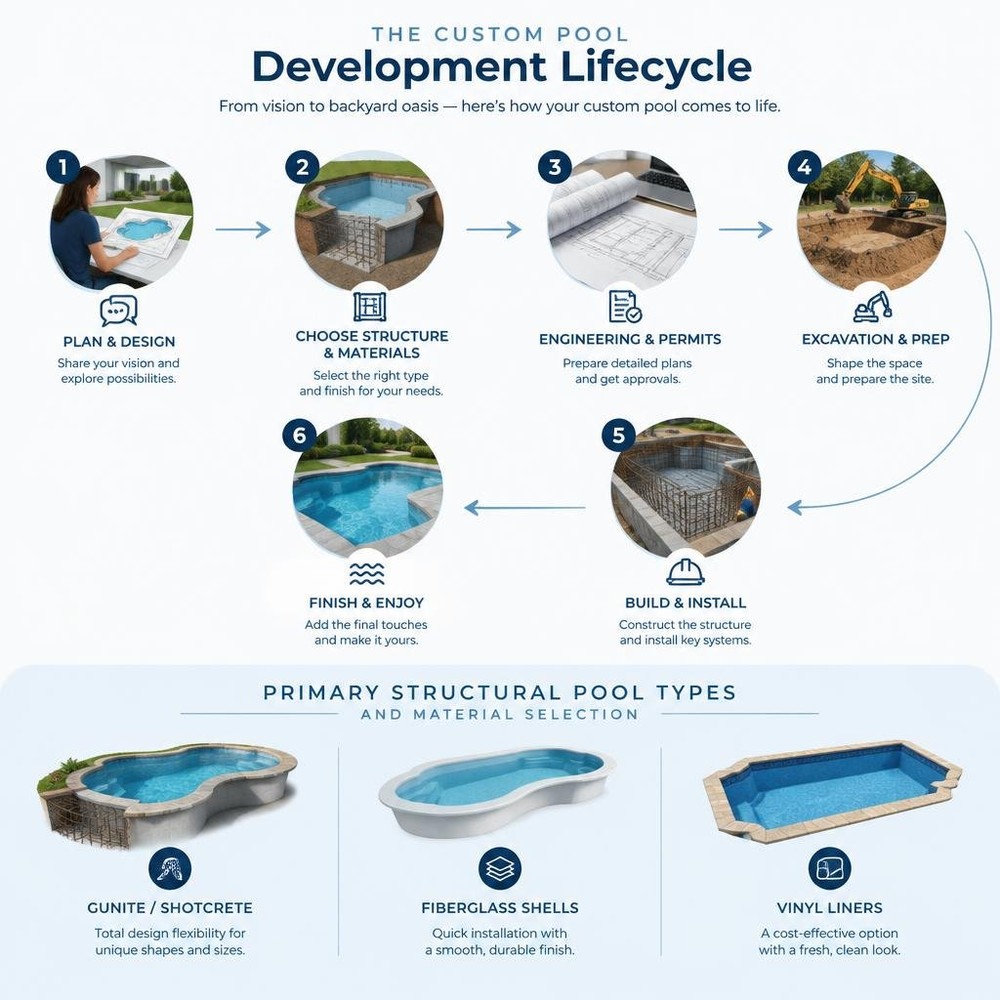
When embarking on a custom pool project, one of the most fundamental decisions revolves around the primary structural material. This choice significantly impacts design flexibility, durability, maintenance requirements, and overall cost. The three predominant types of in-ground pool construction are gunite (or shotcrete), fiberglass shells, and vinyl liners. Each offers distinct advantages tailored to different homeowner preferences and site conditions.
Gunite/Shotcrete Pools: These are the most popular choice for custom designs due to their unparalleled flexibility. Gunite and shotcrete are forms of pneumatically applied concrete, sprayed over a steel rebar framework. This method allows for virtually any shape, size, or depth, making them ideal for complex, freeform, or geometric designs that perfectly complement a home’s architectural style. Once cured, the concrete shell is incredibly strong and durable, capable of withstanding various soil conditions, including challenging expansive clay soils or rocky substrates. The finish can then be customized with aggregate plasters, tiles, or other materials.
Fiberglass Pools: Manufactured as a single, pre-formed shell, fiberglass pools offer a quicker installation time compared to concrete. Their smooth, non-porous surface is highly resistant to algae growth, which can reduce chemical usage and maintenance. While design options are more limited to available molds, modern fiberglass pools come in an increasing variety of shapes, sizes, and integrated features like steps and benches. They are also known for their flexibility, which can be advantageous in areas prone to ground movement.
Vinyl Liner Pools: These pools feature a custom-fabricated vinyl liner that fits over a frame of steel, polymer, or concrete walls. Vinyl pools offer a broad range of shapes and sizes, though not quite as limitless as gunite. They are generally the most affordable option upfront and their smooth surface is comfortable underfoot. The liner can be replaced over time, offering an opportunity to refresh the pool’s appearance without a full reconstruction.
The local soil mechanics and climate conditions of your property in October 2026 will play a crucial role in determining the most suitable material. For instance, areas with significant ground movement or expansive clay might benefit from the structural integrity of gunite or the flexibility of fiberglass. A qualified pool builder will conduct a thorough site evaluation to recommend the best structural approach for your specific backyard.
Material Selection in Custom Pool Construction
Beyond the primary structural shell, the selection of interior finishes, coping, and decking materials profoundly influences both the aesthetics and long-term durability of your custom pool. These choices are integral to achieving a cohesive design that withstands environmental factors and daily use.
For gunite pools, interior finishes range from traditional plaster to more sophisticated aggregate plasters (like pebble or quartz finishes) and glass tiles. Aggregate plasters offer enhanced structural durability, better resistance to staining, and a longer lifespan than standard plaster. Glass tiles, while a premium option, provide stunning visual effects, particularly with integrated LED lighting, and exceptional longevity. The choice of finish also impacts water chemistry and maintenance routines.
Coping, the material that caps the edge of the pool, is another critical element. Popular choices include natural stone like travertine, limestone, or sandstone, as well as concrete pavers or brick. Travertine coping, for example, is highly valued for its elegant appearance, slip-resistant surface, and ability to stay cool under the hot sun. It also offers excellent freeze-thaw resistance, a vital consideration in climates with fluctuating temperatures.
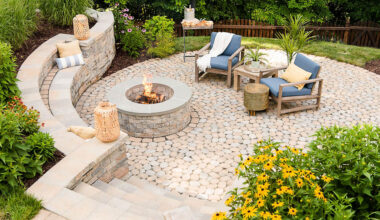
Decking materials, which surround the pool, should complement the coping and overall landscape design. Options include pavers, natural stone, stamped concrete, and wood composites. Considerations for decking include heat absorption, slip resistance, and ease of maintenance. The goal is to create a seamless transition from the pool’s edge to the rest of your outdoor living space, ensuring both beauty and functionality.
Integrating Architectural Water Features and Automation
A truly custom pool transcends a simple swimming hole, becoming a dynamic centerpiece through integrated architectural water features and smart automation. These additions elevate the sensory experience, enhance visual appeal, and offer unparalleled convenience.
Popular water features include elegant tanning ledges, which provide a shallow area for lounging and are particularly appealing for families with young children. Spillover spas seamlessly connect to the main pool, creating a soothing waterfall effect and offering a luxurious hydrotherapy experience. Laminar jets shoot graceful arcs of water into the pool, adding a playful and sophisticated touch. Sheer descent waterfalls provide a continuous, smooth sheet of water, creating a tranquil ambiance.
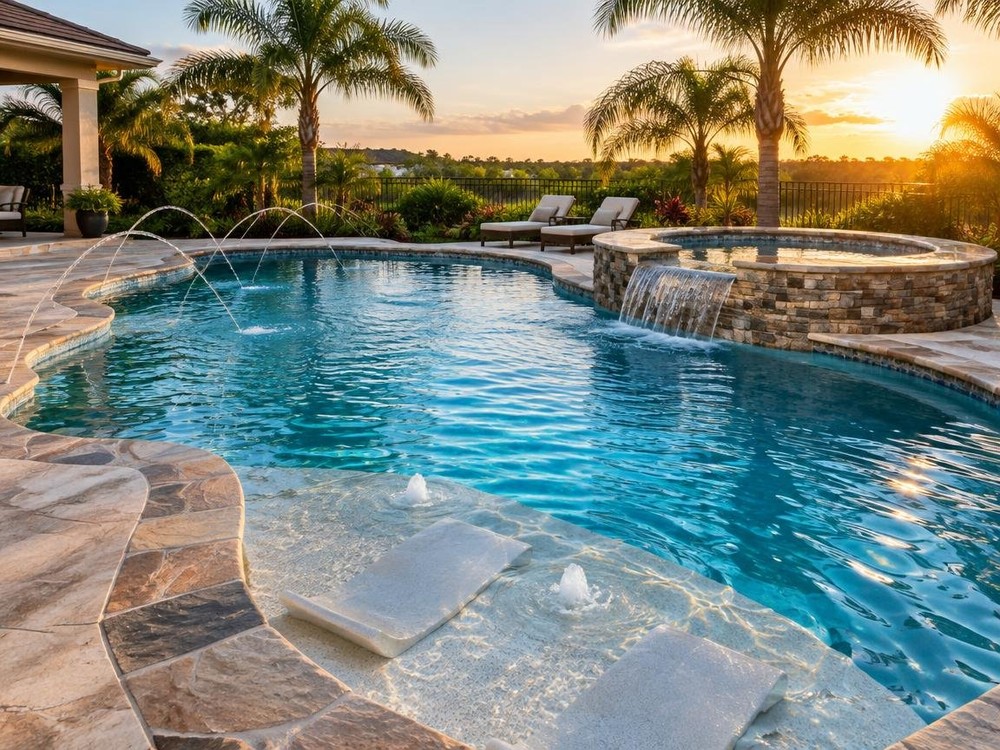
Beyond aesthetics, modern custom pools are increasingly integrated with smart home automation systems. These systems allow homeowners to control pool functions—such as heating, filtration, lighting, and even water features—remotely via a smartphone or tablet. LED lighting, available in a spectrum of colors, can transform the pool’s mood with a tap, while smart controls can optimize energy usage for pumps and heaters, leading to long-term cost savings. This level of integration transforms a basic pool into a resort-like experience, making it easier than ever to manage and enjoy your backyard oasis.
Key Phases of Custom Pool Construction
Building a custom pool is a complex undertaking, necessitating a structured approach that moves from conceptualization to completion through several distinct phases. Effective project planning, meticulous site surveys, precise structural layout, and comprehensive utility mapping are foundational. Throughout the process, robust contractor coordination and diligent milestone management are crucial to ensure the project stays on track, within budget, and meets the highest quality standards. Each phase builds upon the last, demanding precision and expertise.
Engineering and Permits for Custom Pool Construction
Before any ground is broken, the engineering and permitting phase is paramount. This initial stage involves translating your vision into detailed, actionable plans and securing all necessary approvals. It typically begins with professional 3D rendering, allowing you to visualize the final pool and outdoor living space with remarkable accuracy, making adjustments before construction begins. Following design approval, detailed CAD (Computer-Aided Design) plans are developed, outlining every structural, plumbing, and electrical component.
Navigating municipal zoning laws and obtaining local building permits is a critical step. This often involves submitting detailed plans to city or county departments for review, ensuring compliance with local codes, safety regulations, and environmental standards. For properties within planned communities, HOA (Homeowners Association) approval is also a mandatory hurdle. Structural engineering calculations are performed to guarantee the pool’s integrity, especially considering factors like soil composition and seismic activity. Finally, barrier compliance, such as fencing requirements, is integrated into the design to meet safety regulations. A reputable pool builder will manage this complex administrative process, ensuring all documentation is accurate and approvals are secured efficiently.
Excavation, Steel Reinforcement, and Plumbing
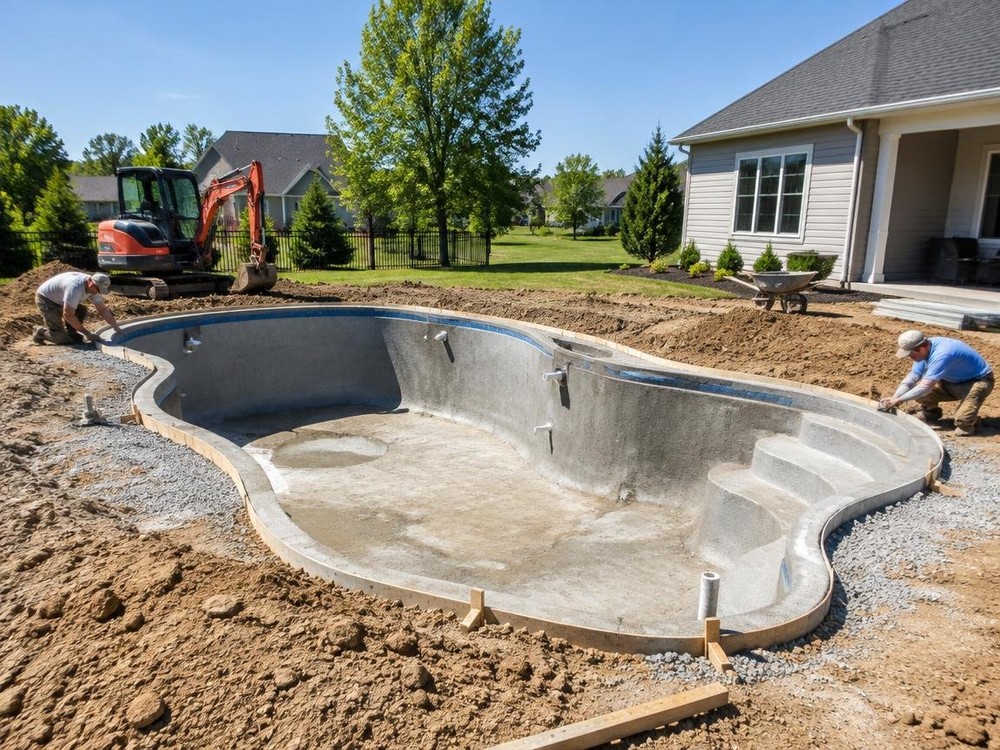
Once permits are in hand, the physical transformation of your backyard begins with excavation. This earthmoving phase involves carefully digging out the pool shape to the precise dimensions and depths specified in the design plans. Proper grading and drainage considerations are paramount during this stage to prevent future water issues.
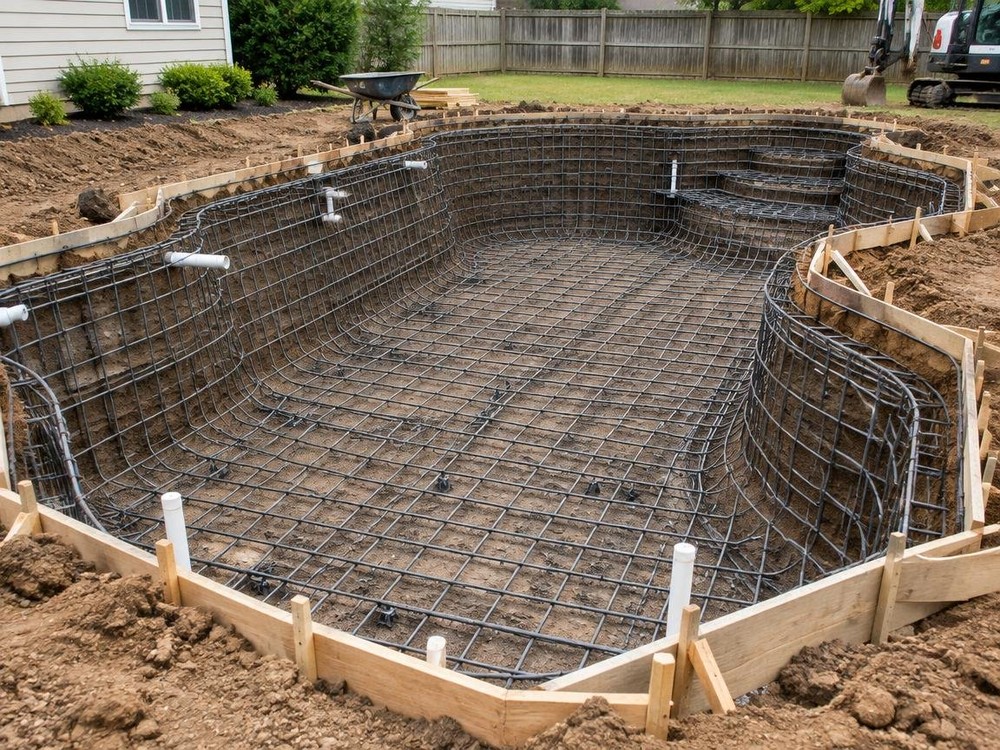
Following excavation, the steel reinforcement phase commences. A robust framework of rebar cages is meticulously assembled within the excavated pit. This steel skeleton provides the structural integrity for the concrete shell, crucial for resisting ground pressures and ensuring the pool’s longevity. Inspections are typically conducted at this point to verify the rebar’s placement and adherence to engineering specifications.
Simultaneously, the plumbing and electrical rough-ins are installed. This involves laying out the hydraulic loops for water circulation, filtration, and any integrated features like spas, waterfalls, or deck jets. Electrical conduits are also run for lighting, pumps, heaters, and automation systems.
For gunite pools, the next step is the pneumatic application of concrete (gunite or shotcrete) over the rebar framework. This high-pressure application creates a dense, monolithic shell. Once applied, the concrete undergoes a crucial curing cycle, a period during which it gains its full strength. This process typically involves keeping the concrete moist for several days to prevent cracking and ensure optimal structural development.
Interior Finishes, Decking, and Project Startup
The final stages of custom pool construction focus on bringing the aesthetic and functional elements to life, culminating in the project’s startup and handover. After the structural shell has cured, the interior finish is applied. This could involve traditional plaster, durable pebble aggregates, or luxurious tile work, all chosen to complement your design vision and provide a comfortable, long-lasting surface.
Simultaneously, the surrounding decking is installed. Materials like porcelain pavers, natural stone, or stamped concrete are laid, creating the functional and aesthetic transition from your home to the pool area. This phase often includes integrating other outdoor living elements, such as outdoor kitchens, fire pits, and landscaping, transforming the entire backyard into a cohesive oasis. For those seeking truly exceptional outdoor environments, exploring options for luxury pools and outdoor spaces can provide inspiration for comprehensive backyard transformations.
Once the interior finish and decking are complete, the pool is filled with water. This is followed by the equipment startup, where the filtration system, pumps, heaters, and automation are commissioned and tested. Water chemistry is carefully balanced to ensure a safe and healthy swimming environment. Finally, a thorough owner walkthrough is conducted, providing you with essential information on operating and maintaining your new custom pool. This comprehensive approach ensures that every detail, from the structural integrity to the final aesthetic touches, contributes to a functional and beautiful backyard retreat.
Supply Chain and Process Optimization in Pool Building
In October 2026, the construction industry, including custom pool building, is increasingly embracing advanced methodologies to enhance efficiency and quality. For custom pool construction, focusing on supply chain and process optimization is not just a best practice; it’s a strategic advantage that can significantly impact project timelines, costs, and the final product’s quality. This unique angle emphasizes the “how” behind exceptional builds, moving beyond mere design aesthetics to the operational excellence that underpins them.
Effective material procurement is at the heart of an optimized supply chain. This involves strategic sourcing of high-quality materials—from rebar and gunite to specialized tiles and advanced filtration systems—at competitive prices. Implementing a custom inventory management system for pool construction materials can drastically reduce waste and ensure that components are available precisely when needed, preventing costly delays. We’ve seen instances where clients saved as much as 20% on large-scale builds by deploying tailored inventory tracking software.
Lean workflow principles, borrowed from manufacturing, are being applied to streamline the pool building process. This means identifying and eliminating waste in all its forms: overproduction, waiting times, unnecessary transport, over-processing, excess inventory, unnecessary movement, and defects. By mapping out the entire construction workflow, from excavation to interior finishing, builders can identify bottlenecks and inefficiencies. For example, a construction firm reduced material waste by 20% through custom packaging solutions and quick deployment planning, ensuring materials arrived on-site in the right quantities and at the right time.
Automation also plays a growing role. While full robotics might still be emerging for complex tasks, automation can handle repetitive tasks such as concrete pouring, precise tile placement, and equipment installation. This not only increases build speed and consistency but also reduces the potential for human error and enhances safety on the job site. Integrating custom software for inventory and scheduling can further automate administrative tasks, freeing up skilled labor for critical construction activities.
Quality control is intrinsically linked to process optimization. By implementing Six Sigma principles, which aim to reduce defects and variability, pool builders can ensure higher standards at every stage. This involves rigorous inspections, standardized procedures, and continuous improvement loops. The result is a pool that is not only aesthetically pleasing but also structurally sound and built to last, often exceeding typical industry benchmarks. Efficient material handling, ensuring proper storage and movement of components, is widely considered essential for the long-term survival and competitiveness of any construction business.
By integrating supply chain cost reduction strategies early in the design phase and applying lean and Six Sigma techniques to streamline the workflow, custom pool construction projects can achieve remarkable efficiency gains. This leads to faster completion times, reduced costs (with typical savings around 20% reported for custom software implementations), and a superior quality product for the homeowner.
Frequently Asked Questions About Custom Pools
Homeowners considering a custom pool often have numerous questions regarding the process, costs, and long-term implications. Here, we address some of the most common inquiries to provide clarity and help you make informed decisions.
How long does the custom pool construction timeline typically take?
The timeline for custom pool construction can vary significantly based on several factors, including the complexity of the design, site conditions, weather, and the efficiency of the builder. Generally, after permit approval, the physical construction phase for a gunite pool can take anywhere from 8 to 16 weeks.
The initial steps, such as permit approval, can add several weeks to the overall project duration, sometimes extending to 2-4 weeks if not managed efficiently. Site excavation and structural work proceed relatively quickly, but the gunite cure duration is a critical period that cannot be rushed, typically requiring several days of careful watering. Weather delays, especially during rainy seasons or extreme temperatures, can also impact the schedule. For instance, a typical custom inground pool build in Central Florida might take 8-12 weeks from permit approval, while a gunite pool in Austin, Texas, could range from 10-16 weeks for the construction phase alone, with a total timeline of 4-6 months from contract signing to final water fill.
What factors most influence the total cost of a custom pool?
The cost of a custom pool is highly variable, ranging from starter pools around $50,000 to luxury designs exceeding $200,000, and even up to $2 million for large-scale, highly customized outdoor living spaces. Several key factors contribute to this wide range:
- Pool Dimensions and Depth: Larger and deeper pools naturally require more materials and labor.
- Site Grading and Accessibility: Difficult terrain, steep slopes, or limited access for heavy machinery can increase excavation and construction costs.
- Soil Composition: Challenging soil conditions, such as expansive clay or bedrock, may necessitate additional engineering and excavation techniques.
- Luxury Upgrades and Features: Integrated spas, tanning ledges, waterfalls, laminar jets, LED lighting, automation systems, and custom tile work significantly add to the overall price.
- Premium Finishes: High-end interior finishes (e.g., glass tiles, pebble aggregates) and decking materials (e.g., travertine, elaborate pavers) are more expensive than standard options.
- Outdoor Living Integration: Incorporating elements like outdoor kitchens, fire features, pergolas, and extensive landscaping will expand the project scope and budget.
Transparent, itemized pricing from your builder is crucial to understanding these costs and avoiding hidden expenses.
How do soil and climate conditions affect structural pool design?
Soil and climate conditions are critical considerations that directly influence the structural design and longevity of a custom pool. Builders must account for these environmental factors to ensure the pool’s stability and durability.
- Expansive Clay Soils: Common in regions like Texas, expansive clay soils can swell when wet and shrink when dry, exerting significant pressure on pool walls. Gunite pools, with their reinforced steel and monolithic concrete shells, are often preferred in these areas due to their superior strength and ability to withstand ground movement.
- Bedrock Excavation: Properties with underlying bedrock require specialized excavation techniques, often involving rock hammers or blasting, which can increase project costs and timelines.
- Hydrostatic Pressure: High water tables can create hydrostatic pressure beneath the pool shell, potentially causing it to lift or crack. Proper drainage systems and hydrostatic relief valves are essential in such conditions.
- Thermal Expansion and Contraction: Extreme temperature fluctuations, including freeze-thaw cycles in colder climates, can cause materials to expand and contract. Pool materials and construction methods must be chosen to accommodate these movements without compromising structural integrity. For instance, finishes like travertine coping offer excellent freeze-thaw resistance.
- Gunite Strength: The inherent strength and flexibility of gunite make it a preferred choice in areas with challenging soil or climate conditions, as it can be engineered to specific site requirements, providing a robust and long-lasting structure.
Understanding these geological and meteorological factors is vital for designing a pool that will perform optimally and remain a beautiful asset for decades to come.
Conclusion
Building a custom pool is an exciting journey that transforms a backyard into a personal haven. As we’ve explored, achieving this dream requires more than just aesthetic vision; it demands meticulous planning, informed material selection, expert engineering, and efficient project execution. From choosing the optimal structural type—be it the flexible gunite, low-maintenance fiberglass, or cost-effective vinyl—to integrating advanced water features and smart automation, every decision contributes to the final masterpiece.
The importance of a well-engineered supply chain and streamlined processes cannot be overstated. By embracing lean practices, automation, and robust quality control, custom pool construction can be delivered with greater efficiency, reduced costs, and superior long-term durability. This focus on operational excellence ensures that your investment yields a high-quality, resilient structure that stands the test of time.
A custom pool is a significant investment that enhances your lifestyle, provides a focal point for backyard living, and adds substantial value to your property. By engaging with experienced professionals who prioritize detailed planning, transparent communication, and cutting-edge construction methodologies, you can confidently turn your backyard dreams into a stunning reality that you and your family will cherish for many years to come.