Performance Signals That Matter in Real Life
A great pair does more than absorb. It keeps you feeling dry, stays put, and disappears under clothing. When evaluating options, look for three tangible signals.
- Dryness feel: After 30 to 60 minutes of wear on a moderate day, the surface next to skin should feel almost dry to the touch. If the top layer stays tacky, wicking is weak and you will notice it.
- Edge discipline: The outer edges of the gusset should lie flat and not curl. Curling edges let fluid travel along stitching and sneak out near the leg openings.
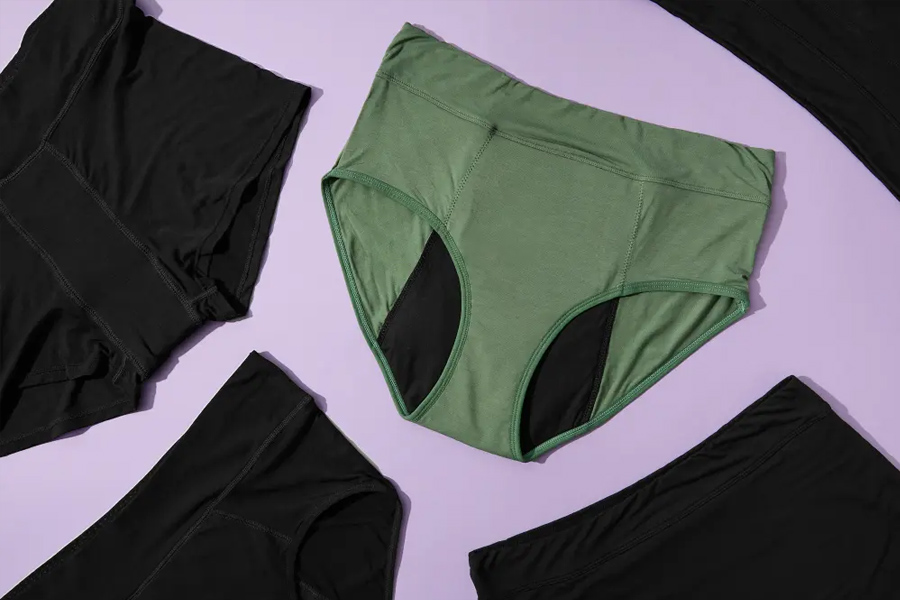
- Gusset reach: For day use, the absorbent zone should start close to the front waistband seam and continue well past the midpoint of the rear panel. For overnight, rear coverage should extend close to the top of the back rise. A long runway catches more misfires.
Think of absorbency as a team effort between speed, distribution, and containment. Speed is how quickly fluid moves through the top layer. Distribution is how well it spreads across the core rather than pooling. Containment is the last barrier that keeps everything from crossing the line.
Comfort Engineering: Fabric Tactility, Thermoregulation, and Seams
Handfeel and microclimate determine comfort. Modal, cotton-rich mixes, and bamboo viscose are familiar and breathable. Washable microfiber shells are elegant beneath clothes and dry quickly. To balance, soft fabrics soothe and silky fabrics glide under leggings.
Check waistband construction. A wide, brushed elastic distributes pressure and prevents digs. Wearing narrow elastics for hours can cause hotspots. Sewn-in tags create microscopic sandpaper; tagless heat transfers or bonded labels avoid rubbing. Flatlock seams stack fabric layers without ridges, making them perfect. If away from creases, overlock seams are OK.
Controlling temperature is undervalued. Denser absorbent cores retain heat and moisture. If you run heated or live in humid climates, use breathable outers and mid-weight cores during the day and rotate to high capacity when needed. Carry only the insulation the weather requires, like hiking layers.
Absorbency Beyond a Number: How to Decode Claims
Capacity is often listed in milliliters, but capacity alone does not guarantee peace of mind. Three variables separate lab bragging rights from street performance.
- Input type: Water pours differently than saline solutions, and both differ from real-life viscosity. Fast-pour tests can overstate performance if the top layer floods.
- Rate of intake: A core that takes in fluid slowly might overflow during a sudden surge, even if its total capacity is high.
- Edge sealing: Fluid follows stitches and folds. If the barrier film stops short of the seam or if stitching pierces the barrier without reinforcement, leaks happen at the perimeter.
Ask simple practical questions. How quickly does a teaspoon disappear into the fabric. Does the surface rebound to a dry feel after one minute. If you press with a paper towel, how much moisture returns to the surface. These observations tell you more than a single capacity number.
Fit Diagnostics and Style Matching
Fit is the unsung hero. The same core will perform differently depending on how it sits on your body.
- Rise: If you have a longer torso or a curvier lower belly, a mid to high rise keeps the gusset anchored where it counts. Shorter torsos or lean frames may prefer mid to low rises to keep the front panel flat.
- Leg opening: Athletes with developed quads may need more gentle leg elastic to avoid cutting in, which can tilt the core outward. Curvier hips often benefit from wider side panels that resist rolling.
- Gusset map: The absorbent zone should cover the point where your body contacts your underwear when sitting and walking. Try on and perform a few squats. If the gusset migrates forward or backward, consider a different cut.
For workdays in tailored pants, choose a hipster or brief with bonded edges to reduce lines. Under dresses or for desk-heavy days, high-rise briefs stabilize the core and reduce shifting. For exercise, look for four-way stretch panels that move without twisting.
Care Science: Protecting the Waterproof Layer
Longevity lives or dies in the laundry. The waterproof barrier is often a thin film laminated to fabric. Heat and harsh chemistry are its enemies.
- Wash cold, gentle cycle. Hot water and high heat weaken the film and elastics.
- Use mild detergent. Avoid fabric softeners, which coat fibers and slow wicking. Limit bleach and peroxide systems, which can degrade elastic and barriers over time.
- Line dry. Occasional low tumble may be tolerable, but routine machine drying accelerates wear.
- Pre-rinse after heavy use. A quick cold rinse before the wash prevents odor build-up and protects fibers.
If odor lingers, try a cold soak with a teaspoon of baking soda per liter of water for 20 minutes, then rinse and wash. Dry fully before storing. Rotating several pairs spreads stress so each pair rests between wears, which extends life.
Cost Per Wear and Inventory Strategy
Cost per wear determines value for wearers and retailers. Price/wears is easy math. A 38-dollar pair worn weekly for a year gives 52 wears at 73 cents each. Math improves quickly if good care increases life to two years at biweekly rotation.
Budget lines are useful for backups and occasional use. Premium lines usually justify their greater price with longer performance and better guarantees. To promote testing, shops should consider a starter trio across capacities. Analyze returns by size and cut to adjust assortment. The fit guide should include waist and hip measurements and a brief quiz. Fewer mismatches mean fewer returns and better reviews.
Merchandising and Content That Converts
Shoppers are scanning, not reading, so your content should show rather than tell.
- Photography checklist: flat lay of gusset length, inside-out view of layers, side seam close-up, on-body images across sizes, and a rear coverage shot for overnight styles.
- Copy that clarifies: use short, concrete statements like Feels dry in under a minute on moderate flow in most sizes or Long rear panel for side sleepers.
- Confidence builders: offer a fit swap or first-pair trial window. Place care instructions above the fold and in the packaging. Add a cost-per-wear calculator to product pages.
Invite user stories. Ask customers to share what size they bought, how they wear them with other products, and their typical day. Authentic notes beat generic claims.
Safety and Sensitivities
Sensitive skin needs soft fabrics. Choose non-scented textiles and avoid hard finishes. Some antimicrobials reduce odor, but not all. Metal coatings like silver and zinc are typical, but some use plant-derived or quaternary chemicals. Start with untreated or delicate products for reactive skin. New pairs should be patch tested at home before a long day.
Transparency matters. Look for clear fiber percentages and any mention of skin-safe certifications. For most users, breathable natural blends next to skin reduce irritation. If you have a history of nickel or metal sensitivities, prefer pairs without metallic trims or grommets.
Use-Case Playbook
- Athletes: Choose mid-weight cores with bonded edges that vanish under compression tights. Prioritize fast wicking and snug leg openings to prevent migration during sprints and squats.
- Travel: Pack mid-rise briefs with quick-dry shells and two high-capacity pairs for overnights. Hand wash in cold water and press in a towel to speed drying.
- Teens: Look for soft waistbands, inclusive sizing, and longer gussets for class and sports. Starter bundles help dial in comfort without over-committing.
- Postpartum: Opt for ultra-soft interiors, very high coverage, and forgiving waistbands. Some designs accommodate disposable pads for the first days and transition to standalone wear later.
- Light bladder leaks: Seek pairs that mention dual-use for micturition. Urine has different chemistry and flow characteristics. Prioritize quick intake and robust barriers.
Home Leak Lab: A Simple At-Home Test
Test new pairs before a high-stakes day to build trust.
- Pre-wash once in cold water to remove factory residues.
- Create a saline solution by mixing one teaspoon of salt into one cup of cool water. This mimics real conditions better than plain water.
- Place the underwear flat on a plate. Drip one teaspoon slowly onto the center of the gusset. Time how long it takes to disappear.
- After 60 seconds, press a folded paper towel on the spot for three seconds. Light imprint is acceptable. If it soaks through, surface wicking is weak.
- Tilt the plate to check if fluid travels toward the seams. Good designs keep it centered or move it deeper, not sideways.
- Repeat near the rear third to simulate lying down. Check for seepage at the back edge.
This simple routine helps you confirm absorbency speed, distribution, and edge security.
Sustainability That Holds Up
Reusable things must last to be sustainable. Look beyond green buzzwords to durability. Elastic fabrics with a cold-wash-resistant barrier have the largest real-world impact. After the barrier breaks, use worn pairs as cleaning cloths or recycle them locally. Full-load cold washing and line drying save electricity. Many prefer a limited wardrobe of well-maintained pairs than a drawer full of fast-fading alternatives.
FAQ
How many pairs do I need for a typical cycle?
Most people do well with five to seven pairs across capacities. Aim for two high-capacity or overnight styles, two mid-weight daily pairs, and one to two light or thong styles for backup. Adjust based on how often you can wash.
Can I wear period underwear with a cup or tampon?
Yes. Many wearers use light or medium pairs as backup. This combination gives peace of mind on heavy or unpredictable days and helps prevent stains if removal timing is off.
Will period underwear work for light bladder leaks?
Some pairs are designed for both menstrual fluid and urine. If you need this functionality, look for quick-intake claims and robust barriers. Start with short errands to test comfort and odor control before a full day.
How do I control odor without antimicrobial treatments?
Rinse in cold water shortly after wear, then wash with a mild detergent. Ensure pairs dry completely before storage. Occasional cold soaks with a small amount of baking soda can help. Good airflow is as important as good chemistry.
Are thongs a real option during my period?
Thongs can work as backup or on very light days. Choose designs with a tapered but absorbent gusset that extends far enough front to back. For anything more than light spotting, switch to fuller coverage to prevent edge leaks.
How long should a pair last?
With cold washes, mild detergent, and line drying, many pairs hold up for one to three years, depending on frequency of use. Replace when the surface stays damp, the barrier shows seepage, or elastics lose snap.
Can I put them in the dryer if I am in a hurry?
Occasional low-heat drying is usually survivable, but routine tumble drying shortens the life of the barrier and elastics. When speed matters, press between towels to remove excess water, then hang in a breezy spot.
How do I avoid visible lines under leggings?
Choose pairs with bonded edges or laser-cut leg openings. Smooth microfiber shells also help. Ensure the fit is snug but not tight so edges lay flat rather than dig in.
What if I have sensitive skin or eczema?
Prioritize fragrance-free, breathable fabrics next to skin. Avoid heavy finishes and start without antimicrobial treatments if you are reactive. Wash new pairs before first wear and do a short at-home test to check for irritation.