Key Takeaways
- Match tackle to the target species, fishing method, depth, and likely fish size.
- Check marine weather, tides, currents, and sea conditions before departing.
- Prepare a clear safety plan for the boat, crew, communication, and return route.
- Review current fishing rules before deciding which fish to keep.
- Pack practical backup gear and handle both retained and released fish responsibly.
A successful saltwater trip starts long before the first cast. Whether the plan is a short inshore run or a day offshore, anglers benefit from thinking through the target, conditions, equipment, and crew. Local fishing knowledge, charter information, and trip-planning guidance from https://connleyfishing.com/ can help anglers turn a general idea into a more organized day on the water.
Saltwater fishing can involve changing wind, strong current, long runs from shore, and fish that test both tackle and technique. A thoughtful plan does not remove every surprise, but it gives everyone aboard a better chance to make sound decisions when conditions or fishing patterns change.
Why Saltwater Trips Need More Planning
Saltwater conditions can change quickly over the course of a single day. Wind can build, wave direction can make a ride uncomfortable, and current can alter how a boat drifts or how a bait moves. Longer trips also require more attention to fuel range, navigation, weather updates, and the time needed to return safely.
The best plan is not always the longest offshore run or the heaviest possible tackle. It is the plan that fits the boat, the crew’s experience level, the available weather window, and the species being pursued. Good preparation reduces avoidable gear problems and leaves more time for fishing.
Start With the Fishing Goal
Begin by choosing a primary method. Trolling, bottom fishing, jigging, live-bait fishing, and casting each call for different equipment and boat positioning. A trip aimed at mahi-mahi or wahoo may involve trolling, while grouper and snapper fishing commonly centers on presenting bait or jigs near structure. Tuna, kingfish, sailfish, and other pelagic species can require a different combination of line capacity, drag performance, and lure or bait presentation.
Seasonal patterns are useful starting points, not guarantees. Water temperature, bait activity, depth, current, and local conditions all influence fish behavior. Choose one primary target and one reasonable backup option so the crew can adapt without having to carry a full setup for every species.
Match the Rod, Reel, and Line
Choose Balanced Tackle
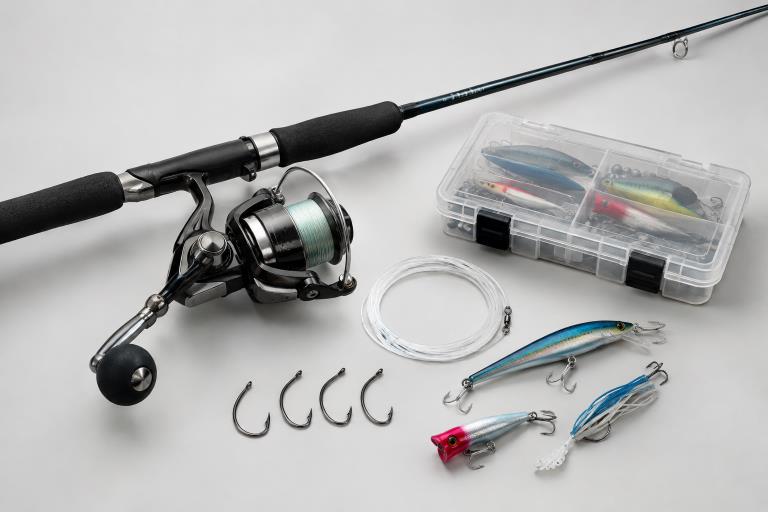
Rod power describes how much force is needed to bend the rod, while action describes where the rod bends most readily. Together, those qualities affect casting, lure control, hook-setting, and how well the setup absorbs sudden runs. Spinning gear is often convenient for casting and lighter presentations, while conventional gear is commonly used for trolling, deep dropping, and heavier bottom fishing.
Line, leader, hooks, and drag settings should work as a system. A reel needs enough capacity for the expected depth and fish size, while the leader should suit the fish, structure, and abrasion risk. Test knots, inspect guides, and make sure the drag operates smoothly before leaving the dock.
- Choose the target species and likely fish size.
- Select the fishing method and expected depth.
- Match the rod, reel, line, leader, hooks, and lure or bait.
- Check the full setup, including knots and drag, before departure.
Use Weather and Water Data Before Launch
Review wind speed and direction, wave forecasts, thunderstorms, visibility, and current before making a final go or no-go decision. Check marine weather forecasts more than once, particularly when the trip involves open water or a long distance from the inlet. Compare the forecast with the boat’s capability, the crew’s experience, and the time needed to return.
Tides and currents matter as well. They can change drift speed, influence where bait gathers, and affect how effectively anglers can hold bottom. If conditions worsen after departure, turning around early is usually a better decision than waiting until the ride home becomes difficult.
Build a Simple Boat Safety Plan
Every trip should include properly sized personal flotation devices, reliable communication, navigation tools, first-aid supplies, emergency lights, and a way to signal for help. Share a float plan with a trusted person onshore. Include the launch location, intended fishing area, names of people aboard, expected return time, and a contact number.
Pre-Departure Boat Check
- Confirm fuel level, engine condition, battery charge, and bilge-pump operation.
- Test navigation lights, VHF radio, and other communication devices.
- Check the anchor, rode, fire extinguisher, and signaling equipment.
- Bring drinking water, sun protection, snacks, spare clothing, and motion-sickness supplies when needed.
- Store extra leaders, hooks, swivels, tools, batteries, and small repair items in waterproof containers.
Check Fishing Rules Before the Trip
Fishing regulations can vary by state, region, species, season, and fishing zone. License requirements, size limits, bag limits, vessel limits, closures, and reporting rules may all affect the day’s plan. Before departure, review the applicable rules and keep a measuring device aboard. The guidance for sustainable saltwater recreational fisheries also reflects the importance of protecting access and fish populations over the long term.
Do not rely on an old regulation card, a social-media post, or last season’s experience. Confirm the rules that apply to the exact waters and species you intend to fish, then adjust the plan if the harvest opportunity has changed.
Protect the Catch and the Fishery
Handle fish intended for release with wet hands when possible, keep them in the water or supported properly, and minimize air exposure. Use hooks and release tools suited to the method so fish can be returned quickly. Protected or undersized fish should be released as soon as practical.
For fish that may be kept legally, have ice and storage ready before the first catch comes aboard. Keep the catch cold, maintain a clean fish box, and bring all line, bait packaging, plastic, and other waste back to shore.
A Practical Pre-Trip Checklist
- Confirm the target species, backup option, and fishing method.
- Review current regulations and harvest limits.
- Check marine weather, tides, current, and return conditions.
- Inspect the boat, motor, fuel, safety equipment, and communication tools.
- Pack matched tackle, food, water, sun protection, and backup supplies.
- Share the float plan and set a clear check-in or return time.
Common Planning Mistakes to Avoid
- Leaving without a current marine forecast.
- Choosing tackle only for maximum strength instead of the fishing method.
- Using outdated regulations or failing to measure a fish properly.
- Ignoring fuel range, travel time, or changing sea conditions.
- Forgetting backup communication, repair gear, or drinking water.
- Waiting too long to head back when conditions deteriorate.
Conclusion
A smarter saltwater fishing plan begins before launch. Match the gear to the trip, keep a close watch on conditions, verify the rules, inspect the boat, and prepare for small setbacks. That preparation creates more confidence on the water while helping protect the crew, the equipment, and the fishery.