Many households are already aware of the dangers of a potential home fire. However, it is not enough to rely on just one smoke alarm placed away from the most common fire areas. It is not enough to ensure that you have adequate home fire protection, which means having the correct type of alarm in the high-risk rooms. Unfortunately, three rooms in a typical UK household are often incorrectly protected.
The kitchen: covered by nothing, or covered by the wrong thing
Cooking fires cause more house fires in the UK than anything else, yet the room where they happen most often is the room almost everyone has deliberately gone without detection. You ask people why, and they nearly always say something like: I had a smoke alarm in the hall once, but it kept going off every time I made toast so I took the battery out. Or words to that effect.
It is a rational reaction to the wrong kind of alarm. Smoke alarms use a photoelectric sensor that responds to smoke particles, and as any cook will tell you, normal cooking generates plenty of those, which is why your smoke alarm goes off every time you fry, grill or roast something. The right response is not to abandon detection in the kitchen – that’s where most fires start – but to use a different type of alarm. A heat alarm responds to a rapid rise in temperature rather than the presence of smoke or steam and therefore won’t go off every time you cook, but will still give you an immediate warning if a pan fire or an electrical fault does start to burn.
Bedrooms: closed doors buy time for smoke, not for you
Many home fires turn deadly in bedrooms. Not because people ignore the risk, but because they’re asleep and the fire starts somewhere they can’t see it. Phone chargers, laptops left charging overnight, and electric blankets are common culprits.
Here’s the part most people don’t think about: a closed bedroom door is good for containing fire and smoke temporarily, but it also delays detection. If your only alarm is in the hallway, smoke has to build up enough to seep under or around that door before the hallway unit even notices something’s wrong. By that point, a fire that started small can be well established. In-room detection in bedrooms closes that gap, giving occupants warning minutes earlier than relying on a hallway alarm alone.
Escape routes: present, but badly placed
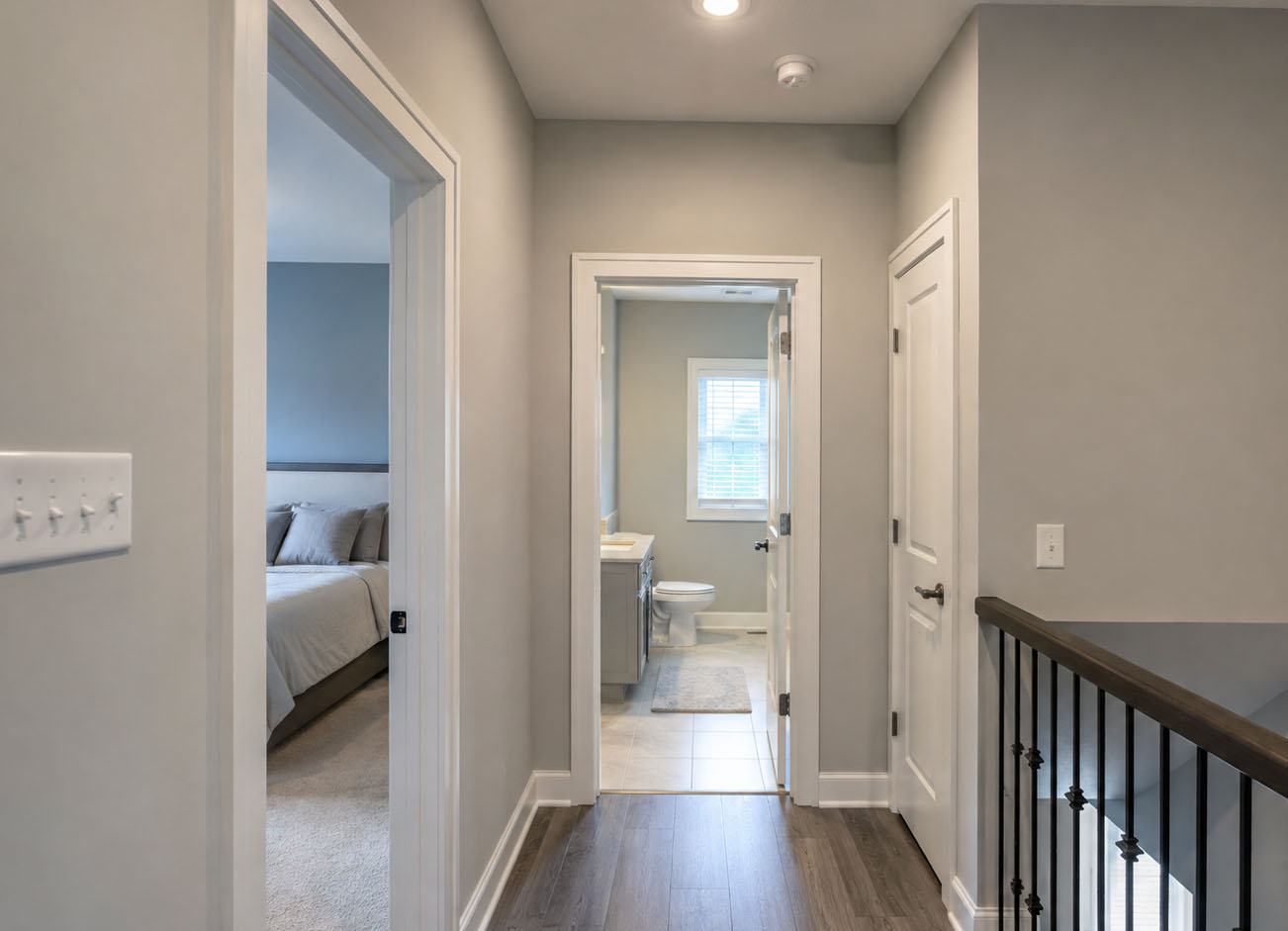
Hallways, landings, and stairwells are actually the places where most of us have a fire alarm. The problem is that a single alarm installed in a corner of a hallway, too close to the kitchen doorway, or at the top of the stairwell where airflow can easily disrupt its sensor, isn’t fulfilling its potential.
LD1, LD2, and LD3 are the three categories set out in BS 5839-6, the British Standard that governs fire detection and fire alarm systems in dwellings. They describe incremental levels of coverage, from minimum protection throughout the property up to full zoned detection across every significant risk area. Detectors need to be ceiling-mounted, positioned away from walls, corners and air vents, and sited so they actually catch smoke on its way through an escape route rather than missing it because of poor airflow near a wall.
Why one alarm per floor still isn’t enough
Placing a smoke alarm on each floor is a good recommendation, but it is not equivalent to adequate coverage. Smarter protection involves breaking the home down into risk-based zones: kitchen, sleeping areas, and circulation spaces. Each of these requires protection designed for that specific risk, meaning the sort of detection that functions best for that particular area, plus devices sounding together and not a single generalist unit working too hard on the wrong part of the home.
For instance, kitchens need heat alarms because cooking fumes can accidentally trigger a smoke sensor but won’t set off a heat alarm. By contrast, bedrooms and hallways work better with a smoke alarm. Cabling them all together is what actually turns them into a system, rather than separate alarms, with the multiplier effect of every one going off when any single device detects a fire. That interconnection matters most in multi-storey homes – if a fire starts in a ground-floor kitchen at night, an alarm on that floor won’t wake anyone sleeping two storeys up unless every device is linked to sound together.
Getting it checked
If you’re unsure what your current setup does and doesn’t cover, in most areas a fire service home safety visit is both free and will provide a pro’s evaluation of your existing alarms, where they are, and where you might be falling short. Also, CO is a different risk to fire – CO alarms do not detect smoke, they detect gas, so they do not replace detection in any of the above three areas.
The government’s long-standing Fire Kills campaign, used by fire & rescue services up and down the country, including the LFB, says you’re at least four times as likely to die in a house fire if you don’t have a working smoke alarm. That stat assumes there is a working alarm somewhere in the property. It doesn’t tell you whether that alarm is the right type, in the right location, or part of an interconnected system. Coverage isn’t a single device doing its best – it’s the whole system working together, in the rooms where fire is actually most likely to start.