Key Takeaways
- Commercial doors require regular attention because they handle heavy loads and repeated use.
- Minor defects can become safety risks, access problems, and costly downtime.
- Inspections should cover hardware, tracks, springs, cables, controls, seals, and safety devices.
- Maintenance records help teams identify repeat failures and plan repairs responsibly.
- Consistent care can support safer, more reliable, and more energy-conscious operations.
A commercial garage door is more than an entrance. It supports deliveries, fleet movement, loading activity, storage access, security, and employee traffic. Reviewing the available options at https://easeconstructionllc.com/commercial-garage-doors/ can also help facility teams understand which door styles and features best fit their daily operating demands.
When a door fails, the disruption can extend well beyond the opening itself. Delayed shipments, blocked vehicles, unauthorized access, weather exposure, and unsafe workarounds can all affect the facility. A planned maintenance program helps teams catch developing problems before an urgent repair interrupts operations.
Why Maintenance Matters
Garage door maintenance is part of practical facility management. A working door keeps goods, vehicles, and people moving through the building as intended. The U.S. Department of Energy notes that effective operations and maintenance can improve reliability, safety, and energy efficiency. For a busy commercial property, that means maintenance should be treated as a planned operating task rather than an occasional response to a breakdown.
Common Safety Risks to Watch
Commercial doors contain moving parts, electrical controls, and counterbalance components that can become dangerous when worn or damaged. During normal walkthroughs, watch for broken or stretched cables, worn springs, loose brackets, bent tracks, cracked rollers, damaged panels, blocked travel paths, and unusual grinding or shaking. Employees should never adjust springs, cables, drums, or other high-tension parts without the correct training, tools, and authority.
The Commercial Garage Door Inspection Checklist
Visual Condition
- Look for dents, cracks, corrosion, loose sections, or damaged framing.
- Confirm the door sits evenly when fully closed.
- Check that warning labels, controls, and operating instructions remain visible.
- Inspect the wall and floor around the opening for impact damage or water intrusion.
Tracks, Rollers, Hinges, and Hardware
- Look for bent tracks, gaps at track joints, or loose mounting brackets.
- Listen for noisy, worn, or cracked rollers during operation.
- Check hinges, bolts, and fasteners for looseness or unusual movement.
- Keep pallets, vehicles, waste, and stored materials out of the door’s travel path.
Springs, Cables, Operators, and Safety Devices
- Look only for visible fraying, rust, gaps, or imbalance in cables and springs.
- Test approved wall controls, remote controls, emergency release features, and stop functions.
- Make sure photo eyes are clean, aligned, and free of obstructions.
- Remove the door from service if it will not stop, reverse, or close safely.
Seals and Weather Protection
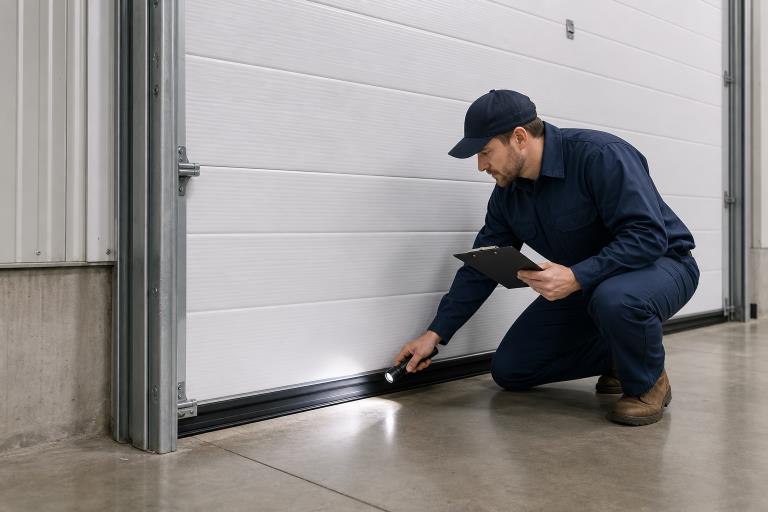
- Inspect bottom, side, and top seals for cracks, compression loss, and visible gaps.
- Look for daylight, drafts, water entry, pest access, or debris collecting near the threshold.
- Arrange a replacement when damaged seals no longer provide a dependable seal.
How Often Should Doors Be Serviced?
No single schedule works for every building. A low-use storage door has different needs than a warehouse or fleet garage door that cycles throughout the day. Service frequency should reflect opening cycles, door size and weight, age, repair history, weather exposure, dust, moisture, corrosive conditions, and the manufacturer’s guidance.
- Daily:Check for visible damage, obstructions, unusual sounds, and unsafe movement.
- Monthly:Review hardware, tracks, seals, controls, and the area around the opening.
- Planned service intervals:Have qualified personnel perform detailed testing, lubrication, adjustment, and documentation.
Maintenance, Air Loss, and Building Efficiency
Gaps around a door can allow conditioned air to escape and outdoor air, moisture, and contaminants to enter. Bottom seals, misaligned panels, poor closing performance, and slow operators can all contribute to unnecessary air loss. Maintenance alone will not solve every efficiency issue, but it supports better results when combined with sensible loading procedures, traffic planning, insulation, and door-use controls.
Why Service Records Matter
A simple service log turns scattered observations into useful maintenance information. Record the inspection date, door location or asset number, inspector name, visible defects, photos, temporary safety actions, completed repairs, and recommended follow-up date. A shared digital form, spreadsheet, or facility management system can reveal repeat failures and help leaders budget before a door becomes an emergency replacement project.
Repair or Replace? Key Questions to Ask
A focused repair may be the right choice when the problem is limited to a replaceable component and the panels, frame, tracks, and operator remain sound. Replacement deserves consideration when repairs recur, parts are difficult to obtain, the door no longer matches current traffic demands, or safety and performance concerns continue. Compare long-term ownership costs, downtime risk, service calls, energy loss, and expected useful life instead of choosing solely by the lowest immediate quote.
Staff Training and Safe Daily Use
Even a well-maintained door can become unsafe when people bypass safe operating practices. Staff should keep people and equipment clear of the travel path, avoid walking or driving beneath a moving door, report unusual sounds immediately, and never defeat sensors or safety controls. OSHA has identified material handling, walking surfaces, egress, and fire protection as important warehouse safety concerns, all of which can be affected by a poorly managed loading area.
Common Questions About Commercial Garage Door Care
Can employees perform basic inspections?
Yes. Employees can complete visual checks, keep the opening clear, and report problems. Mechanical repairs and high-tension adjustments should be left to qualified service personnel.
What does a grinding sound mean?
Grinding may indicate worn rollers, track problems, loose hardware, or operator strain. Schedule an inspection before continued use causes a larger failure.
Should an off-track door be used?
No. Keep people clear, stop using the door, and arrange professional service. Continued operation can worsen damage and create a serious hazard.
Final Checklist for Facility Managers
- List every commercial garage door and assign an asset number.
- Track use level, age, repair history, and known issues.
- Complete routine visual and operational checks.
- Inspect seals and closing performance.
- Schedule qualified service for mechanical, electrical, or safety-control concerns.
- Train staff to operate doors safely and report defects promptly.
- Review records regularly and plan repairs before they become urgent.
Commercial garage door maintenance may seem like a small part of facility management, but it affects access, safety, security, energy use, and workflow. A consistent checklist replaces guesswork with a repeatable process that protects both people and daily operations.