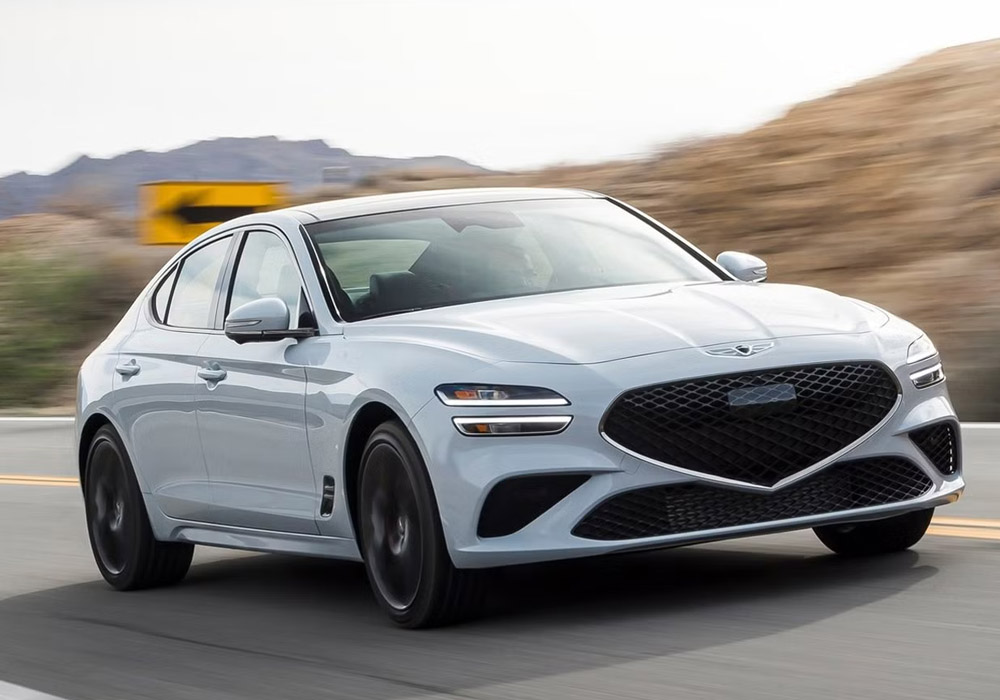
The reason why cars appear old is not that their design has become obsolete. Rather, it is due to the gradual wear and tear, such as swirl marks on the paint, yellowing of the headlight lenses, fading trim, and a visible registration plate showing the year of production. All these age indicators can be easily eliminated step by step, without having to repaint the car or buy a new one.
Why Cosmetic Upkeep is Worth Taking Seriously
Cars that receive regular washing and maintenance often don’t look like they need as much as they actually do. But one unseen layer of grime can be hiding another, brightwork can quickly become off-white, and some persistent contaminants will, without you knowing, have embedded themselves deeper in your paint. Meaning your car is never going to look as good as it could, even when you give it a thorough wash.
Start With Proper Paint Decontamination
Most individuals believe that washing their car is enough to clean it, but in reality, it’s not.
While a typical wash removes dirt from the surface, it does not eliminate bonded contamination. These include iron particles from brake dust, tar spots, tree sap, and industrial fallout, all of which have lodged into the clear coat. These particles reflect light differently, giving the paint a dull and exhausted look, regardless of the car’s actual color.
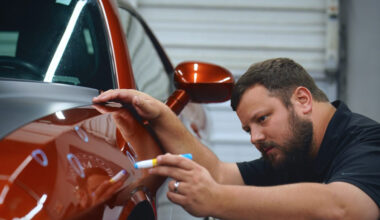
Decontaminating the surface properly requires a three-step process. First, apply an iron fallout remover which is a chemical that reacts with ferrous particles and dislodges them from the surface. Second, use a tar and adhesive remover to get rid of road contamination that the fallout spray wouldn’t be able to dissolve. Third, clay bar or detailing clay the surface of every painted panel while it’s lubricated. The clay will remove anything that is still sticking to the clear coat, leaving you with paint that is truly shiny and smooth.
This step makes the foundation. Any wax, sealant, or coating that you put on contaminated paint will be wasted on the compromised surface.
Remove the Age Indicator From the Registration Plate
This is one of the more subtle visual aging factors, but it’s instantly recognizable once you become aware of it.
Most registration systems around the world have the year of manufacture as part of the plate itself. In the UK, that two-digit age identifier in the middle of a standard plate means that whoever glances at it knows exactly the year your car was registered. It’s the vehicular equivalent of a timestamp. A dateless or personalized plate removes that information from the outside of the vehicle entirely, meaning you can de-age your vehicle with a private plate in a manner that no amount of elbow grease, or vehicular detailing can replicate. A fresh and clean car with a private plate is honestly trickier to age on sight.
It’s not a superficial trick in the conman sense, just presenting the vehicle as what it is, rather than when it is.
Use Machine Polishing to Eliminate Swirl Marks
Machine polishing is the one single intervention that can make your old paint look amazing.
Swirl marks are practically invisible to the naked eye but their impact on your paint isn’t. Poor washing technique, automatic car washes and rough cloths are the usual culprits. They leave the surface covered in thousands of tiny scratches that look like cobwebs in direct sunlight or under artificial light. They’re most often described by customers as ‘dull paint’, but they don’t know why.
A dual-action polisher with the right cutting compound will remove a carefully measured minimal layer of clear coat to leave the surface level a fraction of a millimeter below those scratches. This is paint correction done right, and it leaves a depth and gloss on old automotive paint that you’d swear was fresh off the factory floor. A detailer doing this properly on a full-sized car will spend 6-8 hours on this stage alone.
Don’t be tempted to miss out the decontamination stage before you start polishing either. Those polishing pads will push any embedded particles into the paint instead of removing them if you do.
Seal Corrected Paint With a Modern Coating
Once we’ve corrected the paint, how we protect it is what keeps all that hard work looking pristine. Traditional carnauba wax is sacrificial, meaning that the sun and road wash it away, and typically, it lasts weeks rather than months. It offers limited UV protection and isn’t much of a long-term solution.
Ceramic coating, by contrast, is a liquid polymer that chemically bonds with the factory clear coat to become one, slick, hydrophobic surface. Water, road grime, and the UV can’t split them up. A well-applied ceramic coating can last two to five years, depending on the product and the aftercare regime. For all the reasons above, ceramic coating is the choice solution for a car that’s staying with you for the long run.
For the areas that take a pounding, bonnet leading edge, front bumper, mirror housing, Paint Protection Film (PPF) offers ceramic coating a level of physical protection it can’t reach. PPF is a clear polyurethane film that absorbs stone chips, the main enemy of any paint, and resists the kind of micro-abrasions that eventually make your paint look pitted. The two technologies are typically married together, with PPF employed on the most vulnerable zones and then the ceramic coating going over the top.
Restore Headlights and Upgrade the Lighting Signature
Clouded and yellowed headlight lenses are a clear indicator of an aging car. The polycarbonate lenses used by manufacturers break down over time from UV exposure, causing them to become yellow and cloudy. Not only does this make the entire front of the car look unkempt no matter how good the paint is, but it also diminishes the effectiveness of the headlights.
Wet-sanding the lenses, using progressively finer grits from 800 to 3000, abrades away the oxidized outer layer, before a machine polish is used to improve clarity, ready for sealing with a UV-stable clear coat. This process prevents the dreaded oxidation from returning and, when carried out correctly, will see the lenses looking like new at a mere fraction of the cost you’d pay for brand-new units.
As the headlights are addressed, consider adding to the overall effect by switching out halogen bulbs for modern LED conversion kits where this is permissible under the relevant road codes. LEDs produce a crisper, whiter light than the warm yellow cast of old halogens, and it’s one that immediately reads modern. It changes the appearance of the front of the car during the day and when illuminated at night.
Tackle Faded Trim and Rubber Seals
Grey, chalky exterior plastic trim ages a car considerably. Bumper surrounds, mirror housings, door handles, and body cladding all tend to fade from their original deep black to an uneven grey as UV exposure depletes the surface pigment.
The mistake most people make is reaching for a silicone-based tyre dressing or general purpose spray to darken them back up. These work briefly and then fade within days, leaving the plastic streaky and uneven. Dedicated trim restorers work differently, they penetrate the plastic and chemically restore the pigmentation from within rather than sitting on the surface. The results last months rather than days, and the finish looks uniform rather than artificially shiny.
Rubber door seals and window surrounds are worth treating at the same time. Dried-out rubber turns chalky and can start to crack, which both looks worn and reduces how tightly the door sits in its frame. Wipe down the rubber with a damp cloth to get rid of any loose particles and dust, then apply a silicone-based conditioner to keep it soft and supple. Repeat this every month or so for optimum results.
Refurbish or Upgrade the Wheels
Curbed alloys and corroded rims are immediate visual damage. A car can have perfect paint and still look neglected if the wheels are scuffed and pitted.
Professional powder coating is the most durable refurbishment route for alloy wheels. The process involves stripping the wheel to bare metal, applying the powder coat electrostatically, and curing it under heat to form a hard, even finish. The durability exceeds what factory lacquer offers, and the option to choose a modern finish, gunmetal, satin black, anthracite, means the wheels can be updated rather than simply restored. On older vehicles especially, a wheel colour change can shift how contemporary the car reads without changing anything structural.
Modernize the Cabin’s Technology
You can tell a lot from a car’s exterior. But then you get inside and spot a factory head unit with a CD player and a tiny static screen, and the vehicle is dated in a different way.
One of the most high-impact, low-hassle interior upgrades you can make is to retrofit an aftermarket double-DIN head unit that supports Apple CarPlay or Android Auto. Installation is usually relatively easy on older cars, and the result is a dashboard interface that behaves just like your smartphone. It’s a lot easier to interact with your navigation, media, and calls when you’re using a system that’s just a few months old instead of a few years old.
Get that installed, and give the interior a proper deep clean. The steering wheel, gear shifter, and seat bolster get covered in body oils and friction wear, which is what the car world means when it describes a car as “tired”. Use leather or fabric cleaners as needed, and then apply a conditioner where appropriate. The result should have a similar matte or textured finish as the rest of the interior. The car feels used but not worn, the exact sweet spot you’re after.
The Practical Case For Keeping a Vehicle Looking Current
None of these things necessitate a total respray or substantial mechanical outlay. The majority are subtractive rather than additive insofar as they are removing damage and degradation, not troweling on something fake. A car that has been decontaminated, polished, protected, and properly treated in terms of lighting and trim can look half its age with no components having been swapped out. In a world where the price of a new car keeps going up, that’s not an insignificant outcome.