Defining the Modern Golf Course Experience
For many of us, golf is more than just a game; it’s an immersive journey that combines athletic challenge with the beauty of nature and camaraderie. The allure of the perfect shot often intertwines with the intricate tapestry that defines the entire golf course experience. But what truly elevates a round from merely good to absolutely unforgettable? And how can understanding these elements not only deepen our enjoyment but also provide invaluable insights for our training and mental game?
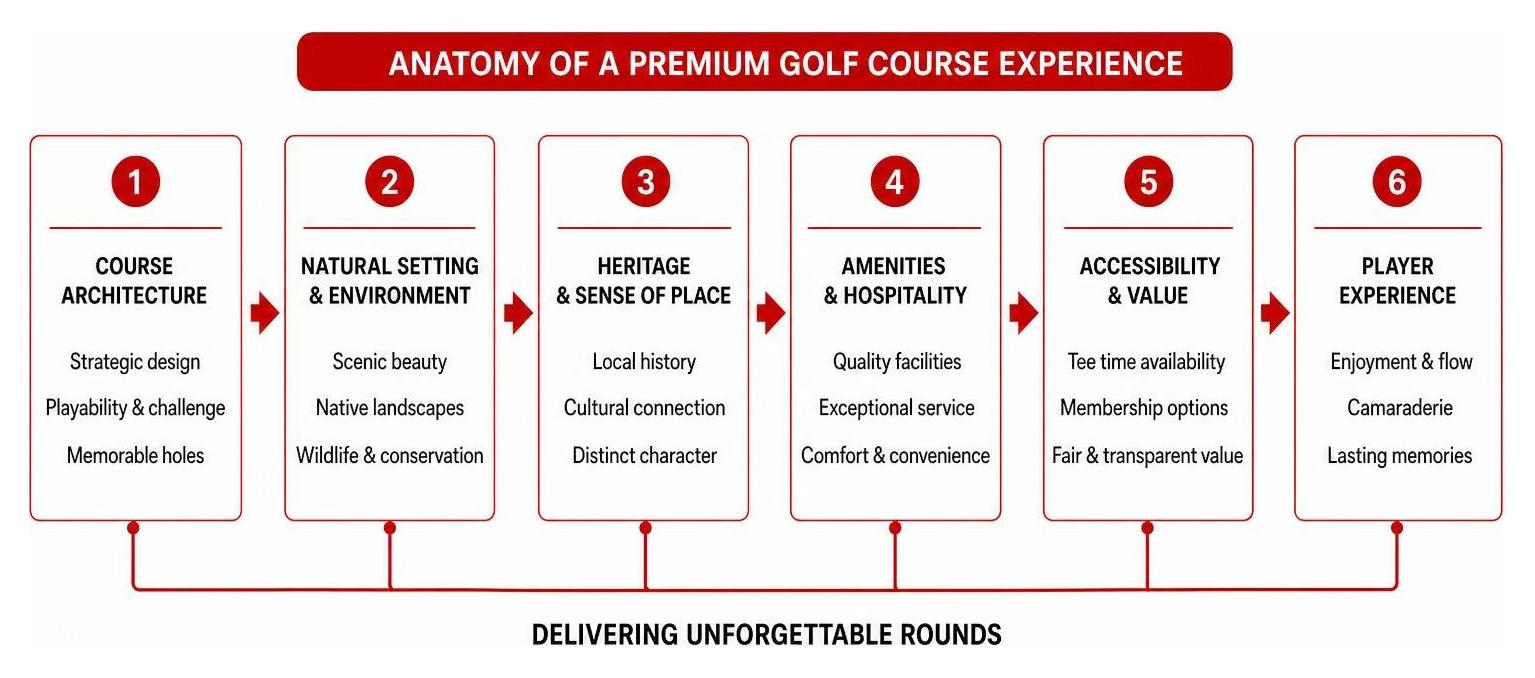
We believe that a truly exceptional golf experience extends far beyond the quality of the greens and fairways. It encompasses everything from the strategic design philosophy of the course architects to the thoughtful amenities that cater to every player’s needs. Whether we are planning a bucket-list trip to a world-renowned resort or enjoying a casual outing at a local public golf course, the details matter.
We will delve into the multifaceted components that shape the modern golf course experience. We will explore how various destinations balance exclusivity with accessibility, the crucial role of amenities and hospitality, and how course architecture impacts player enjoyment. Furthermore, we will examine the subtle yet profound influence of natural landscapes and local history in creating a distinct sense of place, ultimately guiding us toward more rewarding rounds and more effective training strategies.
Beyond the pristine fairways and manicured greens, a truly unique golf course experience is often defined by its seamless integration with the surrounding environment and a compelling narrative. Top destinations understand that a golf course isn’t just a playing field; it’s a canvas upon which nature, history, and architectural brilliance converge.
Consider Big Cedar Lodge in Ridgedale, Missouri, which has earned accolades like “America’s Best Golf Resort” by USA TODAY readers. Its “America’s Nature Golf” philosophy means courses like Payne’s Valley and Ozarks National are designed with the explicit goal of highlighting the local natural topography, rather than imposing upon it. This approach creates a distinct sense of place, allowing golfers to feel connected to the Ozarks landscape. Similarly, Breckenridge Golf Club in Colorado, playing at over 9,300 feet in elevation, leverages its stunning mountain environment and rich gold mining history. Features like historical rock piles, known as ‘tailings,’ are preserved as course elements, and the club actively participates in the Audubon Cooperative Sanctuary Program, protecting local wildlife like moose and elk. This blend of natural beauty, historical context, and environmental stewardship elevates the experience beyond just the game. Nauka Golf Club, spanning 920 acres with over four miles of Pacific coastline, offers another example of how a course can be deeply rooted in its natural setting, with Tom Fazio himself calling it one of the best courses he’s ever built.

Balancing Exclusivity and Accessibility in Golf
The golf world often presents a dichotomy between ultra-exclusive private clubs and more accessible public courses. However, many destinations are finding innovative ways to balance this, offering a taste of luxury to a broader audience while maintaining the allure of exclusivity.
For instance, Cabot Saint Lucia, ranked highly on Golfweek’s 2025 list of Top 100 International Courses, operates as a private, members-only club where membership typically requires property ownership. Yet, they offer a limited number of special booking opportunities for non-members, albeit at a premium green fee of $750 US. This allows a select few to experience its world-class Coore & Crenshaw design. Firestone Country Club in Akron, Ohio, a venue steeped in professional golf history, also opens its doors to non-members through curated “Stay & Play” packages, providing access to its legendary courses and club amenities.
On the other end of the spectrum, public courses like Victory Links Golf Course in Blaine, Minnesota, designed by PGA TOUR Design Services, offer championship-level links-style golf that is widely accessible. It caters to all skill levels with yardage options from 2,834 to over 7,000 yards and even provides adaptive carts for golfers with mobility challenges. This demonstrates a commitment to inclusivity, proving that a high-quality golf experience doesn’t always require private club membership. The key is often in how destinations structure their offerings, whether it’s through guest access, resort packages, or dedicated public facilities, to ensure varied levels of engagement.
The Impact of Course Architecture on Player Enjoyment
Course architecture is the silent storyteller of a golf round, dictating strategy, challenging skills, and shaping emotional responses. The philosophy behind a course’s design significantly influences player enjoyment, moving beyond mere difficulty to create memorable experiences.
Reversible courses, for example, offer a fascinating innovation. Forest Dunes in Roscommon, Michigan, boasts North America’s only truly reversible golf course, The Loop, designed by Tom Doak. Utilizing the same 18 greens and fairways, it features two distinct routings played in opposite directions on alternate days. This means golfers can experience the same landscape from entirely different perspectives, demanding fresh strategies and enhancing replayability without requiring double the land.
The distinction between strategic and penal design also plays a crucial role. Strategic courses, like those designed by Alister MacKenzie (such as Cypress Point), offer multiple routes to the hole, rewarding thoughtful play and course management. They encourage players to consider angles, hazards, and the natural contours of the land. In contrast, penal designs often punish slight misses severely, demanding precision above all else. While both can be challenging, strategic courses tend to foster a deeper sense of engagement and satisfaction, as players feel they have outwitted the course rather than simply survived it. The Lido, a legendary C.B. Macdonald design recreated at Sand Valley by Tom Doak and Brian Schneider, is another example of a strategic masterpiece, where blind shots and subtle contours necessitate local knowledge and thoughtful execution. These architectural nuances are fundamental to creating a truly rich and enjoyable golfing journey.
Elevating the Round: Premium Amenities and Services
An outstanding golf experience extends beyond the 18 holes, encompassing a suite of amenities and services designed to enhance comfort, convenience, and overall satisfaction. From the moment we arrive until we depart, thoughtful touches can transform a good round into an exceptional one.
Comfort stations, caddies, and practice facilities are often hallmarks of a premium golf destination. At Cabot Saint Lucia, the $750 green fee includes a pre-round massage, range time, a cart, a caddie, and all-you-can-eat-and-drink stations on the course—even a beach bar. This all-inclusive approach removes friction and allows players to fully immerse themselves in the experience. Big Cedar Lodge also prioritizes comprehensive amenities, offering caddie services and practice facilities included with tee times, alongside diverse putting courses. Nauka Golf Club takes this further with luxurious comfort stations like “The Nest” and “La Panga,” which offer high-end culinary experiences directly integrated into the course routing, intentionally slowing down play for leisure and enjoyment.
Beyond the course, non-golf activities also play a vital role, especially at resort destinations. Whether it’s access to spas, fine dining, or other recreational pursuits, these offerings cater to diverse interests and ensure that companions or family members who aren’t golfing can also have a memorable stay. This holistic approach to hospitality is key to player satisfaction and encourages longer, more enriching visits.
How Technology and Training Refine Your Golf Course Experience
Modern technology has revolutionized how we experience and prepare for a round of golf, contributing significantly to game improvement and overall enjoyment. From on-course aids to advanced training tools, these innovations are shaping the future of the sport.
Many contemporary golf carts now feature GPS displays, providing precise yardages, course layouts, and even pace-of-play monitoring. Victory Links Golf Course, for instance, equips its electric carts with 7-inch displays, enhancing navigation and strategic decision-making on the course.
Off the course, practice facilities are increasingly incorporating high-tech solutions. Nauka Golf Club’s premium practice areas include launch monitors and tour-quality golf balls, offering invaluable data for swing analysis and game refinement. For those looking to hone their skills regardless of weather or location, indoor golf simulators provide a realistic and data-rich environment. These simulators allow golfers to play virtual rounds on world-famous courses, practice specific shots, and receive instant feedback on clubhead speed, ball launch, spin, and carry distance. This blend of technology on and off the course allows us to better understand our game, make more informed decisions during a round, and continually work towards improvement.
Furthermore, understanding how environmental factors, such as high altitude, affect play is crucial. At Breckenridge Golf Club, playing at over 9,300 feet, the thinner air means the ball travels further, requiring adjustments in club selection. Technology can help predict these changes, but experience and a caddie’s local knowledge remain invaluable.
The Role of Hospitality and Culinary Offerings at the Turn
The “turn” – the transition between the front and back nine – is a critical moment for hospitality, offering an opportunity to refresh players and enhance their overall experience. Thoughtful culinary offerings and welcoming halfway houses can significantly impact player satisfaction and even pace of play.
Top resorts understand that convenience and quality at the turn are paramount. Big Cedar Lodge, for example, offers complimentary hot food and drinks, including their famous bison dogs, to keep players energized. This not only delights golfers but can also subtly improve pace of play by reducing the need for lengthy stops. At Nauka Golf Club, the comfort stations like “The Nest” and “La Panga” are destinations in themselves, offering gourmet food and beverages, including signature items like the “Burgerdilla.” These aren’t just quick stops; they are designed as leisure points where golfers can relax, socialize, and savor the experience, often intentionally slowing down the pace of play for a more relaxed round.
Cabot Saint Lucia’s all-you-can-eat-and-drink stations and beach bar integrated into the course routing provide a similar luxury, allowing golfers to indulge without worrying about transactions. These culinary touchpoints, often featuring local cuisine and beverages, create a stronger sense of place and contribute significantly to the overall memory of the golf trip. They transform a utilitarian break into an integral part of the premium experience.
Comparing Golf Destinations: Resorts, Private Communities, and Public Courses
When planning a golf trip, understanding the distinctions between dedicated golf resorts, private club communities, and public daily-fee courses is crucial for matching expectations with reality. Each offers a unique experience tailored to different preferences and budgets.
Golf resorts, such as Big Cedar Lodge, typically offer comprehensive packages that include lodging, multiple courses, and a wide array of non-golf amenities like spas, dining, and family activities. They are designed for an all-encompassing vacation, often catering to groups and families. Private club communities, like Cabot Saint Lucia or Nauka Golf Club, are generally more exclusive, with membership often tied to property ownership. While they may offer limited guest access (sometimes at a premium), their primary focus is on serving their members with unparalleled luxury, service, and a strong sense of community. Public daily-fee courses, exemplified by Victory Links Golf Course, prioritize accessibility and affordability, offering quality golf to the masses. They may have fewer luxury amenities but often provide excellent course conditions and a welcoming atmosphere for all golfers.
Here’s a comparison of these different types of golf experiences:
| Feature | Golf Resort (e.g., Big Cedar Lodge) | Private Club Community (e.g., Nauka Golf Club) | Public Daily-Fee Course (e.g., Victory Links) |
|---|---|---|---|
| Accessibility | Open to all guests booking packages | Highly exclusive, often members-only; limited guest access via resort/invitation | Open to the general public, pay per round |
| Amenities | Extensive: multiple courses, lodging, dining, spa, family activities | Ultra-luxury: bespoke services, high-end dining, private facilities, concierge | Essential: pro shop, practice range, basic dining, cart rentals |
| Pricing | Package-based, can be high for all-inclusive | Very high green fees for guests; significant membership/property investment | Per-round green fees, generally more affordable |
| Community Feel | Vacation-oriented, transient guests | Strong, tight-knit member community, often multi-generational | Casual, diverse mix of local golfers |
| Focus | Holistic vacation experience, golf as a central activity | Exclusive lifestyle, privacy, personalized service | Accessible golf, good value, local engagement |
Family-Friendly Features and Multi-Generational Appeal
The modern golf destination increasingly recognizes the importance of catering to families and multiple generations, transforming golf trips into inclusive vacations. This shift is driven by a desire to broaden golf’s appeal and ensure its longevity.
Short courses and putting greens are at the forefront of this trend. Forest Dunes, for instance, offers a 10-hole par-3 course designed for relaxed, social play, complete with a casual dress code and music. This provides a fun, less intimidating environment for beginners, juniors, or those looking for a quick, enjoyable round after a championship experience. Big Cedar Lodge features the Tom Watson Putting Course and Top of the Rock Putting Green, which are engaging for all ages and skill levels.
Nauka Golf Club exemplifies the concept of “vertical membership,” where the entire experience, from course design to amenities, is explicitly crafted to welcome parents and children equally. Their 9-hole par-3 course, “The Booby Trap,” and relaxed dress codes encourage a family-first environment. Comfort stations at Nauka even offer unlimited free candy and ice cream, a detail that delights younger visitors. Palmetto Bluff also features family-friendly options like Crossroads, a reversible nine-hole course, demonstrating how flexible design can cater to diverse player needs within a family vacation. These offerings ensure that golf is not just an adult pursuit but a shared activity that builds lasting family memories.
Pricing Models, Packages, and Perceived Value
The way a golf experience is priced and packaged significantly influences its perceived value and exclusivity. Destinations employ various models to attract different segments of golfers, from luxury travelers to budget-conscious enthusiasts.
“Stay & Play” packages are a popular offering, particularly at resorts like Firestone Country Club. These bundles often include rounds of golf on championship courses, premium on-site accommodations, and access to club amenities. They provide a streamlined, often discounted, way for non-members to experience exclusive facilities. Firestone offers customizable options like “Buddies,” “Ultimate Buddies,” and “Champions” packages, catering to different group sizes and lengths of stay.
Green fees themselves vary wildly, reflecting the course’s prestige, location, and included amenities. Cabot Saint Lucia’s $750 US green fee, while high, includes a comprehensive luxury experience with caddie, massage, and all-inclusive food and drink, justifying its perceived value for many. Membership models, especially at private communities like Nauka, often involve significant property investment, granting exclusive access and a suite of personalized services.
Transparency in pricing and operations is also key to managing player expectations. Big Cedar Lodge, for example, clearly communicates its aeration schedules and offers “aeration recovery rates” for 10 days post-maintenance. This proactive approach ensures golfers are aware of course conditions and feel they are receiving fair value, even during maintenance periods. These varied approaches to pricing and packaging allow destinations to target specific markets while enhancing the overall perceived value of their golf offerings.
Overcoming Pain Points to Create Unforgettable Memories
Even at the most luxurious destinations, certain pain points can detract from the golf experience. Top resorts employ proactive strategies to mitigate these issues, ensuring that every round is as enjoyable and memorable as possible.
Common disappointments often revolve around pace of play, course maintenance, and customer service. A slow round can quickly sour an otherwise perfect day. Some resorts intentionally integrate leisure points, like Cabot Saint Lucia’s beach bar or Nauka’s lavish comfort stations, to encourage a relaxed pace of play rather than rushing golfers. This allows players to savor the moment, reducing the stress often associated with keeping up.
Regarding course maintenance, transparency is paramount. Big Cedar Lodge’s practice of openly publishing aeration schedules and offering discounted “aeration recovery rates” demonstrates a commitment to managing player expectations. This ensures that golfers are informed and feel fairly treated, even when courses are not in peak condition. Superior customer service, from knowledgeable caddies who can read greens and provide strategic advice (as seen at Cypress Point and The Lido) to attentive staff who anticipate needs, creates a seamless and positive experience.
Personal Connections and the Emotional Golf Course Experience
Beyond the technical aspects of the game, golf often fosters deep personal connections and evokes powerful emotions, transforming a trip from merely good to truly unforgettable. These emotional layers are what many golfers chase, making certain courses “bucket-list” destinations.
Playing a course with a rich history or one that holds personal significance can be incredibly moving. The author’s experience at Cypress Point, using his late father’s inscribed golf ball to honor him on the famous 16th hole, exemplifies this. Tossing the ball into the Pacific Ocean after a memorable shot transformed a world-class round into a profound, personal tribute. Similarly, celebrating a milestone, like a 40th birthday at Cabot Saint Lucia, imbues the experience with extra meaning, making every moment more vivid and cherished.
Group trips, especially those planned over years, like the one to The Lido at Sand Valley, build camaraderie and shared memories. These experiences are often defined not by the final scorecard, but by the laughter, stories, and challenges overcome together. As one attendee noted, “memorable golf trips are defined by moments, stories, and shared laughter rather than the final scorecard.” These emotional connections, whether personal tributes or shared adventures, are the true currency of an unforgettable golf course experience.
Proactive Strategies Resorts Use to Avoid Player Disappointment
Top-tier golf destinations employ a range of proactive strategies to ensure guest satisfaction and prevent common disappointments. These practices go beyond basic service to anticipate needs and enhance the overall value proposition.
One key strategy is transparent communication, particularly regarding course conditions and maintenance schedules. As mentioned, Big Cedar Lodge offers “aeration recovery rates” during the 10 days following maintenance, ensuring guests are aware of potential impacts on play and are compensated accordingly. This builds trust and manages expectations effectively.
Robust caddie programs are another critical element. At courses like Cypress Point and The Lido, mandatory caddies are not just for carrying bags; they provide invaluable local knowledge, help navigate blind shots, read challenging greens, and even offer psychological support. This personal guidance significantly enhances player enjoyment and reduces frustration on complex layouts.
Furthermore, a focus on service standards and guest feedback is paramount. From the moment of arrival, unexpected amenities like pre-round massages at Cabot Saint Lucia or signature welcome drinks set a hospitable tone. Relaxed dress codes at family-friendly clubs like Nauka, which prioritize comfort over rigid tradition, also contribute to a more welcoming atmosphere. By anticipating potential pain points and implementing thoughtful solutions, top resorts consistently deliver experiences that exceed expectations.
Frequently Asked Questions About the Golf Course Experience
Understanding the nuances of a golf course experience can help us better prepare and enjoy our rounds. Here are some common questions answered:
What makes a golf course experience truly unique and memorable?
A unique and memorable golf experience goes beyond course design to include seamless integration with the natural landscape, a compelling local history, exceptional hospitality and amenities (like comfort stations and caddies), and opportunities for personal or emotional connections. Architectural variety, such as reversible courses or strategic layouts, also plays a significant role.
How do private clubs balance exclusivity with public accessibility?
Many private clubs balance exclusivity by offering limited public access through “Stay & Play” packages, resort affiliations, or special event bookings. While membership often requires significant investment (sometimes including property ownership), these avenues allow non-members to experience the club’s amenities and courses, albeit often at a premium price.
Why are caddies and comfort stations so important to a premium round?
Caddies provide invaluable local knowledge, helping with club selection, reading greens, and navigating unfamiliar layouts, which significantly enhances strategic play and enjoyment. Comfort stations, especially those offering complimentary food and beverages, improve pace of play by reducing transaction times and allow golfers to relax and refuel, transforming a utilitarian break into a luxurious part of the experience.
How does high altitude affect golf course playability?
At high altitudes (e.g., 9,300+ feet at Breckenridge Golf Club), the thinner air causes golf balls to travel further. This requires golfers to adjust their club selection, typically using one less club for a given distance. It also impacts ball flight and spin, demanding a different approach to shot-making.
What is a reversible golf course and how does it work?
A reversible golf course, like The Loop at Forest Dunes, utilizes the same 18 greens and fairways but features two distinct routings played in opposite directions on alternate days. This innovative design offers players two entirely different strategic experiences from the same parcel of land, enhancing replayability and novelty.
What are the benefits of adding a short course to a golf resort?
Short courses (e.g., 10-hole par-3s) significantly enhance a golf resort’s appeal by providing a fun, fast, and casual environment for all skill levels. They are perfect for beginners, families, or experienced golfers looking for a relaxed extra round, helping to attract a broader demographic and extend play into evenings.
How do top resorts handle course maintenance without disappointing players?
Top resorts prioritize transparency by communicating aeration schedules in advance and often offering “aeration recovery rates” (discounted green fees) during the post-maintenance period. This manages player expectations, builds trust, and ensures golfers feel they are receiving fair value even when conditions aren’t pristine.
What is a vertical family membership in modern golf clubs?
A vertical family membership is a model adopted by some modern golf clubs, such as Nauka Golf Club, where the entire club experience—from course design and amenities to social activities—is explicitly designed to cater to multiple generations (parents, children, and even grandchildren). It fosters a family-first environment, often with relaxed rules and dedicated facilities for all ages.
How can indoor golf simulators prepare players for bucket-list courses?
Indoor golf simulators offer a powerful training tool by allowing players to virtually experience bucket-list courses, practice specific shots, and analyze their swing data in a controlled environment. This helps in understanding course layouts, identifying strategic lines, and refining technique, leading to better performance and confidence when playing the actual course.
What should golfers look for when booking a stay-and-play package?
When booking a stay-and-play package, look for clear inclusions (rounds of golf, accommodations, meals, amenities), customization options for group size and length of stay, transparent pricing, and information on any special features like caddie services or access to multiple courses. Also, check for reviews regarding hospitality and overall guest experience.
Conclusion
The golf course experience is a rich tapestry woven from diverse threads: architectural genius, natural beauty, historical resonance, impeccable service, and personal connection. From the strategic challenges of a reversible course to the luxurious comforts of all-inclusive amenities, every element contributes to an unforgettable journey. Understanding these components not only enhances our appreciation for the game but also empowers us to seek out experiences that truly resonate with our desires for enjoyment, challenge, and camaraderie.
Whether we are walking in the footsteps of legends at a historic club, immersing ourselves in nature at a mountain resort, or simply enjoying a well-maintained round at our local course, the pursuit of an exceptional golf experience is a continuous adventure. By focusing on the details that elevate a round from ordinary to extraordinary, we can ensure that every swing, every view, and every shared moment contributes to a deeper love for the game.
We encourage you to explore the vast world of golf, from championship layouts to family-friendly short courses, always seeking out those elements that make the experience uniquely yours. For those looking to enjoy a fantastic round locally, we invite you to Bandit Golf Club and book a tee time to discover a great golfing experience.