You’ve got a SaaS idea. Maybe it’s a dashboard tool, a scheduling app, or a niche B2B platform. The problem? Building a full prototype costs thousands of dollars and months of runway — resources most early-stage founders simply don’t have. That’s where smart visual validation comes in.
Mockups aren’t just pretty pictures. They’re decision-making tools. They help founders communicate vision to investors, gather real user feedback, and pressure-test assumptions before writing a single line of code.
Why Visual Validation Beats Code-First Development
The “build it and they will come” era is over. Modern SaaS founders know that ideas need market validation before development — not after. Visual mockups let you simulate the experience of using your product without the engineering overhead.
When Dropbox famously launched with just an explainer video showing a mockup of their interface, they collected 75,000 email signups overnight. That wasn’t luck — it was strategic visual communication proving demand before the product existed.
The principle still holds today. Investors respond to clarity. Users respond to visuals. And mockups bridge that gap.
How to Build a Validation Strategy Around Free Mockups
A lean validation workflow doesn’t need a design agency. It needs structure. Here’s a practical framework:
Step 1 — Define one core hypothesis. What’s the one thing your product must do well? Your mockup should demonstrate exactly that — not ten features, just one.
Step 2 — Choose the right device frame. A fintech dashboard lives on desktop. A fitness tracker belongs on mobile. The device context shapes how users emotionally respond to your design.
Step 3 — Use Free mockups to present your UI professionally. Drop your screen into a realistic device frame and suddenly your Figma concept looks like a shipped product — without a development team.
Step 4 — Test with real humans, not assumptions. Share mockup-based landing pages with five potential users. Watch where their eyes go. Ask what they’d click first.
Step 5 — Iterate fast. The beauty of mockups is zero-cost iteration. Change the layout, swap the color scheme, reframe the value proposition — in hours, not sprints.
Real-World Examples: Free Mockups in Practice
This is where theory meets business reality. Here’s how actual SaaS founders have used mockups as strategic tools:
- Landing page validation: A founder building a legal document automation tool created a mockup of the product dashboard and embedded it in a waitlist landing page. Within two weeks, they collected 340 signups — enough to justify a pre-seed raise. No backend. No login. Just a realistic interface mockup that made the product feel tangible.
- Investor deck visuals: A healthcare SaaS team replaced text-heavy slides with device mockups showing their patient portal UI. Response rates from angels increased noticeably because investors could immediately visualize the product — skipping the imagination gap.
- User interview props: One productivity startup printed mockup screenshots to use during in-person user interviews. Participants pointed at specific elements and gave feedback that reshaped the entire navigation structure before development began.
- Social proof before launch: A remote team tool used styled mockup compositions on their Twitter and LinkedIn pre-launch content. Engagement rates outperformed text posts by a significant margin — turning followers into early adopters.
Free Mockups on ls.graphics: Premium Quality Without the Price Tag
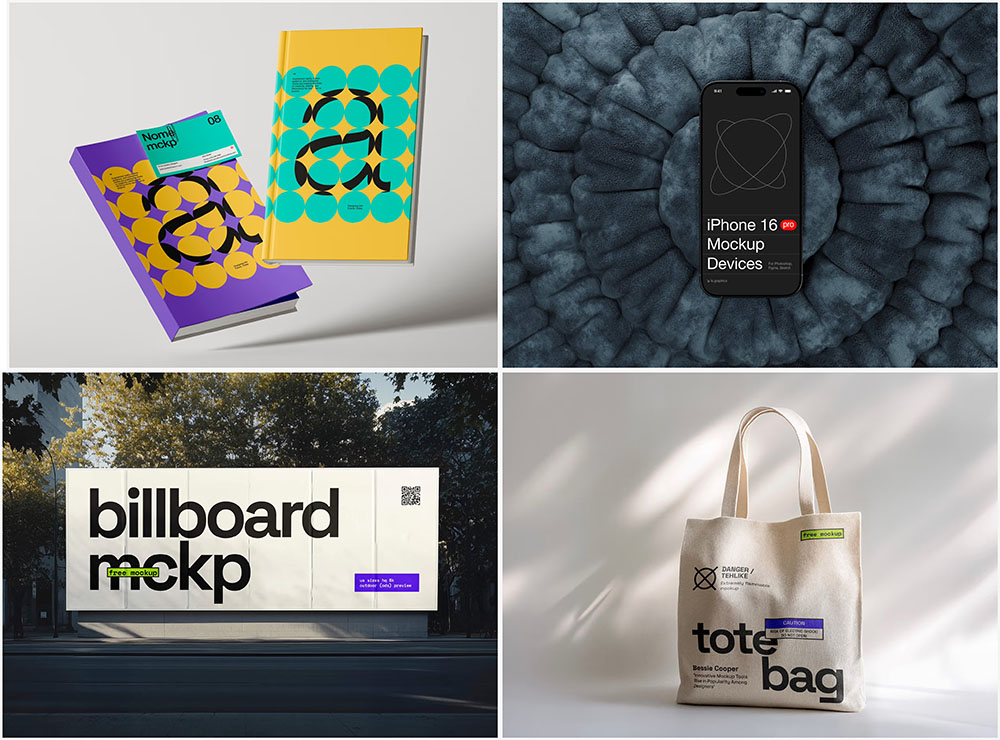
ls.graphics offers an exceptional library of free mockups that genuinely compete with paid alternatives. What sets them apart is the ultra-realistic rendering quality — scenes look like studio photographs, not template placeholders. Files come with organized, clearly labeled layers, making customization fast even for non-designers. You get multiple angles per product, different color styles, and stylish minimalist compositions that feel editorial rather than generic. The Edit Online feature lets you swap screens directly in the browser — no software required. With a large selection of free scenes spanning devices, packaging, branding, and lifestyle contexts, it’s an ideal starting point for any founder validating ideas on a tight budget.
Conclusion
Speed and resourcefulness define early SaaS success. Founders who validate visually — before building — make better decisions, spend less money, and pitch with more confidence. Free mockups are one of the highest-leverage tools in that arsenal.
Whether you’re preparing a landing page, crafting an investor presentation, or running your first user interviews, mockup-driven validation removes the guesswork. And with platforms like ls.graphics offering premium-quality assets for free, there’s genuinely no barrier left between your idea and its first real-world test.
Build less. Validate more. Ship smarter.