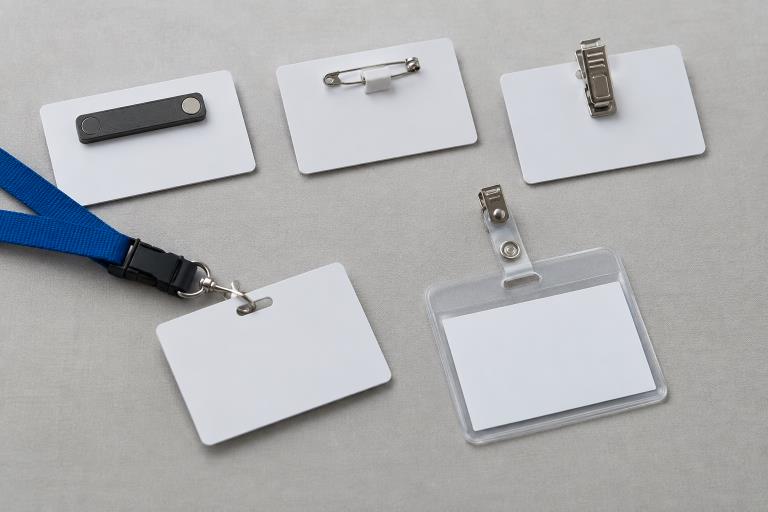
A name badge does more than display a person’s name. It can support introductions, customer service, visitor management, and workplace identification. Choosing the right attachment matters because it affects whether the badge stays readable, feels comfortable, protects the uniform, and fits the work being done. For teams that want a polished option without piercing fabric, magnetic name tags can be a practical starting point.
There is no single attachment that works best everywhere. A badge worn briefly at a conference has different demands from one worn through a busy restaurant shift, a hospital round, or a warehouse job. Clothing, movement, equipment, hygiene expectations, access-card use, and replacement needs should all guide the decision.
Why Attachment Choice Matters
The attachment determines where a badge sits, how easily it can be repositioned, and whether it remains flat enough to read at a glance. A poor choice can lead to twisted badges, damaged garments, frequent loss, or workers who stop wearing their badges because they are uncomfortable. In a customer-facing role, even a well-designed badge is less useful if it is hidden by a jacket lapel, turned backward, or constantly slipping.
It is also useful to consider the badge as part of the daily workflow. A visitor may only need a badge for a few hours, while an employee may need to wear it for an entire shift and remove it for laundering. Staff who repeatedly tap or scan an access credential need a setup that supports quick use. Teams that issue many temporary badges may prioritize fast distribution and simple return procedures.
The Main Name Badge Attachment Types
Magnetic Attachments
Magnetic attachments hold a badge in place without making holes in clothing. They are often a good fit for shirts, blazers, scrubs, and uniforms that should remain unpierced. Their main limitation is that thick layers or a jacket’s lapel can hide the badge, so testing with the real uniform is important.
Pin Attachments
Pin attachments are simple, familiar, and generally secure when placed through fabric. They can work well for durable uniforms and occasional-use badges. However, pins may leave small holes, making them a less appealing choice for delicate materials, premium clothing, or garments worn repeatedly in the same location.
Clips
Clips attach to a pocket edge, collar, apron, belt, or uniform seam. They can be useful for staff who change layers frequently or wear aprons over regular clothing. A clip should grip firmly without crushing the fabric, and it should be positioned where it will not catch on nearby items.
Lanyards, Reels, and Tethers
Lanyards make badges easy to issue, see, and remove, which is why they are common at events, schools, and visitor check-in points. Badge reels are helpful when an access card must be presented frequently. Tethers can reduce the chance of a badge being dropped or misplaced. These options require more attention to length, movement, and workplace hazards than a fixed attachment does.
Best Attachments by Workplace
Use the following suggestions as starting points, then adjust them to align with local policy, uniform design, and employee feedback.
- Office: A magnet or clip is often comfortable for all-day wear and easy to reposition for meetings or client interactions.
- Retail: A magnet or pin can keep the badge visible during customer conversations, especially when employees wear branded shirts or vests.
- Restaurant: Magnets and clips can work well with aprons, uniforms, and frequent clothing changes. Badge placement should not interfere with food-service tasks.
- Healthcare: A clip or an approved magnetic attachment may suit scrubs and uniforms, provided it meets the organization’s identification and infection-control practices.
- School: Lanyards, clips, and reels can help staff, visitors, and temporary personnel display credentials clearly.
- Factory or warehouse: A secured clip, short reel, or workplace-approved tether may be preferable to a loose hanging badge.
- Conference or event: Lanyards and clips make check-in, distribution, and end-of-event collection easier.
Comfort, Clothing, and Daily Wear
Badge weight, fabric thickness, placement, and pressure all affect comfort. A light badge may feel unobtrusive on a shirt, but pull awkwardly on a thin knit top. A strong attachment can be useful, but it should not restrict the wearer or cause the badge to bunch the garment. Ask employees to wear test samples during normal duties rather than judging an attachment only at a desk.
Magnets can be useful when avoiding fabric holes is a priority, while clips may be better for thicker aprons, coats, pockets, or belts. Pins can make sense for durable garments where a fixed placement is preferred. For any option, the badge should be positioned so the name is visible without interfering with protective equipment, radios, seat belts, or uniform pockets.
Safety, Access, and Badge Visibility
A badge attachment should support identification without creating an avoidable snag or entanglement risk. In areas with moving equipment, workplace rules should determine whether lanyards, reels, loose cords, or dangling badges are permitted. Moving machine parts can cause severe workplace injuries, so badge choices in industrial settings should be reviewed alongside the site’s safety procedures and protective-equipment requirements.
Magnetic attachments also need individual consideration. People with pacemakers, implantable cardioverter-defibrillators, or other implanted medical devices should follow guidance from their clinician and device manufacturer before using a magnetic badge attachment. The FDA notes that magnets may affect certain implanted medical devices when they are close enough to cause interference.
How to Choose the Right Option
- Identify the setting. Consider whether the badge is for an office, classroom, clinic, kitchen, public counter, warehouse, or event.
- Review the clothing. Look at fabric type, garment layers, pockets, aprons, outerwear, and protective gear.
- Consider movement. Account for bending, lifting, walking, scanning, and frequent removal.
- Check safety rules. Confirm restrictions involving magnets, loose cords, badge placement, or machinery.
- Test a small sample. Have real users wear each option for a full shift before placing a large order.
- Plan for changes. Make replacement, reassignment, and new-hire processes easy to manage.
Common Mistakes to Avoid
- Choosing solely on the upfront price instead of daily usability.
- Using a single attachment type across departments with very different working conditions.
- Selecting a magnet without testing it on thicker, uniform layers.
- Ignoring how often a credential must be scanned or removed.
- Using a hanging badge where it could interfere with equipment or tasks.
- Skipping a backup process for lost, broken, or reassigned badges.
Maintenance and Replacement Tips
Inspect attachments regularly for cracked clips, loose reels, frayed cords, bent pins, and magnets that no longer hold securely. Clean badges and attachments using methods appropriate for the workplace and badge material. Keep spare badges organized in a dry, labeled location, and maintain a simple assignment record so missing or damaged items can be replaced quickly.
A Simple Selection Checklist
- Is the badge comfortable for a full shift?
- Will it remain visible during normal movement?
- Could it damage the uniform or clothing?
- Could it create a snag, hygiene, or equipment concern?
- Does it work with the fabric thickness and uniform layers?
- Can employees remove or reposition it quickly when needed?
- Will the system work for new hires, visitors, and temporary staff?
- Has it been tested in the actual workplace?
Conclusion
The right name badge attachment depends on the work environment, uniform, level of movement, safety requirements, and how often the badge must be used. A thoughtful choice helps keep identification visible while reducing discomfort, fabric damage, and unnecessary replacement costs. Test the options in real conditions, gather feedback from the people who wear them, and choose the attachment that best supports everyday work.