The Science of Cocoa Beach Bioluminescence
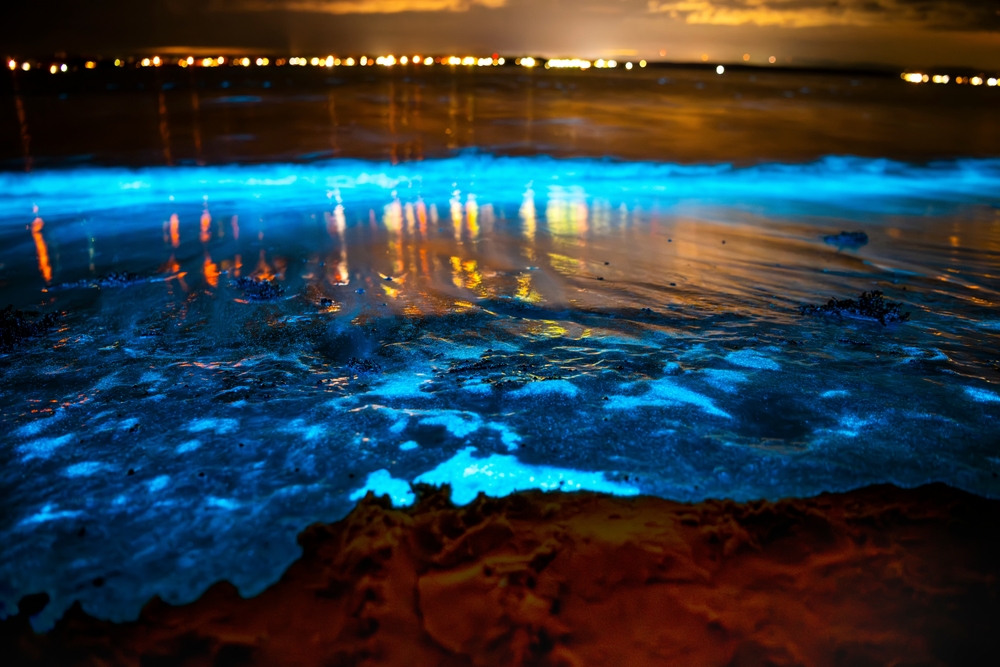
Imagine gliding across calm water under a blanket of stars, where every ripple and paddle stroke ignites a vibrant, ethereal blue-green glow. This captivating natural light show isn’t a dream—it’s the magic of bioluminescence that transforms the waterways around Florida’s Cocoa Beach into an unforgettable spectacle.
We often hear whispers of the “glowing waters” of the Space Coast, and it’s natural to wonder about the science behind such an extraordinary phenomenon. What exactly causes the water to sparkle with such brilliance after dark?
In this comprehensive guide, we will delve into the fascinating world of bioluminescence. We’ll explore the tiny marine organisms responsible for this dazzling display, uncover the optimal times and locations to witness it, and provide essential tips for experiencing this wonder safely. Prepare to understand the hidden science that makes Cocoa Beach truly shine at night.
The mesmerizing glow observed in the waters near Cocoa Beach is a natural phenomenon known as bioluminescence, a term derived from the Greek “bios” (life) and Latin “lumen” (light). This biological light production is primarily attributed to microscopic marine organisms, creating what many describe as liquid starlight.
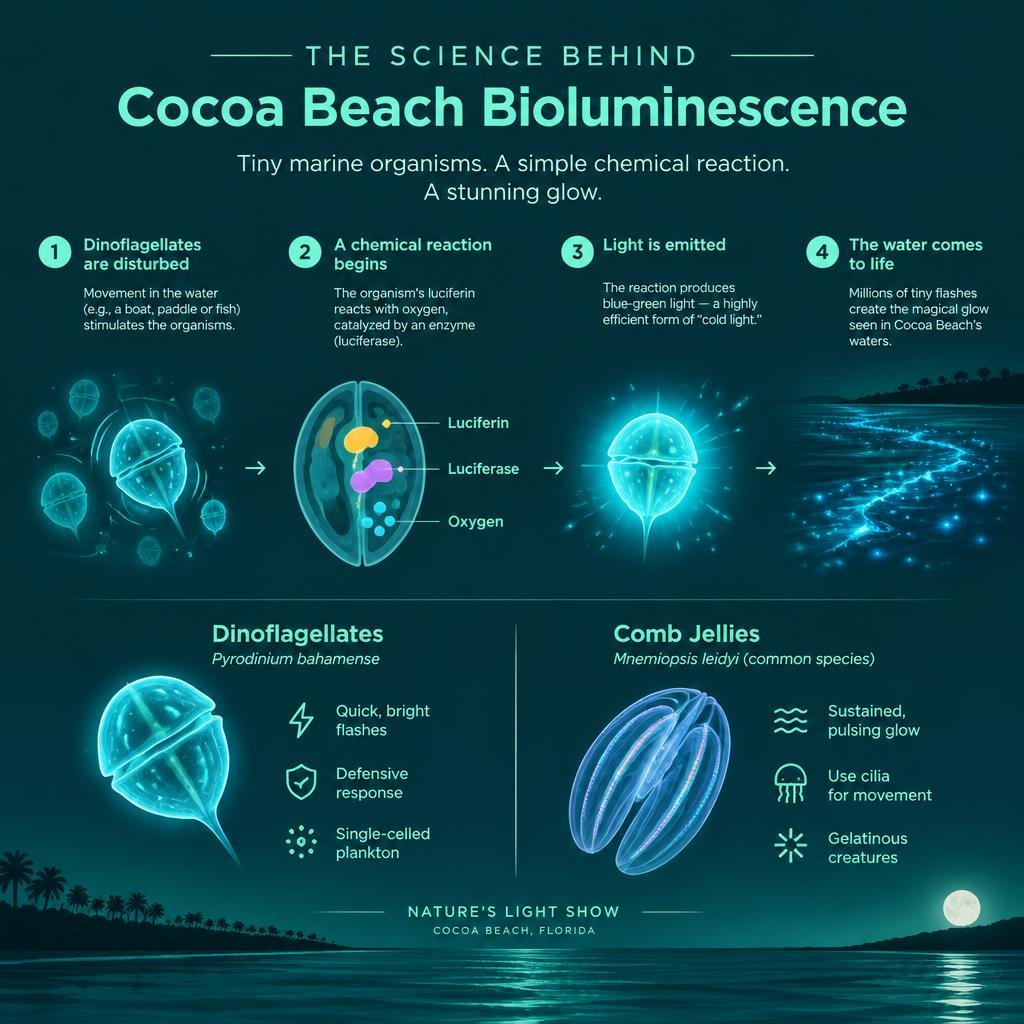
The main culprits behind this dazzling display in Florida’s brackish lagoons are single-celled organisms called dinoflagellates, specifically a species known as Pyrodinium bahamense. These tiny plankton possess an incredible ability: when they are mechanically stimulated—whether by a boat, a paddle, a swimming fish, or even a human hand—they emit a brief, brilliant flash of blue-green light. This biochemical light is often referred to as “cold light” because less than 1% of the energy is lost as heat, making it incredibly efficient. This light emission is primarily a defensive adaptation, startling predators and drawing attention to anything attempting to consume them.
Understanding Dinoflagellates and Comb Jellies in Cocoa Beach Bioluminescence
While dinoflagellates are the primary source of the bright, instantaneous flashes, another fascinating group of organisms contributes to the bioluminescent tapestry of the Space Coast: comb jellies. These delicate, gelatinous creatures, scientifically known as ctenophores (with Mnemiopsis leidyi being a common species), also produce light, but their display is distinct. Unlike the quick flashes of dinoflagellates, comb jellies emit a more sustained, pulsing glow when disturbed. They lack stinging cells and instead use tiny, hair-like cilia (combs) for propulsion, which refract light in the daytime, creating a rainbow effect. At night, their internal light production adds another layer to the glowing waters.
Understanding the differences between these two main contributors helps us appreciate the complexity of the bioluminescent ecosystem. While both are often described as “glowing algae” or “plankton,” their mechanisms and visual effects differ.
Feature Dinoflagellates (e.g., Pyrodinium bahamense) Comb Jellies (e.g., Mnemiopsis leidyi) Organism Type Single-celled plankton Multicellular invertebrates Light Type Brief, intense blue-green flashes Pulsing, sustained light Trigger Mechanical disturbance (movement, pressure) Mechanical disturbance (movement, pressure) Primary Role Defensive adaptation Defensive, possibly communication Visibility Creates glowing trails and splashes Visible as pulsing or streaking forms Seasonality Primarily warmer months (blooms) Often year-round, more visible in cooler months The Chemical Reaction: Luciferin and Luciferase
At the heart of the dinoflagellates’ glow is a sophisticated biochemical process involving two key components: luciferin and luciferase. Luciferin is the light-emitting compound, acting as the substrate for the reaction. Luciferase is the enzyme that catalyzes the oxidation of luciferin.
When a dinoflagellate is disturbed, a signal cascade is initiated within its cell. This leads to a rapid change in pH within specialized organelles, which then triggers the luciferase enzyme to act upon the luciferin. In the presence of oxygen, this enzymatic oxidation reaction releases energy in the form of light photons, resulting in the characteristic blue-green flash. This cellular reaction is incredibly efficient, converting chemical energy directly into light energy, minimizing heat production, and utilizing ATP (adenosine triphosphate) as an energy source. It’s a marvel of natural chemistry, allowing these tiny organisms to create such a profound visual impact.
Best Times and Environmental Factors for Viewing the Glow
Experiencing the full splendor of Cocoa Beach’s bioluminescence largely depends on timing and environmental conditions. While the phenomenon is present year-round to some extent, certain factors significantly amplify its brilliance. The Indian River Lagoon system, encompassing the Banana River and Mosquito Lagoon, is one of the densest bioluminescent ecosystems globally, making it an ideal location, but knowing when to visit is key.
The primary driver for intense bioluminescent displays is the abundance of dinoflagellates, which thrive in warmer waters. This leads to significant “blooms” during the hotter months, making the summer and early fall the prime viewing season. Dark skies are equally crucial, as any ambient light can diminish the perceived intensity of the glow.
Optimal Seasons and Moon Phases for Cocoa Beach Bioluminescence
For the most spectacular show, visitors should plan their trip during the peak summer months. The bioluminescence season in Florida typically runs from May through early October, with the most intense brightness occurring during June, July, and August. However, the phenomenon can be quite strong well into September and October. In fact, visitors will likely see the glowing algae at its most intense between July and October.
Beyond the seasonal window, the lunar cycle plays a critical role. The darker the night, the more vivid the bioluminescence appears. Therefore, the absolute best time to experience this natural wonder is during the new moon phase. During a new moon, the sky is at its darkest, minimizing light pollution and allowing the subtle, yet powerful, blue-green flashes to stand out dramatically against the inky water. Planning your visit around the new moon calendar for October 2026, for example, would maximize your chances of witnessing an unforgettable display. To learn more about planning your trip and what to expect, check out this comprehensive guide on Cocoa Beach bioluminescence.
Environmental Influences: Weather, Rain, and Water Quality
Several environmental factors can influence the intensity and visibility of bioluminescence. The Indian River Lagoon system is a brackish water environment, meaning it’s a mix of fresh and saltwater. This delicate salinity balance is crucial for the dinoflagellates.
Heavy rainfall can sometimes dilute the concentration of dinoflagellates, especially after prolonged periods, potentially reducing the glow’s intensity. Storm runoff can also introduce pollutants or alter nutrient levels, which in turn can affect the plankton populations. Conversely, certain nutrient levels can sometimes lead to larger blooms. Lagoon circulation patterns, influenced by tides and winds, also play a role in concentrating or dispersing the organisms. While a little rain might not deter the glow, prolonged heavy downpours just before your tour could have an impact. It’s always a good idea to check local conditions and consult with tour operators for the most current insights.
Prime Locations to Experience Bioluminescence Near Cocoa Beach
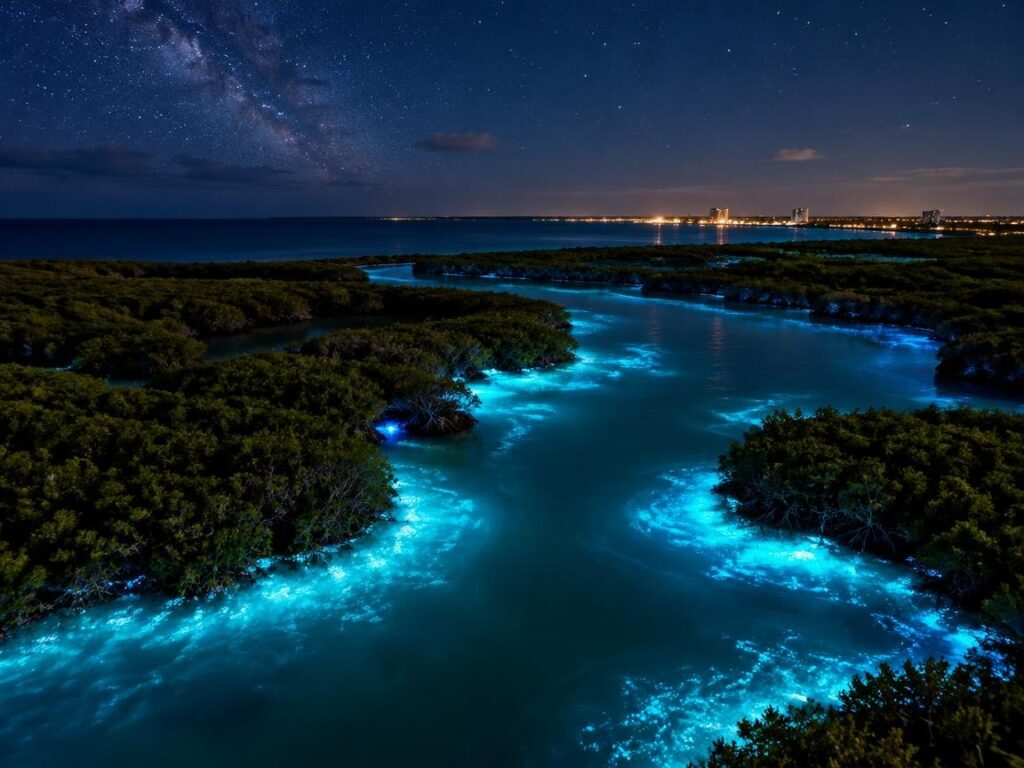
While the general term “Cocoa Beach bioluminescence” is often used, the actual viewing takes place in the surrounding estuarine waters of the Indian River Lagoon system, not directly on the ocean beaches. This expansive, biodiverse waterway is uniquely suited for bioluminescent organisms due to its brackish nature and rich nutrient content. The Indian River Lagoon, along with its interconnected sections, the Banana River and Mosquito Lagoon, forms one of the densest bioluminescent ecosystems in the world.
These lagoons are easily accessible from Cocoa Beach and other Space Coast cities. Some of the most popular and effective launch locations for experiencing the glow include:
- Merritt Island Wildlife Refuge: This vast refuge offers secluded, dark waters, providing an excellent backdrop for the bioluminescence. Its protected status means minimal light pollution, enhancing the natural spectacle.
- Banana River Aquatic Preserve: Located close to Cape Canaveral, the Banana River is a prime spot, with many tour operators launching from various points along its shores, including areas near Kiwanis Island Park.
- Mosquito Lagoon: Further north, Mosquito Lagoon is renowned for its intense bioluminescence and abundant wildlife, often providing encounters with glowing fish and even dolphins.
- Kiwanis Island Park (near Cocoa Beach): This is a popular and convenient launch point for many guided kayak tours, offering easy access to the Banana River’s glowing waters.
These locations are within a short drive from Cocoa Beach and offer diverse settings, from mangrove tunnels to open water, all teeming with the glowing organisms.
How to Experience the Glow: Night Kayaking and Safety
The most immersive and popular way to experience the bioluminescence near Cocoa Beach is through guided night kayaking tours. These tours often utilize clear kayaks or paddleboards, allowing you to witness the glow directly beneath and around your vessel. Paddling through the water creates a truly magical effect, as every stroke of your paddle, and every movement of fish or manatees below, ignites a brilliant blue-green light.
Safety is paramount during any nighttime water activity. Guided tours are highly recommended as they provide experienced guides, proper equipment, and knowledge of the waterways. Here are essential safety precautions and items to consider for your bioluminescence adventure:
- Wear a Life Jacket (PFD): This is non-negotiable. Nearly 90% of drowning victims were not wearing a life jacket. Always wear a properly fitted personal flotation device, even if you are a strong swimmer.
- Visibility is Key: Tour operators typically provide 360-degree navigation lights for kayaks or paddleboards. These bright white lights are visible for at least two miles, ensuring you can be seen by other watercraft.
- Sound Devices: Carry a whistle or other sound-making device to signal for help if needed.
- Weather Monitoring: Check weather conditions before heading out. Avoid tours during thunderstorms or strong winds, which can make paddling dangerous.
- Stay with the Group: Especially during night tours, it’s crucial to remain with your guide and group to prevent getting lost.
- Safe Touch: The bioluminescent organisms are generally non-toxic and safe to touch. You can gently swirl your hand in the water to create a personal light show.
- Hydration: Even at night, staying hydrated is important. Bring a water bottle.
- Insect Repellent: Especially for tours in Mosquito Lagoon, insect repellent is highly recommended.
- Dress Appropriately: Wear clothes that can get wet. Quick-drying fabrics are ideal. Bring a change of clothes for after the tour.
- Leave Valuables Behind: It’s best to leave phones, cameras, and other non-waterproof valuables in your car or at home to fully immerse yourself in the experience and prevent accidental damage.
- Eat Beforehand: Many tours start later in the evening, so it’s wise to eat dinner before your adventure, as restaurants might be closed afterward.
Essential Gear for Nighttime Lagoon Paddling:
- Personal Flotation Device (PFD): Mandatory for safety.
- Water Bottle: Stay hydrated.
- Insect Repellent: Critical for comfort, especially in marshy areas.
- Quick-Drying Clothing: Expect to get a little wet.
- Towel & Change of Clothes: For after the tour.
- Water Shoes or Sandals: Protect your feet during launch and landing.
- Headlamp or Small Flashlight: For setting up and packing up, but turn off during the tour to maximize glow visibility.
- Small Dry Bag: To protect any essentials you bring.
- Whistle: For signaling.
By following these guidelines, you can ensure a safe, comfortable, and truly unforgettable bioluminescent kayaking adventure.
Ecological Impact and Marine Conservation
The unique bioluminescent phenomenon in the Indian River Lagoon system is not just a spectacle for tourists; it’s an indicator of the lagoon’s health and a vital part of its complex ecosystem. The presence of thriving dinoflagellate populations and comb jellies suggests a relatively balanced environment capable of supporting such intricate life forms.
Eco-tourism centered around bioluminescence has brought significant attention and economic benefits to the Space Coast region. However, with increased human activity comes the responsibility to protect this delicate habitat. The lagoon system faces various environmental challenges, including nutrient runoff from agricultural and urban areas, which can lead to harmful algal blooms (red tides or brown tides) that disrupt the natural balance and can be detrimental to marine life.
The lagoon is home to an incredible array of wildlife, including iconic species like manatees, dolphins, and various fish, all of whom interact with the bioluminescent organisms. When you see a manatee gliding through the water, leaving a glowing trail, or a school of mullet jumping and sparkling, it’s a powerful reminder of the interconnectedness of this ecosystem. Protecting the water quality and preserving the natural state of the mangroves and shorelines are crucial for the continued flourishing of both the bioluminescent organisms and the larger marine community. Sustainable travel practices, such as choosing responsible tour operators who prioritize environmental stewardship and adhering to “leave no trace” principles, are essential to ensure that future generations can also witness this magical glow.
Frequently Asked Questions About Cocoa Beach Bioluminescence
Is Cocoa Beach bioluminescence visible to the naked eye and safe to touch?
Absolutely! The bioluminescence near Cocoa Beach is clearly visible to the naked eye. In fact, many visitors find that photos and videos don’t truly capture the intensity and immersive nature of the experience. The glow is bright enough to create distinct trails from paddles and swimming wildlife.
Regarding safety, the dinoflagellates and comb jellies responsible for the glow are non-toxic and entirely safe to touch. You can gently run your hand through the water to create your own personal light show without any harm to yourself or the organisms. It’s a truly interactive natural wonder.
How far are the bioluminescent launch sites from Orlando and Miami?
The primary bioluminescent launch sites, located within the Indian River Lagoon system near Cocoa Beach and Titusville, are remarkably accessible from major Florida destinations.
- From Orlando: Cocoa Beach is approximately 45-60 miles east of Orlando, making it about a 1-hour drive. This proximity makes bioluminescence tours a popular and convenient evening excursion for visitors staying in the Orlando area.
- From Miami: The drive from Miami to the Space Coast is longer, typically around 200 miles, which translates to about a 3-hour drive. While further, many visitors from South Florida still make the trip to witness this unique natural phenomenon.
These relatively short travel times make the Cocoa Beach area a prime destination for experiencing bioluminescence, offering a distinct natural adventure within easy reach of Florida’s bustling cities.
Why does the water stop glowing when it is calm?
The bioluminescence produced by dinoflagellates is a “triggered” response. This means that the organisms only emit light when they are disturbed or mechanically stimulated. When the water is perfectly calm, there’s no movement or pressure to activate their internal biochemical process. In this resting state, the dinoflagellates conserve energy. As soon as something moves through the water—a paddle, a fish, or a boat—the mechanical disturbance causes them to flash, creating the visible glow. It’s their unique way of reacting to their environment, making the experience dynamic and interactive.
Conclusion
The question, “Why does Cocoa Beach glow at night?” unveils a world of scientific wonder and natural magic. From the microscopic dinoflagellates and pulsing comb jellies to the intricate biochemical reactions that power their light, the Space Coast ecosystem offers an inexplicable experience that must be seen to be believed.
As we’ve explored, the optimal time to witness this phenomenon is during the warm, dark nights of summer and early fall, particularly around the new moon. With accessible launch points within the Indian River Lagoon system and a variety of guided tours available, experiencing this natural light display is within reach for many. However, the true magic lies not just in the glow itself, but in understanding and appreciating the delicate ecological balance that sustains it. By embracing responsible eco-tourism and supporting conservation efforts, we can ensure that the glowing waters of Cocoa Beach continue to captivate and inspire for generations to come. Start planning your summer excursion to the Space Coast now for truly one of the most magical getaways you’ll ever experience.