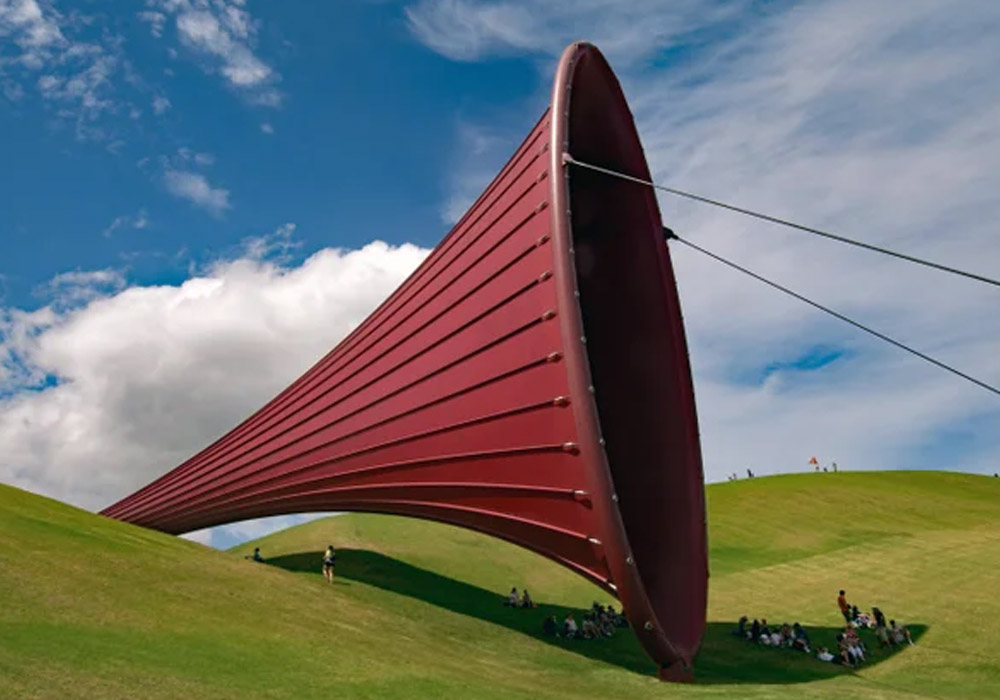
Public art can transform ordinary spaces into memorable landmarks. From towering steel sculptures in city parks to enormous abstract installations outside museums, these works often become defining features of their surroundings. While visitors admire the creativity and craftsmanship behind these works, few consider the complex process required to move them from a fabrication shop to their final location.
Installing large outdoor sculptures involves much more than simply delivering the artwork and setting it down. Many installations weigh several tons, feature unusual shapes, or contain delicate components that require careful handling. Bringing these ambitious designs to life often requires cranes, specialized rigging equipment, experienced lifting crews, and detailed planning.
Understanding how these installations come together reveals an interesting connection among artistic expression, engineering, and heavy-lift technology.
From Artistic Vision to Installation Planning
The installation process begins long before a crane arrives on site. Artists, fabricators, engineers, and installation contractors must determine how the finished sculpture will be transported, lifted, and secured.
Unlike conventional construction materials, large sculptures rarely have simple, balanced forms. Some feature sweeping curves, extended arms, or irregular surfaces that make it difficult to distribute their weight evenly. Others incorporate fragile materials such as glass, polished metal, or decorative panels that cannot withstand the pressure of traditional lifting methods.
One of the first considerations is the sculpture’s center of gravity. Understanding where the weight is concentrated helps rigging professionals determine how to support the artwork during lifting and prevent unwanted movement.
Engineers also assess the sculpture’s structural strength and identify suitable lifting points. These points must support the forces generated during the lifting operation without damaging the artwork.
For particularly complex installations, temporary lifting attachments or custom support frames may be integrated into the design during fabrication.
Choosing the Right Crane for the Installation
Cranes are central to positioning large outdoor sculptures. However, selecting the appropriate crane depends on several factors, including the artwork’s weight, dimensions, installation height, and accessibility.
Mobile hydraulic cranes are commonly used for outdoor art installations because they can be transported to a site and positioned quickly. Their telescoping booms provide the reach needed to lift sculptures over landscaping, existing structures, or other obstacles.
For installations in confined urban spaces, compact cranes may offer better maneuverability. Larger projects involving extremely heavy sculptures may require substantial mobile cranes with higher lifting capacities.
Crane selection involves more than comparing the sculpture’s weight with a machine’s maximum rated capacity. Contractors must also consider the lifting radius, boom configuration, ground conditions, and available setup space.
For example, a sculpture being installed in the center of a public plaza might require a crane positioned outside the plaza. The additional distance between the crane and the installation point can significantly reduce the crane’s available lifting capacity.
Careful planning helps ensure that the selected equipment can safely complete the operation under the actual site conditions.
Specialized Rigging Equipment Protects the Artwork
While cranes provide the lifting power, rigging equipment creates the link between the crane hook and the sculpture.
Selecting the appropriate lifting hardware is especially important when handling artwork with irregular dimensions or sensitive finishes.
Several specialized tools are commonly used in these installations.
Spreader Beams and Lifting Beams
Spreader beams help distribute lifting forces across multiple attachment points. They are especially useful when a sculpture has a wide footprint or components that could be damaged by inward pressure from slings at an angle.
By maintaining separation between lifting connections, spreader beams can help reduce unwanted compression on the artwork.
Lifting beams offer another option for managing multiple attachment points and controlling load distribution. Depending on the sculpture’s configuration, engineers may specify a custom lifting beam tailored to the artwork’s geometry and approved lifting locations.
Synthetic Lifting Slings
Synthetic web slings and round slings are often chosen when lifting objects with finished or delicate surfaces.
Compared with bare steel lifting components, synthetic slings can provide a softer contact surface. However, they still require appropriate protection against sharp edges, abrasion, and localized pressure.
For sculptures made of polished stainless steel, painted metal, or other decorative materials, additional protective padding may be required.
Wire rope slings may be used when the lifting arrangement requires their specific strength, durability, or configuration, provided the sculpture has suitable engineered attachment points.
Shackles and Lifting Hardware
Shackles connect slings, lifting attachments, and other rigging components. They are available in various configurations and load ratings to suit specific lifting arrangements.
Bow shackles are often useful in multi-leg sling assemblies, whereas other connection hardware may be selected for more specialized applications.
Every component must be compatible with the intended load direction and have an adequate working load limit.
Chain Hoists and Load Adjustments
Chain hoists can assist with controlled positioning during certain installation tasks.
For example, an engineered lifting arrangement may incorporate suitable hoists to make minor adjustments to a sculpture’s orientation before final placement.
These adjustments are especially valuable when the artwork must align with concealed anchor bolts or a precisely constructed foundation.
Any hoist used in a suspended lifting arrangement must be approved for that use and incorporated into the engineered rigging plan.
Transporting Large Sculptures to the Installation Site
Moving a massive sculpture from a fabrication facility to its final destination poses another set of challenges.
Some artworks can be transported as complete structures, while others must be disassembled into smaller sections for shipping and reassembled on-site.
Large sculptures may require flatbed trailers, specialized transport vehicles, or oversized-load permits. Route planning is especially important when transporting pieces that exceed standard road dimensions.
Bridges, overhead utilities, narrow streets, and tight intersections can all affect transportation strategy.
Once the sculpture arrives at its destination, crews must coordinate unloading and staging. In some cases, the artwork is transferred directly from a transport trailer to its foundation with a crane. Other installations require temporary supports so workers can inspect the piece or complete assembly before the final lift.
Careful coordination between transportation crews and rigging contractors helps minimize unnecessary handling and reduce the risk of damage.
The Final Lift: Precision Matters
The most dramatic stage of an outdoor sculpture installation is often the final lift.
Before the operation begins, the lifting team reviews the approved plan, inspects the equipment, sets up exclusion zones, and confirms communication procedures.
Weather conditions are another important consideration. Large sculptures can present large surface areas to the wind, making them more difficult to control while suspended.
Once the rigging is connected, crews may perform a controlled initial lift to verify the load’s balance and the lifting arrangement’s behavior.
The crane operator then gradually moves the sculpture toward its foundation as designated rigging personnel monitor its position.
Tag lines may be used, when appropriate, to help control rotation and movement without placing workers beneath the suspended load.
The final positioning often requires exceptional precision. Large sculptures may need to align with anchor bolts, embedded steel plates, or custom mounting brackets.
Even minor alignment errors can complicate installation, especially when the sculpture is rigidly connected to its foundation.
Once the artwork is properly seated and secured, the rigging can be released in accordance with the installation plan.
Securing Sculptures for Long-Term Display
Successfully placing a sculpture is only part of the installation process. Outdoor artwork must remain stable despite changing weather conditions and environmental forces.
Structural engineers design foundations and connections to account for the sculpture’s weight, wind loads, and other applicable requirements.
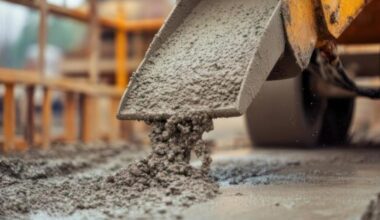
Depending on the installation, foundations may include reinforced concrete, embedded anchor systems, or structural steel supports.
For tall or unusually shaped sculptures, the foundation may be far more substantial than visitors realize. Much of the supporting structure can remain hidden beneath the surrounding pavement or landscaping.
After installation, contractors may complete final welds, tighten structural connections, inspect attachment points, and restore protective finishes.
Additional work may include installing lighting, landscaping, drainage features, or decorative elements around the sculpture.
These finishing details help integrate the artwork into its environment and protect the installation over time.
When Art and Engineering Work Together
Large outdoor sculptures demonstrate how creative ideas can push the boundaries of construction and engineering.
Artists may envision forms that appear to float, twist, or balance in ways that seem almost impossible. Turning those concepts into permanent public installations requires technical expertise, specialized equipment, and meticulous coordination.
Rigging professionals play a critical role in making these projects possible. Their ability to evaluate unusual loads, select appropriate lifting equipment, and execute controlled movements enables ambitious artwork to be installed without compromising its structural integrity or appearance.
The next time you encounter a towering metal sculpture in a public park or an enormous installation outside a museum, consider what it took to bring it there.
Behind the finished artwork is often an equally impressive feat of planning, heavy lifting, and engineering that brings the artist’s vision to life.