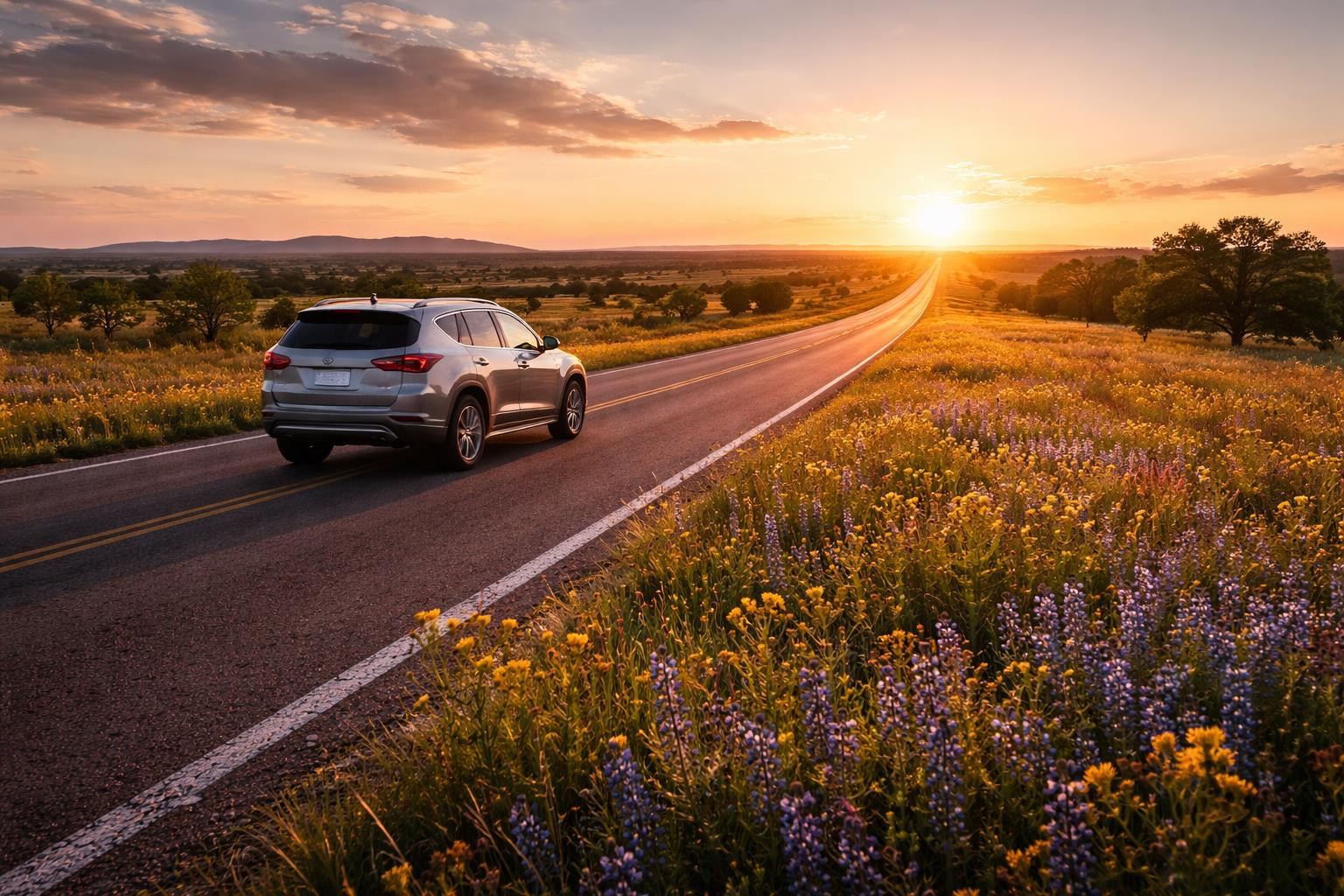
Texas was ranked the number one state for summer road trips in both 2023 and 2024 by WalletHub, which evaluated all 50 states on road quality, gas costs, safety, and variety of attractions. That is not a surprise to anyone who has actually driven across it. The state has over 79,000 miles of roads and highways, more than any other state, and the range of landscapes is genuinely staggering – Gulf Coast beaches, desert canyons, limestone hill country, pine forests, and vast stretches of nothing that somehow manage to be beautiful.
Before heading out, it is worth making sure your vehicle insurance Texas coverage is active and adequate for longer driving. Texas is an at-fault state, which means if something happens on the road, the driver who caused it bears financial responsibility. Long trips through remote areas – West Texas especially – put real distance between you and any kind of immediate help.
Here are the routes worth knowing about.
West Texas: Marfa, Big Bend, and the Davis Mountains
This is the one that surprises people who have never been. West Texas does not look like what most people picture when they think of Texas, and that is exactly the point.
The most common starting point is from Austin or San Antonio, heading west on I-10 before dropping south toward the Big Bend region. The drive from Austin to Big Bend runs roughly 475 to 500 miles and takes around eight to nine hours without stops.
Marfa sits about two and a half hours from Big Bend and deserves its own time. It is a small desert town that became an unlikely art destination starting in the 1970s when minimalist artist Donald Judd relocated there permanently. Today it has world-class contemporary art foundations, the famous Prada Marfa installation on US-90 about 30 minutes north of town, and the Marfa Lights viewing area east of town on US-67. The Trans-Pecos Music Festival draws people from across the country each fall.
From Marfa, the drive south toward Big Bend passes through Presidio and picks up the River Road – FM 170 along the Rio Grande between Lajitas and Presidio. That 67-mile stretch is widely considered the most scenic drive in Texas. The highway twists through the Chihuahuan Desert above the river with views into Mexico across the water.
Big Bend National Park is one of the least visited national parks in the country relative to its size, which means the trails and backcountry feel genuinely remote even during busy periods. The Chisos Mountains rise out of the desert floor to over 7,800 feet. The Santa Elena Canyon trail takes you to the canyon walls where the Rio Grande cuts through 1,500-foot cliffs. Cell coverage is essentially nonexistent inside the park – download offline maps before entering.
Stop in Alpine or Fort Davis on the way back north. The McDonald Observatory outside Fort Davis sits at 6,800 feet and hosts regular star parties that are worth building the schedule around.
Texas Hill Country: Austin to Fredericksburg and Beyond
The Hill Country is the easiest big Texas road trip for most people because the distances are manageable and the towns are genuinely enjoyable to walk around in.
The core route runs from Austin west on US-290 through Dripping Springs and Johnson City to Fredericksburg, about 80 miles. Fredericksburg is a German-settled town with a walkable main street, dozens of wineries on the surrounding Wine Road 290, the National Museum of the Pacific War (one of the best military history museums in the country), and more peach orchards per square mile than most people expect.
From Fredericksburg, Enchanted Rock State Natural Area is about 18 miles north on Ranch Road 965. It is a massive pink granite dome rising 425 feet above the surrounding terrain. The summit hike takes about 45 minutes and gives a wide view of the Hill Country.
Luckenbach sits about 13 miles southeast of Fredericksburg on a back road and is worth the small detour. It is barely a town at all – a dance hall, a bar, a post office that no longer functions. The weekly acoustic music sessions are free and often excellent.
Heading further west through Kerrville, Garner State Park on the Frio River near Concan is consistently one of the most popular state parks in Texas, especially in summer. The spring-fed river runs cold even in August, which explains a lot.
The Gulf Coast: Galveston to South Padre
Texas has 367 miles of Gulf Coast, and the drive along it offers a very different experience from the state’s interior.
Galveston sits 50 miles south of Houston across a causeway and is the most accessible beach destination from the state’s largest city. The historic Strand District downtown has 19th-century architecture and a decent food scene. The Seawall Boulevard runs along the Gulf for more than 10 miles.
Continuing south, Corpus Christi and Padre Island National Seashore offer one of the longest undeveloped barrier islands in the world – over 60 miles of Gulf beach accessible by standard vehicle on the northern end, requiring four-wheel drive further south. The drive along Park Road 22 onto the island is one of those flat, dramatic coastal approaches that makes a strong impression.
South Padre Island anchors the southern end of the coast near the Mexico border. The town itself is small but the beach is excellent, and the Laguna Madre between the island and the mainland is one of the best birding areas on the continent, particularly during spring migration.
East Texas: Piney Woods and Small Towns
East Texas gets overlooked because it is nothing like what people associate with the state. Tall pines, red clay roads, bayous, humidity that reminds you this is not far from Louisiana. The change in character from one end of Texas to the other is one of the things that makes a cross-state drive genuinely interesting.
Big Thicket National Preserve outside Beaumont protects one of the most biologically diverse areas in North America – sometimes called the “biological crossroads” because plant and animal communities from different regions all converge here. The Kirby Nature Trail through old-growth forest is the most accessible entry point.
Nacogdoches is often called the oldest town in Texas and has a historic downtown and a concentration of small museums worth a half-day. The drive north toward Caddo Lake State Park on the Texas-Louisiana border is particularly atmospheric – Spanish moss, cypress knees rising out of black water, and bayous that stretch in every direction.
Practical Notes Before You Go
Check road conditions. The Texas Department of Transportation provides road condition updates, official travel maps, and highway safety information for drivers planning any route across the state. For West Texas specifically, ranch roads and river crossings can become impassable quickly after heavy rain – checking conditions before entering remote areas is not optional.
Fuel stops in West Texas. Services thin out dramatically west of Fort Stockton. The stretch between Marathon and Study Butte near Big Bend is over 70 miles with almost nothing in between. Top off the tank in Alpine or Marathon before heading into the park.
Insurance before a long drive. Texas has the second highest vehicle theft rate in the country according to the National Insurance Crime Bureau, and weather events – hail, flooding, high winds – generate substantial claim volume, particularly around Houston and the Gulf Coast. If you are uncertain whether your current policy covers what might happen on a long drive, reviewing it before leaving is worth the 10 minutes. For drivers who have had credit challenges and are finding standard rates difficult to manage, exploring affordable insurance options for drivers with poor credit can surface real alternatives that standard quote comparison tools sometimes miss..