Walls are the most underused design tool in most homes. People rearrange furniture, repaint an accent wall, and swap out throw pillows every season, but the art hanging above the sofa often stays untouched for years. That’s changing. U.S. households now spend an average of $2,752 a year on home decorating, according to Market.us (2026), with Seattle homeowners topping the list at $3,493 per household. Art has stopped being an afterthought and has become one of the first decisions people make when a room feels finished but flat.
This guide walks through how to actually choose a piece that changes how a room feels, not just how it looks in a photo.
Finding the right piece for your space
Most people start their search the wrong way. They open a marketplace, filter by color, and buy whatever matches the throw pillows. That approach fills wall space, but it rarely produces a room that feels considered.
A better starting point is the room’s function and mood, not its color scheme. A home office benefits from a calm, structured environment. A living room built for entertaining can handle bolder, more textured pieces. Buyers are also moving away from mass-produced prints toward original, artist-made pieces that feel specific to the person who chose them.
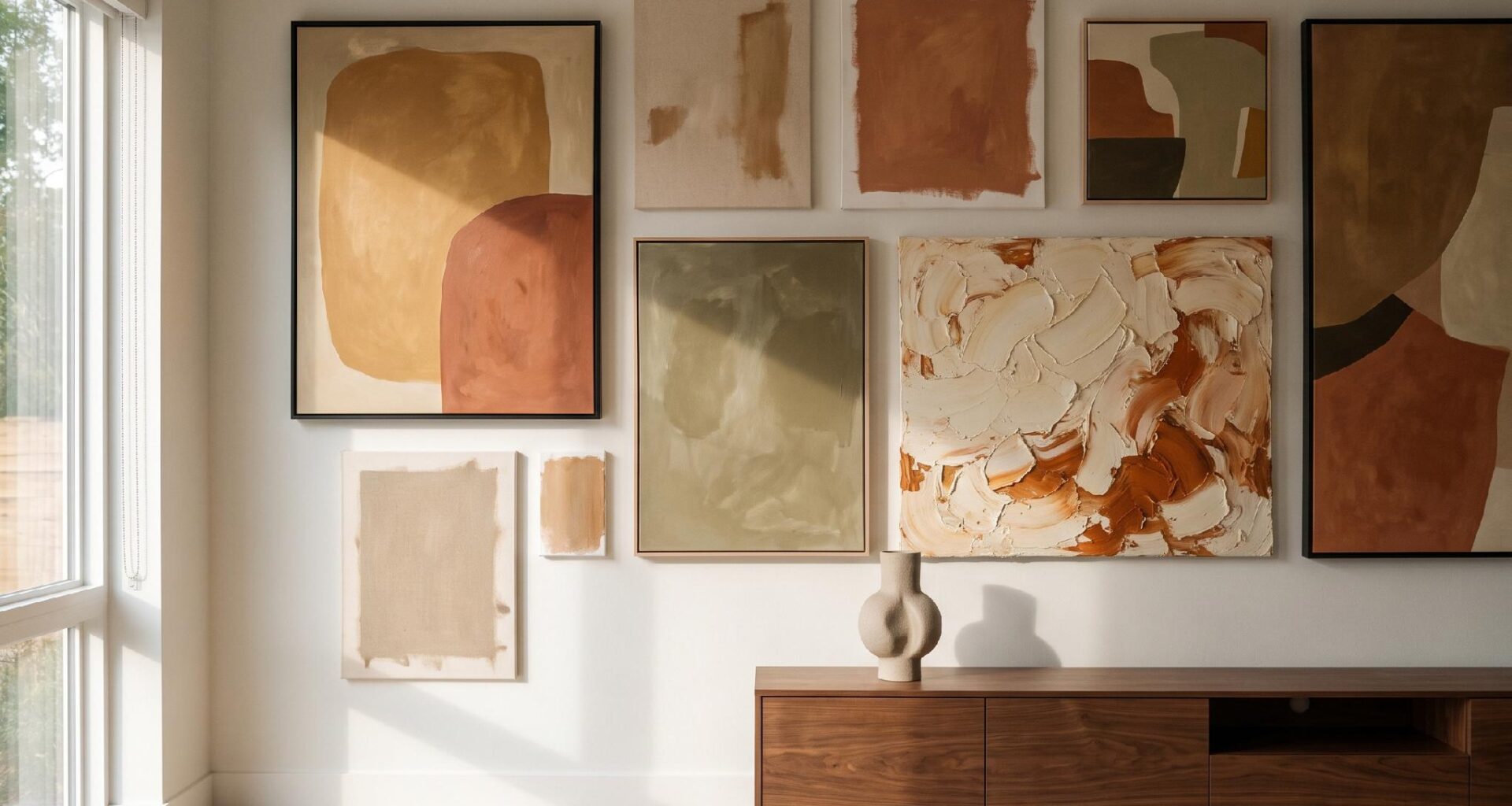
If you want a sense of what that looks like in practice, browsing your on-canvas paintings for sale options is a useful exercise, even if you don’t buy that day. It shows the range between minimalist abstracts and heavily textured, hand-painted work, and that range is exactly what most generic print shops can’t offer.
Why original wall art changes how a room feels
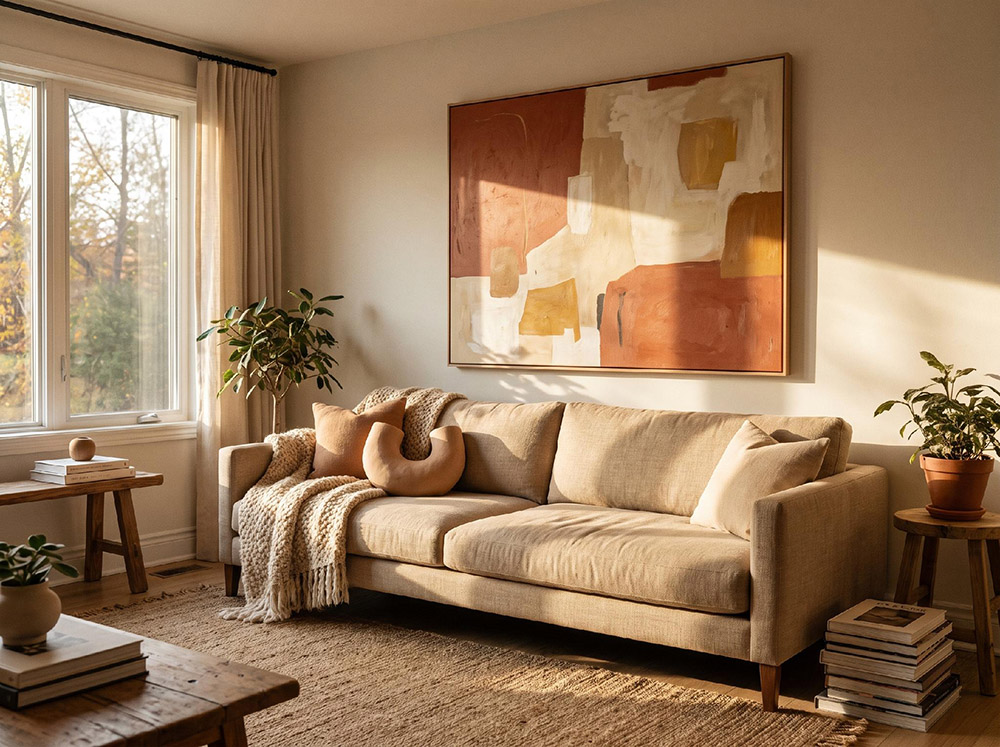
There’s a real psychological case for this, not just a design one. An October 2025 study in Frontiers in Psychology found that museum-based art interventions produced measurable improvements in psychological distress, anxiety, depressive symptoms, and overall well-being. A separate critical review published by the National Institutes of Health’s PMC database examined art therapy’s role in promoting mental health and found consistent evidence that engaging with original art supports emotional regulation.
You don’t need a museum for that effect to matter. A single well-chosen canvas in a room you sit in daily does some of that same work. Original pieces carry texture, brushwork, and small imperfections that a flat print simply can’t replicate, and that tactile quality is part of why they read as calmer and more personal than something mass-produced. It’s not a coincidence that people describe a room with real art as feeling “finished” in a way a room with framed posters doesn’t.
Sizing, placement, and color: getting the basics right
Even a great piece falls flat if it’s hung wrong. A few rules hold up across almost every room type.
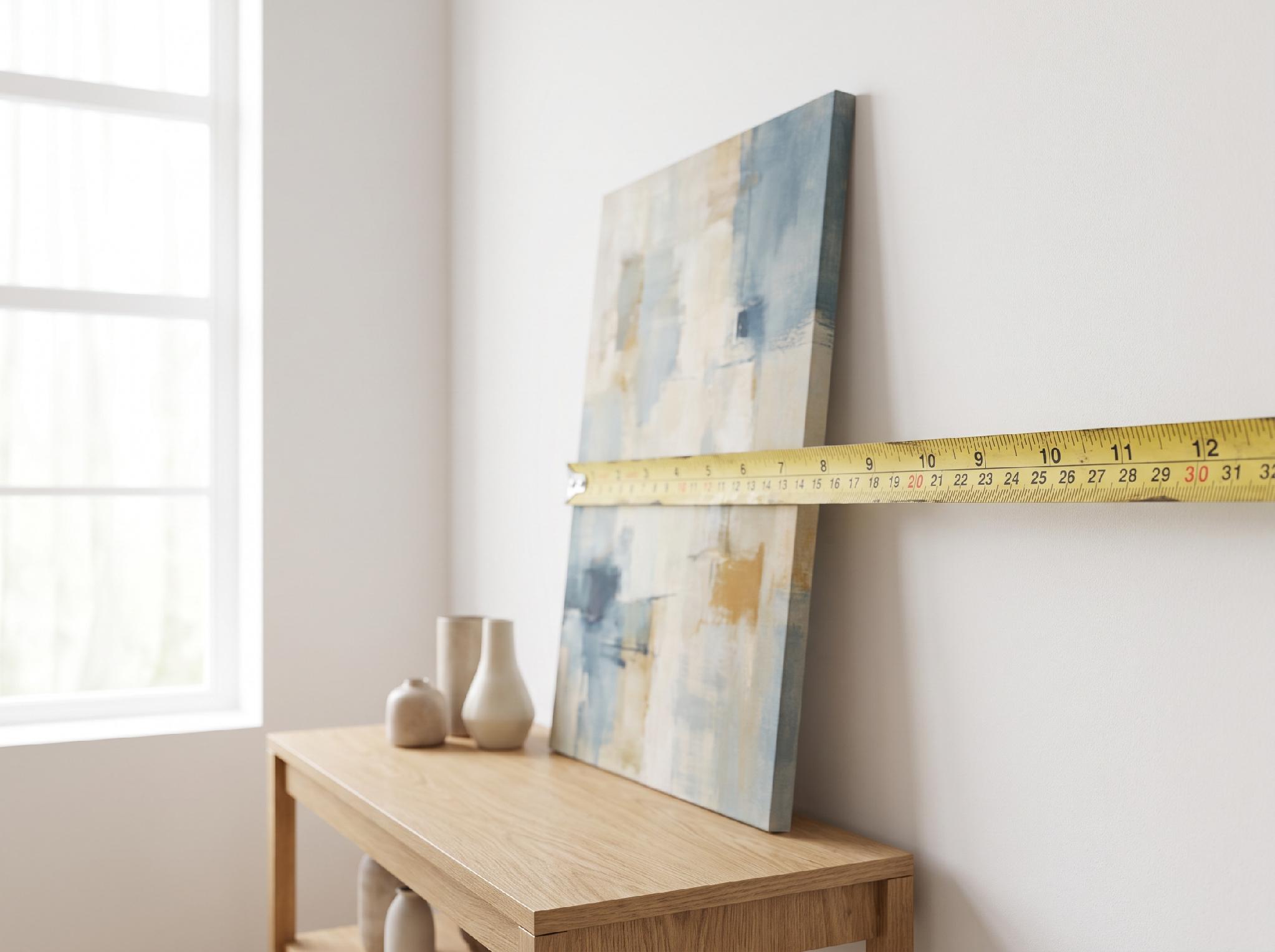
The canvas should span roughly two-thirds the width of the furniture beneath it. A piece that’s too small over a large sofa reads as an afterthought, while an oversized canvas anchors the whole wall. Hang it so the center sits 6 to 8 inches above the back of the sofa or console, roughly eye level for someone standing. And when it comes to color, you don’t need an exact match. A piece that contrasts intentionally with the room’s palette often does more work than one that blends in.
These same principles apply beyond wall art. When we covered choosing the right flooring to match your interior style, the underlying logic was similar: scale and material choice have to work with the room, not just look good in isolation. The same is true of modern architectural details like statement doors, where proportion determines whether a bold choice feels intentional or out of place.
The shift toward texture and personal meaning

The broader home decor market backs up what’s happening room by room. It reached roughly $810.5 billion globally in 2025 and is projected to climb toward $1.13 trillion by 2034, a 3.70% compound annual growth rate, according to MarketDataForecast (2025). Design trend reports for 2026 point to oversized statement art, 40 inches wide or more, and textured, hand-painted canvas pieces replacing the cluttered gallery walls that dominated the last decade. Warm earth-tone abstracts currently rank first in both sales volume and search popularity.
Part of this comes down to discovery. Roughly 67% of marketers plan to increase influencer and social spend around home decor in 2026, according to Firework’s 2026 ecommerce report, which means most buyers now find their art inspiration online before they ever set foot in a store. That shift rewards pieces with real character over generic prints that photograph the same as a thousand others.
The same logic that pushes people toward original wall art applies to other custom features in a home. Consider a custom-designed bathroom centerpiece: the appeal isn’t just its function; it’s that no one else has the exact same one.
Choosing well means choosing on purpose
Wall art isn’t decoration you add once everything else is finished. It’s one of the few design choices that changes both how a room looks and how it feels to spend time in, and the research on art’s effect on mood backs that up. Treat your next piece less like a filler item and more like a decision that will shape the room for years.
Start with mood and function, get the scale right, and lean toward pieces with texture and a real story behind them. That’s the difference between a wall that just holds art and a room that actually feels like yours.