In the rapidly evolving construction industry, the integration of advanced technologies into heavy machinery is revolutionizing job sites. From artificial intelligence (AI) to autonomous systems, these innovations are enhancing safety, efficiency, and productivity. As part of this technological advancement, manual labor is being augmented by specialized machines like the powered wheelbarrow, which help streamline operations and reduce physical strain on workers.
Embracing these cutting-edge developments allows construction firms to remain competitive, meet rising safety standards, and address labor shortages, ensuring industry sustainability for years to come. As worksites continue to evolve, adopting new equipment and management systems becomes crucial for success and compliance.
AI Enhancing Safety on Construction Sites
Modern construction equipment is increasingly equipped with AI-driven safety features. For instance, some excavators now utilize 360-degree cameras and AI human detection systems to identify workers in blind spots and automatically halt operations to prevent accidents. This proactive approach significantly reduces the risk of on-site injuries, as emphasized in guidance from OSHA. AI technology can also monitor compliance with personal protective equipment (PPE) usage, proper signage, and restricted area access, ensuring safety policies are upheld throughout the project site.
Beyond just incident prevention, AI-enabled systems collect and analyze job site data to identify recurring safety issues and project risks. Using machine learning, these systems can predict accident likelihood based on historical patterns and environmental conditions, empowering safety managers to take preventive actions before incidents occur. As technology matures, advanced sensors and AI networks will continue to evolve, offering even more effective safety solutions tailored for the unique challenges of construction environments.
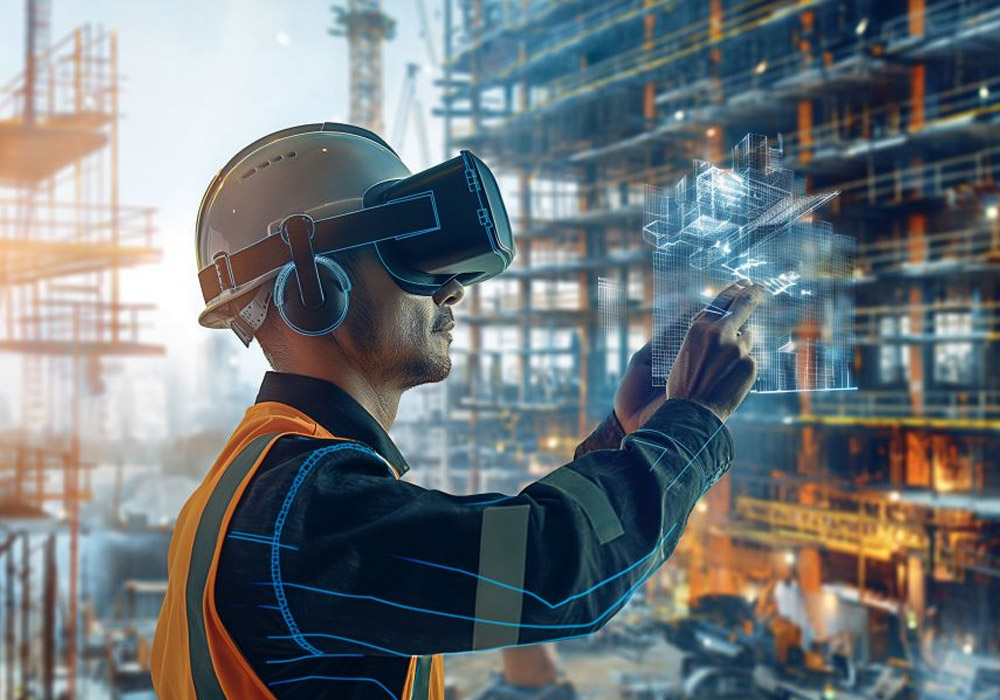
Another significant benefit is the increased ability to train workers using AI-powered virtual reality (VR) and augmented reality (AR) tools. These training modules allow employees to experience real-life hazards and responses in a safe, controlled digital environment, ultimately leading to better on-site preparedness and reduced incident rates. This multifaceted approach to safety innovation is reshaping the way construction companies approach risk management and employee well-being.
The Rise of Autonomous Machinery
Autonomous technology is transforming construction sites by enabling machines to operate with minimal human intervention. Companies like Komatsu have introduced smart construction solutions that connect machines and the office, allowing for real-time tracking and precise earthmoving. With autonomous excavators, loaders, and dump trucks, repetitive tasks can be executed with precise consistency, reducing the risk of human error while boosting productivity. These advancements not only address safety but also tackle workforce shortages by supplementing personnel with intelligent systems.
As the implementation of autonomous machinery becomes more widespread, construction crews are discovering enhanced flexibility in their operations. Machines equipped with GPS-guided technologies can work around the clock, completing tasks such as grading and excavation with improved accuracy. The reduction in required manual oversight also frees up human workers for higher-level strategic tasks, improving job satisfaction while supporting company growth. Furthermore, integration with project management software allows for remote diagnostics, monitoring, and software updates, ensuring equipment operates at peak efficiency and minimizing downtime.
Many industry leaders are partnering with technology firms to develop and refine autonomous solutions tailored specifically for construction scenarios. These collaborations are paving the way for a new era where job sites operate as integrated systems, boosting both scalability and profitability for ambitious firms willing to invest in the future.
Digital Construction Management Systems
The adoption of digital construction management systems is streamlining project oversight. These platforms integrate real-time data analytics, AI, and cloud-based tools to manage every aspect of construction operations, from resource allocation to quality control. Integrated platforms provide collaborative tools for supervisors and laborers, increasing transparency and accountability. As highlighted by For Construction Pros, digital management systems facilitate easier scheduling, equipment deployment, and document storage, resulting in heightened operational efficiency and reduced project overruns.
These modern systems also enable more accurate forecasting by utilizing historical and real-time data to create dynamic schedules and resource plans. By reducing paperwork and manual tracking, digital platforms speed up communication and reduce the likelihood of costly errors. Mobile access ensures that all project stakeholders, from field workers to executives, can view and update project data anytime, enhancing collaboration and accountability across teams.
Additionally, comprehensive management platforms are often equipped with modules for document management, procurement, inspection tracking, and automated reporting. This interconnected approach not only boosts productivity but also helps companies stay in compliance with regulatory requirements, minimizing the risk of project delays due to overlooked documentation or missed deadlines.
Leveraging Data Intelligence
Construction companies are increasingly harnessing data intelligence to enhance efficiency and productivity. By analyzing data from various sources, such as machine telematics and workforce telemetry, firms can make informed decisions that improve project outcomes. This data-driven approach allows for better planning, resource optimization, and quality assurance. It also enables predictive maintenance, identifying equipment issues before they cause downtime, and supports sustainability by monitoring energy consumption and materials usage.
With the proliferation of connected devices and IoT sensors on job sites, construction firms can now capture enormous volumes of data ranging from environmental conditions to fuel usage patterns. By leveraging advanced analytics, companies can uncover process bottlenecks, detect anomalies, and optimize everything from delivery schedules to equipment deployment. Whether through custom dashboards or automated alerts, stakeholders are gaining new visibility into every aspect of field operations.
More forward-thinking organizations also use data intelligence to enhance bidding and estimating processes. By analyzing past project data, firms can create more accurate budgets and timelines, increasing their competitiveness while reducing financial risk. Over time, this culture of continuous improvement driven by analytics is setting apart the most progressive firms in an industry traditionally resistant to change.
Future Trends in Construction Equipment
Looking ahead, the construction industry is poised to embrace further advancements in technology. The integration of AI, automation, and telematics is expected to continue transforming heavy machinery operations, leading to safer and more efficient job sites. Drones for site surveys, 3D printing for prefabrication, and robotic bricklayers are just a few of the solutions on the horizon. As these technologies evolve, they will redefine roles within the industry and offer substantial competitive advantages to firms ready to adopt them. Early movers will benefit from increased project speed and cost savings, while laggards may struggle to meet client demands and regulatory expectations.
In parallel, the future may see the convergence of smart equipment with next-generation materials, such as self-healing concrete and modular building systems, further pushing the boundaries of what is possible in construction. Environmental sustainability is emerging as a core trend, with equipment designed for lower emissions and energy-efficient operation becoming increasingly standard. The integration of alternative energy sources, like electric or hydrogen power for heavy machines, is also gaining traction as regulatory bodies push for greener construction practices worldwide. Know how JCB is contributing to this.
The ability to remotely monitor and even control machinery through cloud-based applications heralds a new wave of tele-operated construction, allowing experts to supervise multiple sites simultaneously from centralized locations. This heightened connectivity will not only help address the skilled labor gap but also expand access to expertise in remote or hazardous environments. As smart construction technology continues to develop, continuous training and upskilling of the workforce will be essential so that personnel remain proficient in these evolving solutions and best practices.
In conclusion, the incorporation of smarter construction equipment is reshaping modern worksites by enhancing safety, efficiency, and productivity. As technology continues to advance, the construction industry must adapt to remain competitive and meet the demands of an evolving landscape. Staying informed on automation, digital management, and AI solutions will be key for industry leaders looking to maximize competitive advantage and future-proof their operations.