Core Factors in Buying Luxury Watches and Estate Jewelry
The world of luxury watches and estate jewelry offers a unique allure. These aren’t just accessories. They are pieces of history, art, and often, significant investments. Each item tells a story, from its intricate craftsmanship to its journey through time.
However, entering this market requires careful consideration. Authenticity, condition, and provenance are key factors. An informed purchase ensures you acquire a piece that holds both sentimental and monetary value. We want to help you make smart choices.
In this guide, we will explore the essential steps to buying luxury watches and estate jewelry. We will cover how to assess authenticity and understand provenance records. We will also look at evaluating condition and identifying period-specific details. Whether you are drawn to a precise vintage timepiece or seeking unique designer and estate jewelry, we will equip you with the knowledge to collect with confidence.
When venturing into the acquisition of luxury watches or estate jewelry, several foundational elements dictate a piece’s value, authenticity, and desirability. Understanding these core factors is paramount for making informed decisions and ensuring your investment is sound. These include provenance records, hallmark authentication, meticulous condition grading, an appreciation for historical eras, and the critical role of serial numbers. Each factor contributes to a comprehensive picture of an item’s true worth and history.
Provenance, or the documented history of ownership, is often considered the backbone of authenticity for high-value items. A clear, unbroken chain of ownership can significantly enhance a piece’s value and provide assurance of its legitimacy. Hallmarks and maker’s marks, stamped onto precious metals or watch movements, serve as official seals of quality, origin, and material composition. These tiny symbols are a rich source of information for the discerning buyer.
Condition grading is another crucial aspect, moving beyond a simple visual inspection. It involves a detailed assessment of wear, originality, and any past repairs or restorations. The historical era from which a piece originates profoundly influences its style, materials, and craftsmanship, making knowledge of different periods essential. Finally, serial numbers on watches are unique identifiers that can trace a timepiece back to its manufacturing date and sometimes even its original sale, offering vital clues to its authenticity and history.
Let’s consider how different eras brought distinct characteristics to both watches and jewelry:
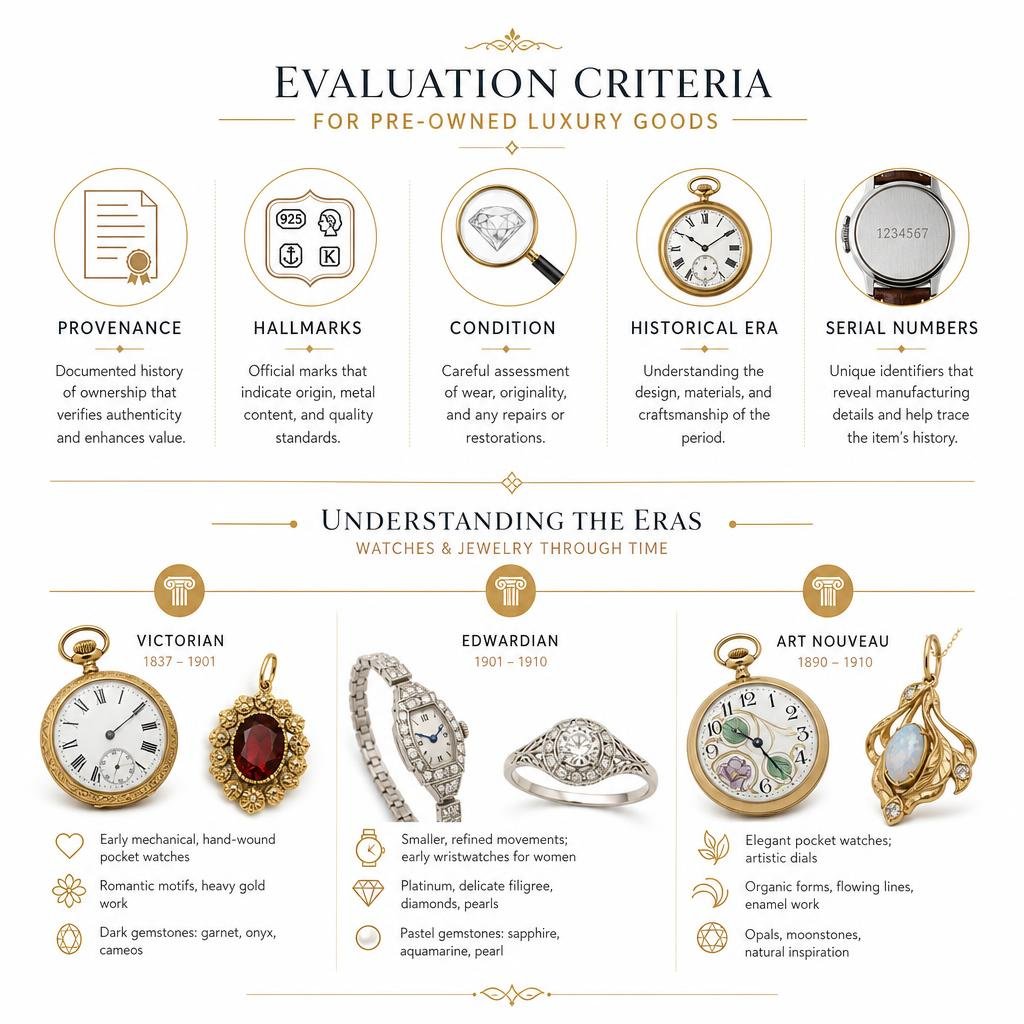
Era/Period Typical Watch Movements & Features Jewelry Characteristics & Gemstones Victorian Early mechanical, often hand-wound pocket watches; intricate cases. Romantic motifs (hearts, flowers), heavy gold, dark gemstones (garnet, onyx), cameos. Edwardian Smaller, more refined movements; early wristwatches for women. Platinum, delicate filigree, diamonds, pearls, pastel gemstones. Art Nouveau Elegant pocket watches, early wristwatches; artistic dials. Organic forms, flowing lines, enamel work, opals, moonstones. Art Deco Precision movements, rectangular/tonneau cases; rise of wristwatches. Geometric designs, bold colors, platinum, diamonds, sapphires, emeralds, rubies. Retro (1940s) Robust movements, chronographs, military-influenced designs. Large, sculptural gold pieces, patriotic themes, synthetic rubies/sapphires, aquamarines. Mid-Century Automatic movements, shock protection; sleek, minimalist designs. Abstract forms, textured gold, cocktail rings, cultured pearls, diamonds. Assessing Authenticity and Provenance When Buying Luxury Watches and Estate Jewelry
The journey to acquiring a luxury watch or a piece of estate jewelry truly begins with a rigorous assessment of its authenticity and provenance. These two pillars provide the confidence needed to invest in such significant items. Without verifiable proof of origin and a clear history, even the most beautiful piece carries considerable risk.
Original documentation, when available, is a gold standard. For watches, this might include the original warranty card, purchase receipts, or service papers from authorized dealers. These documents often bear serial numbers that can be cross-referenced with the watch itself, providing irrefutable proof of its identity. For jewelry, original certificates from gemological laboratories or designer authenticity cards are invaluable. These papers confirm the quality of gemstones and the origin of the piece.
Beyond direct documentation, archive extracts can sometimes be obtained from manufacturers, especially for very rare or historically significant pieces. These extracts might detail the watch’s production date, movement number, and even its original sale location. Service ledgers, particularly from reputable watchmakers or jewelry repair specialists, can also contribute to provenance by documenting a piece’s maintenance history, indirectly confirming its existence and authenticity over time.
Maker marks and hallmarks are microscopic signatures that tell a macroscopic story. These stamps, often found on the inside of watch case backs, on movement plates, or on the metal of jewelry pieces, indicate the manufacturer, the metal purity, and sometimes the year and location of assay. Learning to identify these marks and understanding their significance is a critical skill for any collector. For instance, a watch might have a specific movement caliber number stamped, which can be verified against manufacturer records. Similarly, the presence of a well-known jeweler’s mark on a piece of estate jewelry adds substantial credibility to its origin and craftsmanship. When seeking exceptional designer and estate jewelry, a reputable dealer will always be transparent about these critical details, providing peace of mind and ensuring the value of your acquisition.
Evaluating Condition and Period Details When Buying Luxury Watches and Estate Jewelry
The condition of a luxury watch or a piece of estate jewelry is a primary determinant of its value and desirability. However, “condition” in this context is nuanced; it doesn’t always mean “as new.” For vintage and antique items, certain signs of age are not only acceptable but often celebrated as part of their unique character and history. Understanding these subtleties, along with specific period details, is crucial for accurate evaluation.
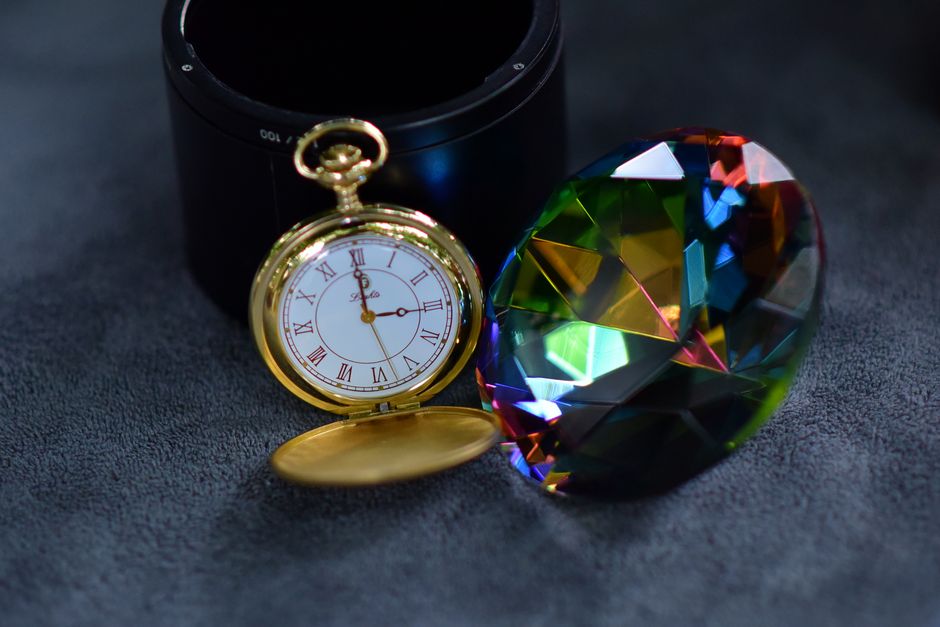
For vintage watches, the dial patina is a key element. Patina refers to the natural aging process of the dial’s surface, often resulting in a unique discoloration or texture. A uniform, undisturbed patina is highly prized by collectors, as it indicates originality and adds character. Conversely, a re-lumed or re-painted dial can significantly devalue a vintage watch. Similarly, unpolished cases are often preferred. Over-polishing removes metal, altering the original lines and sharp edges of the case, which collectors value for preserving the watch’s original factory finish. The integrity of the bezel, including any original inserts or engravings, also plays a vital role in assessing a watch’s overall condition and originality.
When evaluating estate jewelry, attention shifts to the structural integrity and aesthetic preservation. Prong wear is a common concern for gemstone settings. Over decades, the small metal prongs holding gemstones can wear down, increasing the risk of a stone becoming loose or falling out. A thorough inspection will reveal if prongs are secure and if the stone is firmly seated. The gemstone settings themselves should be examined for any signs of damage, repair, or alteration that might detract from the piece’s original design and structural soundness. For instance, a delicate filigree setting from the Edwardian era should exhibit its intricate detail without significant bending or breakage. The presence of original stones, rather than replacements, also significantly impacts value. Collectors often seek pieces that retain their original components, as this speaks to their authenticity and historical integrity.
Understanding Horological Value in Fine Timepieces
Beyond their function as time-telling instruments, luxury watches represent a pinnacle of engineering, artistry, and material science. Their value is derived from a complex interplay of factors, often extending far beyond the simple cost of components. Understanding these elements is key to appreciating and investing in fine timepieces.
At the heart of any esteemed watch is its mechanical movement. These intricate machines, composed of hundreds of tiny parts, are a testament to precision craftsmanship. The presence of complications—additional functions beyond basic timekeeping—further elevates a watch’s horological significance. The choice of precious alloys for cases and bracelets, such as gold, platinum, or high-grade stainless steel, contributes to both aesthetic appeal and intrinsic value.
The meticulous attention to detail in case finishing, from mirror polishing to intricate brushing and chamfering, speaks volumes about a watch’s quality. Certain collectible references, often limited editions or models with historical significance, command premium prices due to their rarity and demand among enthusiasts. Finally, the secondary market liquidity of a brand or specific model is an important practical consideration, indicating how easily and at what price a watch can be resold.
Movements and Complications
The soul of a luxury watch resides in its movement, the intricate mechanism that powers its functions. For connoisseurs, the type and quality of the movement are paramount. Mechanical movements, whether hand-wound or automatic (self-winding), are celebrated for their engineering prowess and the artistry of their construction, often visible through sapphire case backs.
Complications are additional features that go beyond simply displaying hours, minutes, and seconds. They represent advanced levels of watchmaking skill and add significant value. Chronographs, for instance, are sophisticated stopwatches integrated into the watch movement, allowing for precise timing of events. Perpetual calendars are marvels of micro-mechanics, capable of correctly displaying the date, day, month, and even leap years without manual adjustment for centuries. The escapement, a critical component that regulates the release of energy from the mainspring, is often a focus of innovation, with brands developing unique designs for improved accuracy and longevity. Power reserves indicate how long a watch will run when fully wound without being worn or wound again, with longer reserves often being a mark of advanced engineering. Perhaps most prestigious are in-house calibers—movements designed, manufactured, and assembled entirely by the watch brand itself—which signify complete mastery of watchmaking and often fetch higher prices due to their exclusivity and bespoke nature.
Case Condition and Component Originality
The external presentation and internal integrity of a watch are equally critical in determining its value. The case condition is not merely about aesthetics; it reflects how well the watch has been preserved and handled over its lifetime. Collectors highly value cases that retain their original factory finishes, including sharp chamfered edges (the beveled angles on the case) and distinct brushing or polishing patterns. Any signs of excessive polishing that have rounded off these edges or removed metal can significantly diminish value.
Component originality is another non-negotiable aspect for serious collectors. This primarily refers to the dial, hands, and bezel. Factory dials, especially those that have aged naturally to develop a desirable patina without being refinished or replaced, are highly sought after. For vintage watches from certain eras, the aging of tritium lume (a radioactive material used for luminescence) to a creamy yellow or orange hue is often a sign of originality and is highly prized. Replacement dials, even if genuine, typically reduce the watch’s collectible value. Similarly, original hands that match the dial’s aging and are free from corrosion are preferred. The bracelet stretch, or the amount of play in the links of a metal bracelet, is also assessed; minimal stretch indicates less wear and a higher value. Finally, reference stamps and serial numbers on the case, movement, and sometimes the bracelet, must be clear, legible, and match manufacturer records to confirm the watch’s identity and authenticity.
Navigating Eras and Gemstones in Estate Jewelry
Estate jewelry offers a captivating journey through history, with each era leaving its distinct imprint on design, materials, and craftsmanship. Understanding these period styles and the gemstones typically associated with them is essential for appreciating their beauty and assessing their value. From the romanticism of the Victorian age to the geometric precision of Art Deco, these pieces are more than adornments; they are wearable art reflecting cultural shifts and technological advancements.
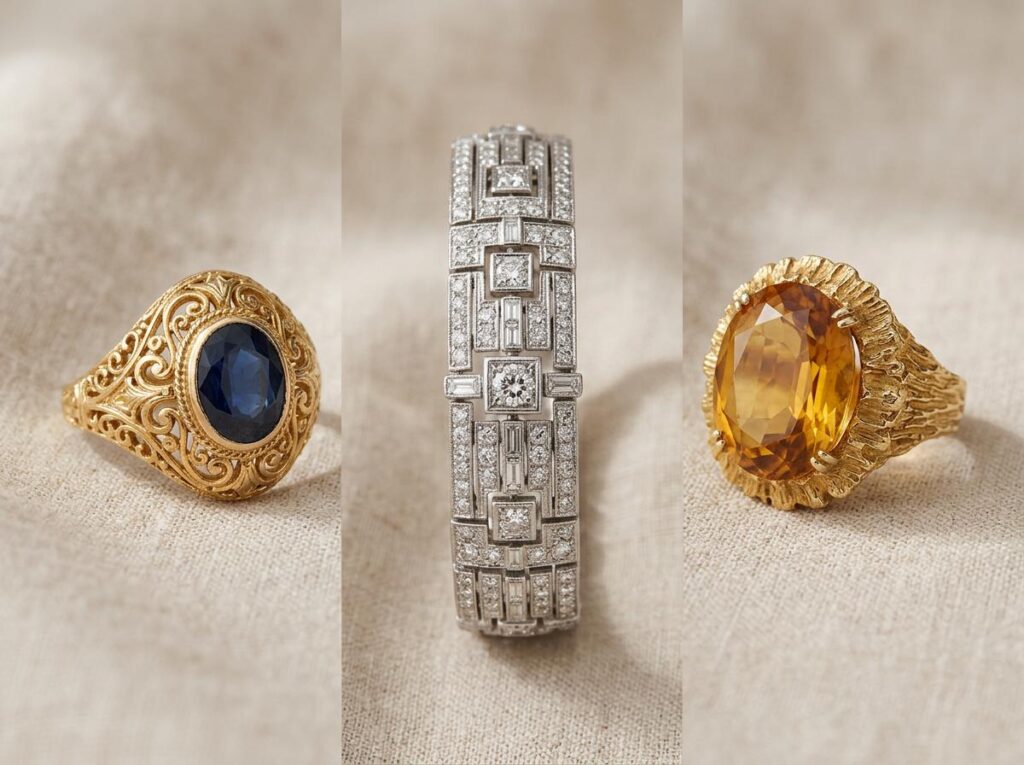
Victorian motifs, prevalent from roughly 1837-1901, often featured sentimental designs like hearts, birds, flowers, and serpents, frequently crafted in yellow gold and adorned with dark gemstones or cameos. Following this, the Edwardian era (1901-1910) ushered in a lighter, more ethereal style, characterized by delicate platinum filigree, intricate lacework designs, and an abundance of diamonds and pearls. The roaring twenties brought forth Art Deco geometry (1920s-1930s), with bold, symmetrical lines, contrasting colors, and the prominent use of platinum, diamonds, sapphires, emeralds, and rubies. The Retro period (1940s) saw a shift towards larger, more sculptural pieces, often in rose or yellow gold, reflecting wartime austerity with less emphasis on precious stones. Mid-Century jewelry (1950s-1960s) embraced abstract forms, textured gold, and vibrant colored gemstones, often in cocktail rings. Across these periods, the craftsmanship, whether it be intricate hand-engraving or precise platinum work, speaks to the skill of the jewelers of their time.
Identifying Antique Diamond Cuts and Natural Stones
The allure of estate jewelry is often inextricably linked to its gemstones, particularly diamonds. Unlike modern brilliant cuts, antique diamonds possess a unique charm and fire due to their distinct faceting patterns. Identifying these cuts is crucial for authenticating a piece’s age and appreciating its historical context.
The old mine cut, popular from the early 18th century through the late 19th century, is characterized by a roughly square or cushion shape, a high crown, a small table, a deep pavilion, and a visible culet (the flat facet at the bottom). These diamonds tend to have fewer, larger facets, producing a warm, romantic sparkle rather than the intense brilliance of modern cuts. The European cut, which emerged in the late 19th and early 20th centuries, is considered a precursor to the modern round brilliant. It features a rounder girdle, a slightly larger table, and a still-visible culet, offering a more refined sparkle than the old mine cut. Recognizing these cuts not only helps date a piece but also confirms its originality.
Beyond diamonds, the value of estate jewelry is significantly influenced by the presence of natural, untreated colored gemstones. Untreated sapphires, particularly those from historically significant sources like Kashmir or Ceylon, command premium prices. Similarly, Burmese rubies, known for their intense “pigeon’s blood” red hue, are among the most coveted gemstones. The absence of heat treatment or other enhancements is a critical factor in their value. When evaluating gemstones, fundamental principles like carat weight (size), clarity grading (absence of inclusions), and color saturation remain important, but the provenance and natural state of the stone are paramount for antique and estate pieces.
Metal Purity and Craftsmanship Hallmarks
The intrinsic value and historical authenticity of estate jewelry are deeply intertwined with the purity of its metals and the craftsmanship evident in its construction. Understanding the various hallmarks and indicators of quality is essential for any discerning buyer.
Assay stamps are official marks applied by assay offices to precious metals (gold, silver, platinum) to certify their purity. These stamps often include symbols indicating the metal type, its fineness (e.g., 18K gold, 950 platinum), the assay office location, and sometimes the year of assay. For platinum craftsmanship, specific platinum hallmarks (like “PLAT” or “950 Pt”) confirm the metal’s composition, which was particularly favored for its strength and white luster in Edwardian and Art Deco periods.
Beyond purity, the quality of craftsmanship is a hallmark in itself. Hand-engraved detailing, a laborious and highly skilled art form, adds immense character and value to a piece. The crispness and intricacy of these engravings, whether on the metalwork itself or as part of a design, speak to the artisan’s skill. Maker signatures, often tiny stamps or engraved initials, identify the jeweler or workshop responsible for the piece. These signatures can significantly enhance value, especially if they belong to renowned historical jewelers. Finally, gold karatage (e.g., 14K, 18K, 22K) indicates the proportion of pure gold in an alloy, with higher karatage signifying greater purity and often a richer color. A comprehensive understanding of these marks and techniques allows for a deeper appreciation of the artistry and investment potential of estate jewelry.
Essential Tips for Securing and Maintaining High-Value Pieces
Acquiring luxury watches and estate jewelry is just the first step; properly securing and maintaining these valuable pieces is crucial to preserving their beauty, functionality, and investment value for generations. A proactive approach to care ensures these heirlooms continue to tell their stories.
One of the most critical steps post-purchase is obtaining independent appraisals. These provide a professional, unbiased valuation of your pieces, essential for insurance purposes and estate planning. Specialized insurance, distinct from standard homeowner’s policies, is highly recommended for high-value items, offering comprehensive coverage against loss, theft, and damage. Secure storage, such as a home safe or a bank safe deposit box, protects your investments from both physical harm and unauthorized access.
For watches, regular mechanical servicing by certified watchmakers is paramount. Just like a fine automobile, a complex mechanical movement requires periodic cleaning, lubrication, and adjustment to ensure accuracy and longevity. This typically occurs every 3-5 years, depending on the watch and manufacturer recommendations. For jewelry, routine cleaning protocols using appropriate solutions and soft cloths can maintain its sparkle. However, professional cleaning and inspection by a jeweler are advisable periodically to check for loose stones, worn prongs, or other potential issues before they become serious. Proper care and attention will ensure your luxury watches and estate jewelry remain cherished possessions.
Frequently Asked Questions About Luxury Watches and Estate Jewelry
Navigating luxury watches and estate jewelry often brings forth a series of common questions. Addressing these can help clarify concerns and empower collectors with confidence.
How do you verify the authenticity of an unboxed vintage timepiece?
Verifying the authenticity of a vintage timepiece without its original box or papers requires a multi-faceted approach, ideally performed by a certified watchmaker or a reputable vintage watch dealer. The process typically begins with a detailed movement caliber inspection. The watchmaker will open the case back to examine the movement, checking for the correct caliber number, manufacturer markings, and any signs of non-original parts or alterations. This is often followed by serial registry verification, where the watch’s serial number (found on the case and/or movement) is cross-referenced with manufacturer databases or historical records to confirm its production date and model. Matching caseback stamps, which might include reference numbers, hallmarks, or specific engravings, against known factory specifications is another critical step. A certified watchmaker’s evaluation is invaluable, as they possess the expertise and specialized tools to identify subtle discrepancies that might indicate a counterfeit or a “frankenwatch” (a watch assembled from parts of different watches).
What defines the difference between antique and estate jewelry?
The terms “antique” and “estate” jewelry are often used interchangeably, but they have distinct meanings. Antique jewelry is generally defined as any piece that is 100 years old or older. This century benchmark is a widely accepted standard in the trade. Such pieces are valued not only for their materials but also for their historical significance, rarity, and the craftsmanship characteristic of their specific era (e.g., Victorian, Art Deco). Estate jewelry, on the other hand, is simply any pre-owned jewelry. This means it has been previously owned but does not necessarily meet the 100-year age requirement for antique status. Estate jewelry can be vintage (typically 20-99 years old) or even contemporary, as long as it’s not new from the manufacturer. While all antique jewelry is estate jewelry, not all estate jewelry is antique. The distinction impacts collectible valuation, as antique pieces often command higher prices due to their age, rarity, and era-specific craftsmanship.
Does restoring an estate watch or jewelry piece decrease its value?
The impact of restoration on the value of an estate watch or jewelry piece is complex and highly dependent on the nature and quality of the restoration. Generally, “sympathetic restoration” that preserves the original character and patina of the item is preferred and can maintain or even enhance value by ensuring functionality and structural integrity. However, aggressive or inappropriate restoration can significantly decrease value. For watches, dial refinishing (repainting the dial) is almost always detrimental to value, as collectors highly prize original dials, even with aged patina. Similarly, case over-polishing, which removes metal and alters the original lines and edges, is frowned upon. For jewelry, replacing original gemstones with non-period-appropriate stones or making drastic alterations to the original design can reduce its historical and monetary value. The key is to aim for original patina preservation where possible and to only undertake restorations that are necessary for structural soundness or functionality, always using period-appropriate techniques and materials, and only by highly skilled specialists. The goal should be to maintain the item’s historical integrity rather than making it look “new.”
Conclusion
Embarking on the journey of collecting luxury watches and estate jewelry is a rewarding endeavor, rich with history, artistry, and potential investment. This guide has aimed to equip you with the foundational knowledge necessary to navigate this intricate world with confidence. From understanding the critical role of provenance and authenticity to appreciating the nuances of condition and the distinct characteristics of various historical eras, each piece holds a unique story waiting to be discovered.
The pursuit of these exquisite items is an exercise in curated collecting, where informed decisions lead to acquisitions that bring lasting joy and value. Prioritizing heirloom preservation through proper care, regular servicing, and secure storage ensures that these treasures can be passed down through generations. Always remember the importance of market due diligence, seeking expert advice, and engaging with reputable dealers. The timeless craftsmanship embedded in every luxury watch and piece of estate jewelry is a testament to human ingenuity and enduring beauty, making each acquisition a truly special experience.