Rethinking the dining room in tight quarters
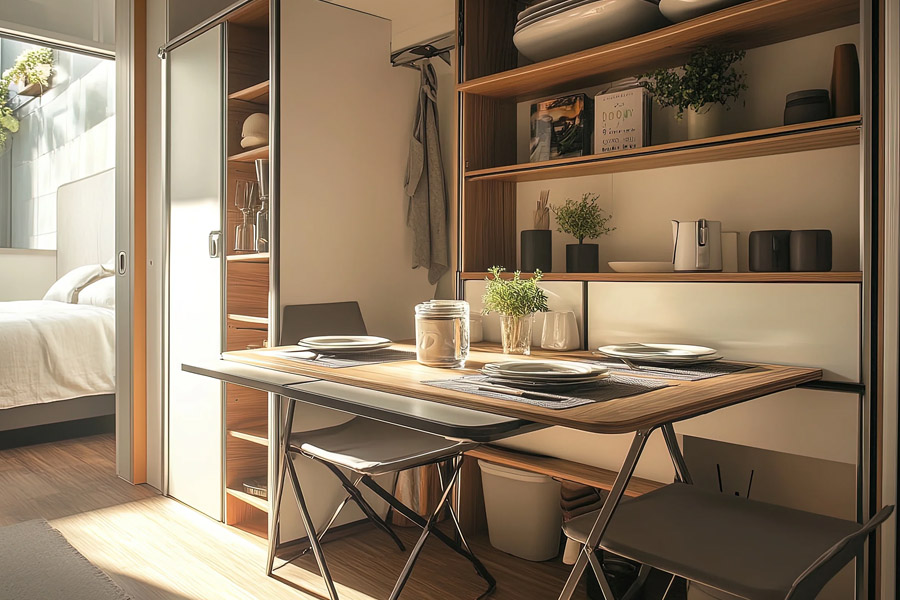
Little flats don’t keep rooms in lanes. Dawn turns a living room into a gym, midday into an office, and night into a movie theater. Your dining table needs chameleon-like qualities. A multipurpose dining table can go from coffee nook to laptop station to dinner table without taking up too much space. Consider the table a tool that adapts to your day.
Choosing the right multifunction table for your routine
Avoid catalog photos and start with habits. If you work from home often, choose a firm typing surface with ample depth for a laptop and plate. If you host weekly, choose extensions you can install alone for speed. A fold-down or wall-mounted alternative leaves floor space open in a yoga or craft studio.
Ask yourself three questions:
- How many people must I seat most days and how often does that number double
- Where will the table live when compact and how far does it expand
- How much time am I willing to spend transitioning between modes
When your answers are honest, the right mechanism and shape reveal themselves.
Measure once, fold twice: sizing that actually fits
A modest space feels spacious with good dimensions. Allow 30–36 inches around the table so chairs can scoot back without touching walls. Give diners 20–24 inches of width and 15–18 inches of knee room. 28–30 inches is typical eating height, with 24–26 inches of knee clearance under the apron.
Round tables enhance circulation. One 36-to-40-inch circular serves two to three daily, four if needed. Square or rectangular tops line walls and fit corners. In small spaces, pedestal bases conserve legroom. Consoles-to-dining designs are 12 to 18 inches deep against a wall and 60 to 72 inches when guests arrive. If you often expand, be sure the expanded footprint will leave a 24-inch pathway on one side.
Mechanisms that matter for daily life
The soul of a multifunction table is its hardware. Each mechanism has tradeoffs you can feel.
- Drop leaves hinge upward to add surface and fold down to slim the profile. They are fast, great for daily flexing, and keep weight light.
- Gatelegs support those leaves with swing-out legs. They are sturdy but take more steps to deploy.
- Butterfly leaves store inside the table. Pull the halves apart, unfold the leaf, then close. No closet hunting for extra panels.
- Flip tops rotate and lock, transforming narrow consoles into full tables. They excel along walls and in entry nooks.
- Wall-mounted Murphy tables fold down from the wall and vanish after meals. They free floors completely, perfect for studios.
Look for smooth glides, steel hinges, and reassuring detents that click into place. The best designs operate with one hand and feel solid at every step. If a table fights you, you will avoid using its features.
Materials and finishes that survive real life
Small spaces concentrate wear. Choose surfaces that shrug off rough days.
- Sintered stone resists scratches, stains, and heat far better than many laminates and woods. It cleans with a damp cloth and stays color true under sunlight. Use trivets for very hot cookware to protect the finish and any adhesives.
- High-pressure laminate is budget friendly and easy to wipe, ideal for mixed work and meal use.
- Solid wood ages with character and can be refinished, though it needs coasters and gentle care.
- Veneer over engineered cores offers stability against warping while delivering a real wood look. Quality edge banding keeps the profile crisp.
- Powder-coated steel frames prevent wobble and add a sleek profile. A pedestal base with a weighted footplate improves stability without eating leg space.
Edges matter in tight rooms. A rounded bullnose is kinder to hips than a sharp square edge when you squeeze past.
Wall-mounted and foldaway safety you should not skip
Folding tables stress hardware and walls. Mount into studs, not walls, with bolts rated for your table’s weight and elbow room. Verify manufacturer static and dynamic load ratings. If possible, utilize soft-close supports and avoid hinge lines during folding. Young toddlers and pets are curious and fast. When storing the table, latches that lock flat against the wall provide security.
Work mode to dinner mode in 90 seconds
Transition rituals sanity small dwellings. Store work items in a shallow tray or caddy that lifts off. Magnetic cable clamps on the table’s underside prevent cord tangling. Placemats and stackable candleholders in a drawer help evening mood approach quickly. Practice the sequence until it becomes muscle memory if your table flips or extends. With elegant set changes, a tiny flat functions as a backstage staff.
Style playbook for compact rooms
Furniture always takes center stage in close confines. Keep the top light in a tiny room. Light woods, warm taupes, and stone with subtle veining open up spaces. A single pedestal or slender trestle creates a design moment without cluttering sightlines. With fabric or cane chairs, gold accents add warmth without bulk like jewelry. Let the table be silent with a bright sofa. In a small room, a patterned top will draw attention.
Hosting without the hallway traffic jam
Shape-shifting tables make small spaces cozy. Weekday dinners are cozy in circles. For board games, hot pot, or sharing plates with corners, open to square or rectangle. Keep passageways free by aligning the long edge with your longest wall. When not in use, slide benches or backless stools under one side. Felt pads on legs and a tiny low-friction mat under the base make reconfiguration easy on fragile floors.
Spotlight on adaptable design from Arrtle
Arrtle explores small-space living using design and mechanics. With precise hinges and slides, these convertible tables are designed for regular usage. The 51-inch Convertible Folding Dining Table exemplifies multifunctionality. It changes from round to square, so you may prioritize flow on weekdays and surface area on weekends. The pedestal base frees knees and is small, while the sintered stone surface handles coffee rings, laptop edges, and supper heat well. Gold embellishments offer warmth and a sleek, fitted look. Arrtle’s wall-mounted Murphy eating choices convert a single space into several in ultra-tight apartments.
Ownership costs and longevity worth counting
One industrious piece replaces three in a small home. Multifunction tables can serve as desks, formal dining tables, and gaming or crafting surfaces. Consolidation saves money and space. Durability depends on materials and mechanisms. Strong tops and metal hardware keep resale value and offer superior comfort. Review fasteners annually and tighten set screws before wobbling becomes common. A good mechanism should feel confident after thousands of cycles with basic care.
FAQ
What size table fits a studio without crowding
Aim for a compact round at 36 to 40 inches or a flip-top console that opens to 48 to 60 inches when needed. Preserve at least 30 inches of clearance on the most used side so chairs can slide back comfortably.
Are pedestal bases stable in small apartments
Yes, if the base is weighted and sized correctly for the top. Pedestals free up leg space and seat counts, but the footplate should be wide enough that the table feels planted when someone leans in.
How many people can sit at a 51 inch table that changes from round to square
In round mode, four diners sit comfortably with good elbow room. In square mode, you can seat four with more surface area for serving, and squeeze six for casual meals if chair widths allow.
Is sintered stone safe for hot pans and daily wear
Sintered stone is highly heat and scratch resistant and shrugs off most spills. It is still best practice to use trivets under very hot cookware and cutting boards for knives to preserve the finish long term.
How much weight can a wall-mounted Murphy dining table handle
It depends on the hardware, wall construction, and the product’s rating. Many are designed for standard dining loads, but you should mount into studs and follow the stated weight limit, which often falls in the 100 to 200 pound range for the surface.
How do I keep extensions level with the main top
Choose tables with metal alignment pins or cam locks that pull leaves tight. Keep hardware clean, wipe dust from tracks, and occasionally apply a light dry lubricant recommended by the manufacturer to glides.
What chair styles work best with tight clearances
Armless, slim-profile chairs or low back benches tuck in neatly and preserve visual air. Look for seats around 16 to 18 inches deep and keep overall chair width near 18 to 20 inches to maximize counts.
How can I reduce noise when folding or expanding the table
Install felt pads where surfaces meet, keep hinges clean, and tighten loose screws. If the mechanism allows, add soft-close supports that slow the final inches of movement.
Will switching shapes or moving the base scratch my floors
Use felt glides on feet and check them every few months. When reconfiguring often, place a thin protective mat or rug under the base so pivoting or sliding does not mark wood or tile.
Do multifunction tables get wobbly over time
Quality designs resist wobble when hardware is maintained. Retighten fasteners annually, keep weight within the ratings, and address any play in hinges early. A solid frame and good joinery make the difference between sturdy and shaky over years of use.