What Dubai’s Climate Really Does to Floors
Dubai makes floors endurance athletes. Sea salt humidity and silty particles bombard surfaces, which expand during daytime and shrink at night. Moist concrete breathes. Sunlight crashes everything near windows or terraces. A coating that is not intended and fitted to withstand these stresses may haze, chalk, peel, or perhaps break before its time. Not picking a product alone is key. A holistic system that regulates heat, light, moisture, and abrasion is key.
Epoxy Chemistry That Holds Its Shape
Resins react differently to temperature cycling. The thicker, harder layer of dense, high-solids epoxies resists softening when temperatures rise. Flexible formulations can tolerate small slab movement without shearing. A 2–5-millimeter construction provides impact resistance and stability without feeling plasticky in heavy-use rooms. For chemical resistance to powerful cleansers or gasoline, novolac-modified epoxies excel. High-solids binders and the proper topcoat make metallic systems durable in ornamental situations.
The key to longevity is crosslink density. Epoxies that cure well provide a tight network that resists swelling and hot tire pickup. That network matters in Gulf heat. Cheap, thin sheets may seem good at handover but turn sticky in summer, inviting dust and premature wear.
Topcoats That Fight Sun and Scuffs
Bright sunlight is cruel. Standard clear epoxies amber near windows and semi-outdoors. Aliphatic polyurethane and polyaspartic topcoats improve scratch resistance, UV stability, and underfoot comfort. A high-performance topcoat does double duty as sunglasses and armor in retail and hospitality. For decorative floors, gloss adds depth, satin reduces glare in bright spaces, and textured treatments resist wet slippage.
Outdoor or sun-soaked areas should never be left with an unprotected epoxy base. A UV stable top layer preserves color, gloss, and clarity, and it wards off chalking that can appear after a few seasons of harsh light.
Build-ups That Last: System Stacks by Use Case
- Villas and apartments with air conditioning: a moisture-tolerant primer, followed by a high-solids epoxy body coat, sealed with a UV stable polyurethane or polyaspartic if there is any chance of sun exposure. For a softer aesthetic, choose satin.
- Penetrating primer wets concrete in garages and vehicle parks, then broadcast system. Full-broadcast quartz or vinyl flakes grip and hide dust. Heavy-duty, hot-tire-resistant coating. Honor expansion joints and fill them with a flexible joint product, not bridge them.
- Commercial kitchens and food prep: a chemical resistant body coat, often novolac based, with a broadcast aggregate for slip control. Top with a non-yellowing, easy-clean finish. Warm water and neutral cleaners will keep the surface healthy without stripping it.
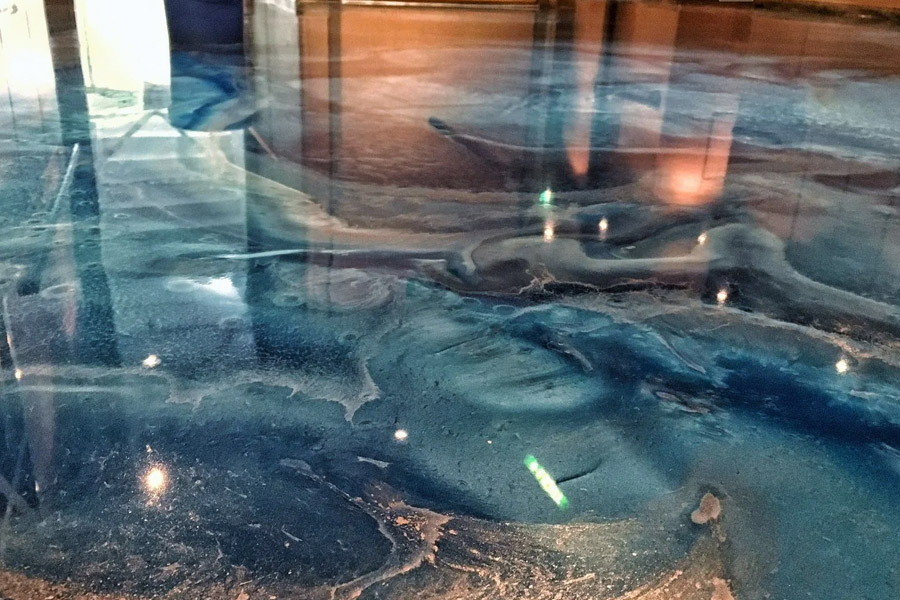
- Showrooms and lobbies: metallic or pigmented epoxy for drama, sealed with a hard-wearing UV stable clear. Add a second clear for extra depth and better scratch resistance if footfall is relentless.
- Semi-outdoor terraces and sunrooms: skip standard clear epoxy. Use UV stable polyaspartic or aliphatic polyurethane finishes over a compatible base system designed for thermal shock. Light colors reduce heat gain and keep surfaces cooler to the touch.
Moisture and Vapor Control in Gulf Buildings
Beneath the beautiful finish, water vapor can be a saboteur. Slabs near the coast or over poorly insulated ground can push moisture upward. If that vapor gets trapped, it can form blisters, cloud clear coats, or break the bond. Moisture-tolerant epoxy primers and vapor mitigating undercoats are the safety net. Good contractors measure moisture and choose primers on data, not guesswork. Perimeter detailing also matters. If water washes onto a coated slab and has no escape route, osmotic blistering can appear months later. Thoughtful edge terminations and drains keep the system breathing.
Installation Timing and Climate Control
Application windows aren’t advice. Film curing depends on substrate, air, and dew point. For coating and early cure, maintain the slab at least 3 degrees Celsius above dew point. The evening or midnight work in Dubai helps coatings flow and level without peeling too quickly. Mixing precision and timing are crucial for quick-cure polyaspartics. Slow crews leave permanent roller marks. Clean tools, skilled hands, and regulated batch sizes matter.
Surface Prep: Where Longevity Is Won
Imagine painting over talcum. Old adhesives, dust, and laitance destroy adhesion. Diamond grinding or shotblasting mechanically opens pores and levels the playing field. Corners and edges demand the same care as open spaces. Route and fill cracks using appropriate materials. Treat or eliminate oil pollution, not ignore it. Mid-range systems can outlive expensive ones on slick, dusty slabs if properly prepared. Preparation anchors the coating.
Maintenance Rhythms That Extend Life
Grit is a little sandblaster army. Regular dry dust mopping prevents gloss-eating particles. Clean with neutral pH cleansers, microfiber pads, and lots of water. Avoid powerful solvents that discolor topcoats. Mats at garage and industrial bay entrances collect sand and tire residue. Consider light recoats before the floor ages. A short clean every few years is cheaper than a full strip and rebuild. Similar to waxing a car to protect the paint.
What Failure Looks Like and How to Dodge It
- Ambering near glass doors: clear epoxy without UV protection. Solution: aliphatic or polyaspartic topcoat and UV stable pigment selection.
- Peeling in tire tracks: undercured film, soft resin, or contamination during application. Solution: correct cure, tougher formulations, rigorous prep, and hot tire resistant topcoats.
- Blisters that appear after a season: moisture vapor or osmotic pressure. Solution: moisture mitigation primers, correct edge detailing, and drainage.
- Map cracking and print-through: slab movement transmitted to a brittle film. Solution: flexible interlayers, proper joint treatment, and honoring control cuts.
- Cloudy patches: trapped moisture or topcoat applied over solvent-wet base. Solution: respect recoat windows and verify dryness.
Each symptom tells a story. The right system and disciplined process keep that story short.
Budget Tiers and Lifecycle Value
Initial cost is only one chapter. A thin, low-cost coating might demand rework in two summers, while a thicker build with a UV stable top might run for seven to ten years with one light refresh. For a 100 square meter garage, a modest increase in upfront spend often saves the cost of a full redo by year three or four. Factor downtime too. Fast-cure systems can return spaces to service in a single day, which matters for businesses where every hour counts.
Color also plays a role. Light grays and speckled flake blends hide dust and keep spaces brighter, which may reduce lighting costs. Deep, rich tones showcase cars and merchandise but need slightly more frequent polishing. Choose with both performance and presentation in mind.
FAQ
Can epoxy be used outdoors in Dubai?
Yes, but not as a plain interior-grade epoxy. Outdoor or sun-exposed areas should be finished with UV stable topcoats like aliphatic polyurethane or polyaspartic. The underlying build must also handle thermal shock and allow for movement. Light colors help control heat buildup.
How do I stop yellowing near windows and terraces?
Use a UV stable topcoat and, where possible, UV stable pigments. Clear interior epoxies without protection will amber. Strategic shading and films on glass can also reduce direct UV load on the floor.
How soon can I park a car on a new garage floor?
Walking is commonly allowed within 24 hours for standard epoxies and much sooner for fast-cure systems. Driving typically follows after 48 to 72 hours for epoxies, often the same day or next day for polyaspartics. Your installer should confirm based on temperature and product.
Will desert sand scratch the surface?
Grit will abrade any finish over time. Choose a hard-wearing topcoat, maintain regular dust control, and use entry mats. Textured flake or quartz systems hide micro-scratches better than mirror-gloss finishes.
Are epoxy floors too hot under bare feet?
Color and exposure determine surface temperature more than chemistry. Light, reflective colors stay cooler. In sunlit areas, UV stable topcoats with light pigments keep floors more comfortable.
Can damaged sections be repaired without redoing everything?
Local repairs are possible. The area is abraded, patched, and recoated. On decorative or metallic floors, blending takes skill to keep patterns consistent. Large open spaces sometimes benefit from recoating entire panels for uniformity.
What slip resistance should I aim for in wet areas?
Add texture. Broadcast fine quartz or use a micro-textured topcoat where spills or washdowns occur. Kitchens, poolside zones, and entry ramps should never rely on a glossy smooth surface.
Which colors hide dust best in Dubai?
Medium to light grays with multicolor flakes camouflage dust and minor scuffs. High-gloss black or solid dark tones look dramatic but show every footprint and grain of sand.
Do I need a moisture barrier on upper floors?
Often no, but testing is still wise. Even elevated slabs can hold construction moisture or be affected by HVAC changes. Moisture-tolerant primers are inexpensive insurance when history is unknown.
What signals a trustworthy installer?
They test the slab, specify prep methods, document product mix ratios and recoat windows, protect adjacent finishes, and provide a maintenance plan. They will talk you out of cutting corners on preparation because they know that is where floors live or die.