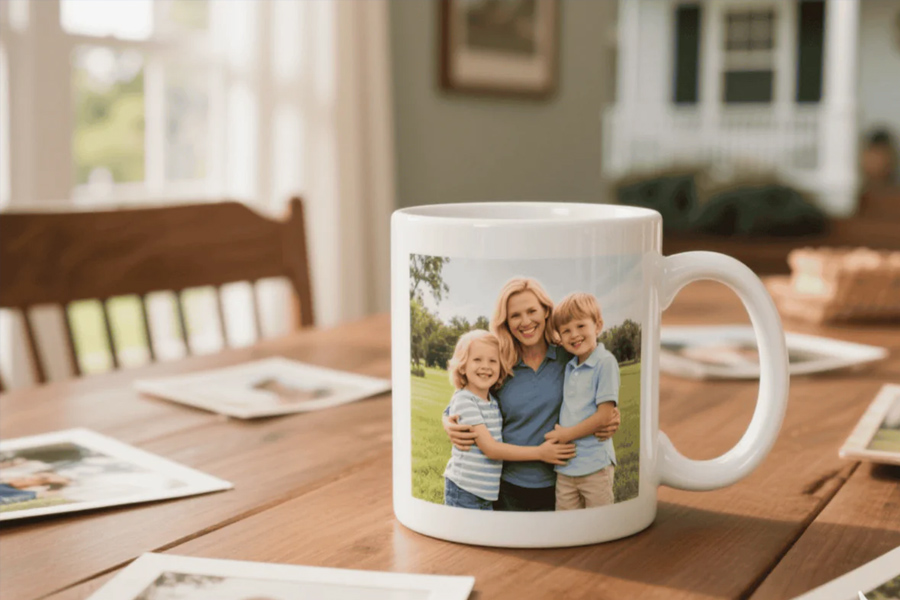
Design-first thinking for multipurpose mugs
Consider mug construction like a designer before reusing it. Material matters. Ceramic is warm and insulating. Thin, beautiful porcelain. Stoneware is handcrafted and durable. Double-walled stainless mugs are practically indestructible and keep drinks hot or cold. Size and silhouette determine utilization. Wide mugs hold scoops and nibbles, tall ones utensils and flowers. A noticeable handle allows hanging, while a straight-sided profile stacks nicely against walls and nooks.
Closely examine the internal glazing. The interior is lighter, making residue easier to notice. Look for a microwave-safe emblem and avoid shiny decals. For heavy jobs, choose mugs with thick walls and strong bases. Choose durable printing technologies like sublimation on polymer-coated surfaces or kiln-fired decals for branding and pictures that will last.
Elevate your coffee station without buying new gear
Create a neat coffee bar using unique cups. Give one to sugar packages and one to tea bags. Use reusable straws and stir sticks in a narrow mug. Place a small mug beside the grinder to capture beans. Form a tasting flight by placing three tiny mugs on a tray and identifying them with dry-erase markers for roast notes. One cup with a flip-top silicone lid keeps dust out and fragrances in during cinnamon and cocoa spoon use. This feels selected, not cluttered.
Kitchen utility that saves steps
Kitchen mug sets are like Swiss Army cups. Aromatics and sauces can be prepared in a cup. Standard 8- to 12-ounce mugs are ideal for pre-measuring pancake batter to pour onto the griddle. Reuse silicone lids to refrigerate leftover broth or smoothies. Use a big mug to scoop flour or rice. Add ingredients to a mug, cover with a lid or stretch wrap, and gently roll to marinate tiny chunks of pork or tofu.
For bakers, mugs serve as butter-softening chambers. Add hot water to one mug, let it sit a minute, pour it out, then invert it over a stick of butter on the counter to trap warmth. When you are done, the same mug can hold bench tools like a dough scraper and thermometer while you work.
Pantry and fridge organization with personality
Use unique mugs to label corrals. Set aside one for quick oatmeal packages, another for snack bars, and a third for daily spice mixes. A mug with a permeable cover makes a prettier baking-soda deodorizer on the fridge than a broken box. To prevent garlic cloves and ginger knobs from escaping into corners of the produce drawer, use a mug. To catch tea ball drips or tasting spoons between samples, keep a small mug on the burner with a folded paper towel.
Craft room and studio helpers
Mugs are versatile modular organizers in creative environments that can withstand spills and nicks. Two mugs for brushes—one for rinse and one for clean water—are recommended. A sturdy mug supports knitting needles and flowery wire spools. A silicone grommet in the handle aperture keeps skeins from wandering as you feed yarn. Paper crafters can stack washi tapes in a broad mug and pull the active roll over the rim. Use a magnet in a mug to keep pins and needles from scattering if the table moves.
Kid-friendly activities and learning tools
Brightly patterned custom mugs make learning easy. Classify buttons, beads, and alphabet tiles with color-coded cups. Create a color-mixing station with three cups, primary-colored water, and droppers on a tray. Children may mix drops into a clear mug to uncover secondary colors. Mugs can hold quiet time kits. Include crayons, a little notebook, and a compact puzzle for vehicle travels. Giving youngsters a cup of measured flour or sugar to add to the bowl during cooking lets them participate without generating a snowfall on the counter.
Workplace culture that feels human
At work, the humble mug can carry more than coffee. Use branded mugs as onboarding vessels, tucking in a welcome note, desk snacks, and a map of the office. For team recognition, pass a rotating custom mug with a lighthearted title printed on it, then let the weekly recipient display it on their desk. In meetings, set a mug near the door as a polite phone parking spot where devices can take a break. Reception desks benefit from a mug that holds visitor badges and another that stores sanitizing wipes. For employee-led charity drives or raffles, a distinctive mug draws tickets or donations while adding a touch of warmth to the counter.
Retail and event staging that stays portable
In stores and events, bespoke mugs serve as decor and logistics. Tiered displays can be made with three mugs at varying heights. A mug holds pencils, loyalty cards, and wrapped mints by the cash wrap. Large branded mugs make memorable raffle entries at markets and trade exhibitions. Instead of searching a backpack, photographers can display lens pens, microfiber towels, and spare batteries in a mug. After the day, everything goes into the mug and a tidy tote.
Safety, care, and sustainability notes
Label mugs as food-only or non-food-only early on. Food-safe jobs demand undamaged, lead-free glazes and no bacteria- harboring cracks or chips. Avoid heat stress, severe temperature fluctuations. Do not fill a frozen mug with hot water or put it in cold water. Choose soft sponges and detergents for high-resolution mugs. Handwashing keeps clarity longer than top-rack dishwashers for many prints.
Put a mug that’s no longer good for meals into a permanent utilitarian duty. The object lives longer without going to the landfill. Check local ceramic recycling guidelines before throwing away a mug. Broken ceramics can be used in tile and mosaic projects, giving them a second life.
Display that doubles as storage
A well-planned display tells your mug story. A shelf spectrum can be created via color gradient. Hang mugs in rows on a pegboard with hooks near the coffee maker or craft table. Shadowbox shelves display cups like little galleries. Clip mug handles with S hooks on a rack in tiny kitchens. Add blackboard labels to the shelf edge to give each family member a mug area and eliminate morning scavenger hunts.
Travel and outdoors without extra gadgets
A mug in the glove compartment can hold parking coins, a charging cord, and lip balm. One mug can be a utensil caddy and another a spice cup with screw-top silicone lid inserts for picnics or campground cooking. For towel and herb drying, keep a solid mug with clothespins on the balcony. A mug on a side shelf can hold a basting brush upright and gather drips at the grill.
Digital workspace adapters
Modern desktops have many cords and peripherals. A USB thumb drive, two adapters, a microfiber cloth, and a small notebook fit in a weighted ceramic mug. Make a video call stand by placing a phone horizontally in a broad mug. A small LED light with a tripod foot fits snuggly within a mug for multimedia creators to quickly adjust without clutter.
FAQ
How can I tell if a mug is microwave safe?
Flip the mug over and check for a microwave-safe symbol or explicit wording. If there is metallic paint or a metallic logo, keep it out of the microwave. When unsure, heat water in short intervals and feel for unusual hot spots or humming that can indicate metal content.
Is it safe to use the same mug for food and non-food tasks?
It is best to dedicate a mug to one category. If a mug has held non-food items like coins, glue sticks, or hardware, retire it from food service. Residues and microabrasions can be hard to sanitize fully.
What is the quickest way to remove coffee or tea stains from a mug?
Make a paste with baking soda and a splash of water. Rub it gently around the interior with a soft cloth, then rinse. For tougher stains, fill the mug with hot water, add a spoon of baking soda and a spoon of white vinegar, let it sit 10 minutes, and wash as usual.
Will dishwasher cycles damage custom prints on mugs?
That depends on the print method. Sublimated or kiln-fired decals are usually more resilient than surface-applied inks. If longevity is important, handwash with mild detergent and a soft sponge, and avoid abrasive scrubbers.
Can I store hot liquids in a mug that has hairline cracks?
No. Hairline cracks can harbor bacteria and may cause the mug to fail under heat. Retire cracked mugs to non-food uses or art projects where heat and moisture are not factors.
How do I label mugs for organization without leaving residue?
Use removable chalkboard stickers or washi tape on the exterior, then write with a chalk marker or fine-tip pen. Replace labels as contents change, and clean with a bit of rubbing alcohol when you remove them.
Are metal insulated mugs good for non-drink uses?
Yes, with caveats. They are durable and temperature stable, which is helpful for outdoor kits and tool storage. Avoid using them as microwaveable prep cups, and keep an eye on sharp tools that might scratch interior coatings.