Key Takeaways
- Asphalt millings can create a firm, economical surface for many driveways, farm lanes, private roads, and parking areas.
- Drainage, base preparation, grading, and compaction determine performance more than the material alone.
- Millings often produce less dust and less loose stone movement than ordinary gravel.
- They are best suited to low-speed, private-use areas rather than heavily trafficked roads or formal commercial lots.
- Delivered cost, material quality, site access, and equipment needs should be reviewed before ordering.
Asphalt millings are a practical option for property owners who need a durable driving surface without the expense of installing new pavement. They can work especially well on long rural driveways, equipment yards, private access roads, and overflow parking areas where function matters more than a perfectly smooth finish.
Before choosing a material, it helps to compare local availability, haul distance, and the condition of the reclaimed asphalt. Property owners researching https://arcosacrushedconcrete.com/region/texas-south/products/asphalt-millings-for-sale/ should focus on the delivered material, not just the quoted price per ton.
What Are Asphalt Millings?
Asphalt millings are pieces of old asphalt pavement removed during road, driveway, or parking-lot resurfacing. Milling equipment grinds away a worn asphalt layer, producing a blend of crushed stone, sand, and aged asphalt binder. The material is also called reclaimed asphalt pavement, or RAP. The Federal Highway Administration explains how reclaimed asphalt pavement can be processed and reused in pavement-related applications.
Loose millings vary in size and quality. Some loads are processed or screened for a more consistent blend, while others contain larger chunks that require additional grading. They are not the same as freshly produced hot-mix asphalt, which is heated, mixed to specification, and placed by paving equipment.
Where Asphalt Millings Work Best
Millings are generally a good fit where traffic moves slowly, and a textured, working surface is acceptable. Common uses include residential driveways, long rural lanes, farm roads, construction entrances, storage yards, low-speed access paths, road shoulders, and overflow parking.
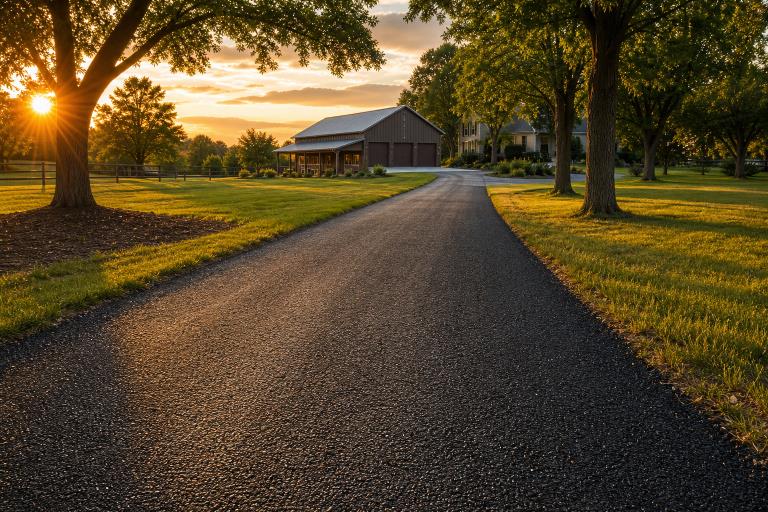
For example, a rural property owner with a quarter-mile driveway may choose compacted millings instead of new hot-mix asphalt. The surface can look more finished than basic gravel while avoiding the cost of paving a large area. That advantage depends on having a stable subgrade and a way to move water away from the drive.
Main Benefits for Property Owners
Potential Cost Savings
Because millings are reclaimed material, they may cost less than new asphalt or concrete. However, savings can disappear when the source is far away, access is difficult, or the job needs extensive excavation and drainage work. Compare total delivered cost, including truckloads, spreading, base material, and roller rental.
Less Dust and Loose Rock
When properly graded and compacted, millings can bind into a tighter surface than loose gravel. This can reduce dust, tire scatter, and the need to rake stones back into place. Warm weather and normal traffic may help the residual asphalt binder tighten the surface over time.
Useful Reuse of Existing Material
Using reclaimed pavement keeps usable aggregate and asphalt binder in circulation rather than treating the old surface as waste. This approach aligns with broader efforts to turn recovered materials into new products through recycling and reuse.
Limits and Potential Risks
Millings are not a universal paving solution. They may not meet appearance or smoothness expectations for formal commercial lots, sidewalks, or high-end residential projects. A surface made from poorly processed material can be hard to grade, especially when it includes oversized chunks, soil, concrete, or debris.
More importantly, millings cannot solve a weak foundation. Soft clay, standing water, poor drainage, and inadequate base depth can lead to ruts, potholes, edge failure, and washouts under any surface material. Heavy trucks, frequent deliveries, or fast-moving traffic may require an engineered pavement design instead.
How to Plan and Install the Surface
Check Soil, Grade, and Drainage
Walk the site after rain and identify standing water, soft spots, erosion, existing ruts, culverts, and blocked ditches. Plan a gentle crown or cross-slope that directs runoff away from buildings and low areas. Check local rules before changing a driveway entrance, roadside connection, ditch, or drainage path.
Prepare a Stable Base
Remove grass, roots, loose soil, and unsuitable material before placement. On weak or wet ground, install and compact an appropriate aggregate base or use a stabilization approach recommended for the site. Placing millings directly over mud usually creates a short-lived surface.
Spread and Compact in Manageable Lifts
Use a skid steer, tractor, grader, or similar equipment to spread the material evenly. Avoid deep piles and thin patches, especially near garage slabs, gates, and paved road connections. A vibratory roller generally produces better compaction than relying only on vehicle traffic. Compact manageable layers, then inspect for low spots and loose edges before regular use.
Cost Factors to Review
A realistic budget includes more than the material price. Consider the cost per ton or load, hauling distance, number of truckloads, excavation, grading, aggregate base, drainage improvements, labor, permits, and equipment.
As a planning example, a fictional 12-foot-wide by 200-foot driveway contains 2,400 square feet. The required quantity depends on planned compacted depth, material density, and expected loss during spreading. A supplier or contractor should confirm how many tons are needed, then provide a delivered estimate. This example is only a starting point, not a substitute for a site-specific quote.
Millings vs. Other Surface Materials
- Millings vs. gravel:Millings may bind more tightly and create less dust. Clean, open-graded gravel may drain more freely, but both need proper shaping and a sound base.
- Millings vs. hot-mix asphalt:New asphalt is smoother, more uniform, and usually better for higher traffic and strict appearance standards. Millings can be a sensible, lower-cost choice for private, low-speed areas.
- Millings vs. concrete:Concrete provides a clean finished look and can offer long service life, but it usually requires a larger upfront investment. Millings are often more practical for long working driveways and rural access roads.
Maintenance, Seasonal Care, and Common Questions
Routine Maintenance
Low maintenance does mean no maintenance. Inspect the surface after heavy rain, clear blocked drainage paths, repair eroded shoulders, and fill shallow ruts before they deepen. In colder climates, inspect before and after freeze-thaw periods. Limit sharp turns from heavy vehicles when the surface is soft or newly placed.
Do Asphalt Millings Harden?
They can become firmer as particles interlock under compaction and traffic. Residual binder and warm temperatures may also help, but the result is not identical to newly paved asphalt.
How Thick Should a Milling Driveway Be?
There is no single correct thickness. Soil strength, drainage, vehicle weight, traffic frequency, and base condition all affect the required pavement structure. Weak ground or heavy truck use may require a deeper base and professional design advice.
Are Millings Right for Every Driveway?
No. They are often a strong choice for budget-focused, private, rural, and low-speed projects. Where heavy traffic, smoothness, drainage control, or formal appearance is essential, hot-mix asphalt, concrete, or an engineered gravel system may be the better long-term investment.
Final Thoughts
Asphalt millings can be a smart surface choice when expectations match the material, and the site is prepared correctly. Inspect the material, solve drainage problems first, compare delivered costs, compact thoroughly, and plan for occasional maintenance. A well-built milling surface can provide reliable access for years, while a poorly prepared one can fail quickly regardless of how inexpensive the material seemed at the start.